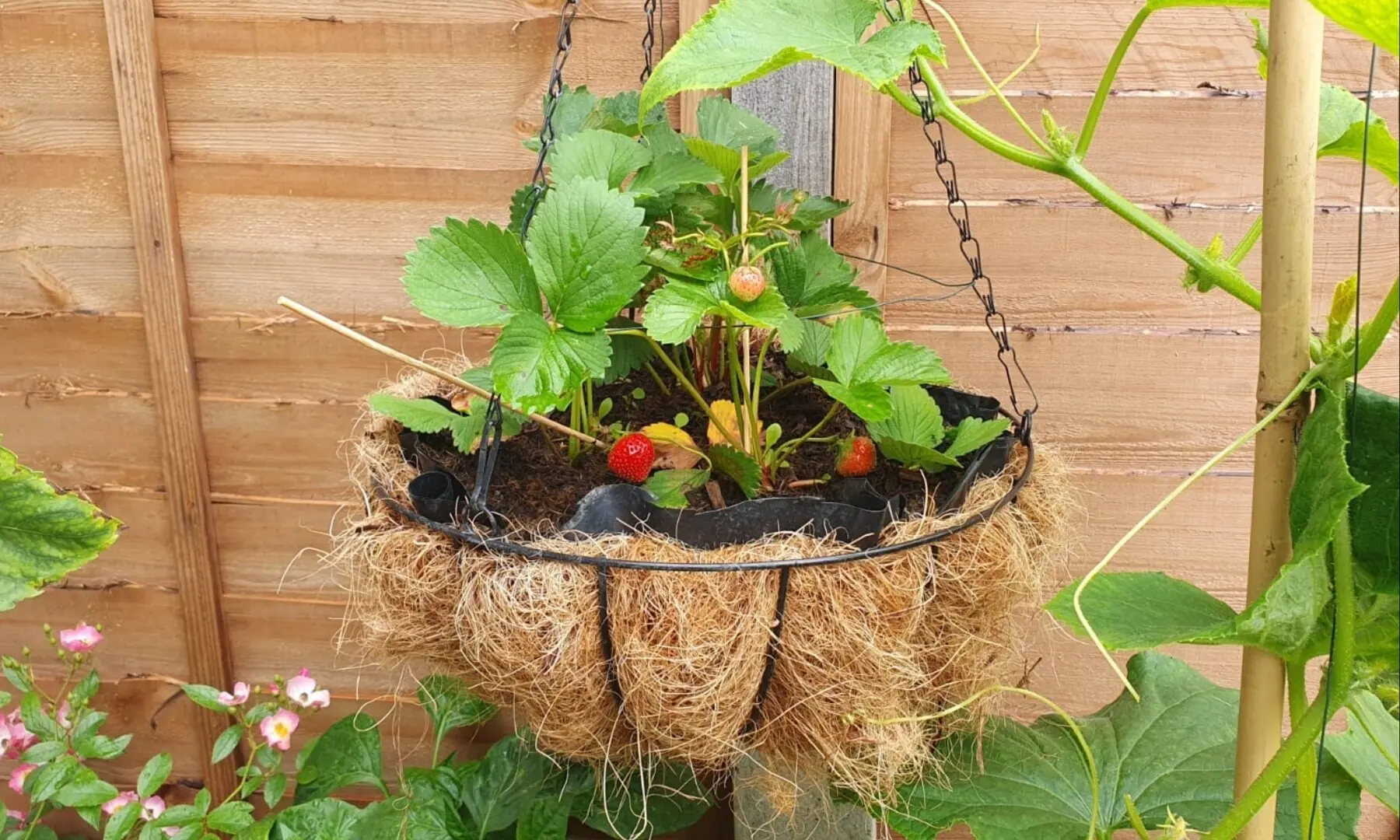

Growing up in Karachi in the 1990s, it was unthinkable for most of us to have access to fresh strawberries. All one came across were artificial strawberry flavours and essence, which were generously used in chocolates, biscuits, ice creams, desserts, jams, jellies and custard, to name a few convenience products.
Pushcart fruit vendors selling strawberries were unheard of and only a lucky few would find fresh strawberries at any of the handful of supermarkets that existed in the city in those days.
To our family’s delight, my father would sometimes purchase a can of strawberries from the then-renowned chor bazaar, a flea market where smuggled items were also available. The only fresh strawberries that we were exposed to in those times were the ones we saw being consumed on television. It is no surprise, then, that these factors added to our eagerness to not only consume fresh strawberries, but also to grow them.
Fast forward to the 2020s and, during its fruiting seasons, different sizes and varieties of strawberries are available at bargain prices throughout Karachi and across the country. A host of different berries, including strawberries, are being grown across Pakistan, especially in colder regions such as Khyber Pakhtunkhwa province. These fruits have proved to be economically beneficial for local growers as well.

In 1990s Karachi, fresh strawberries were nearly impossible to find. Today, they are everywhere and you can even grow them at home

The bright red, aromatic, bite-size, juicy fruit, which is globally adored, is scientifically known as Fragaria x ananassa and hails from the popular Rosaceae family. Technically, strawberry is not a berry, but an aggregate accessory fruit. Botanically, the red and juicy fleshy part that we love to eat is a swollen stem and not a fruit. Scientifically, the seeds that we see on the strawberry are the fruits. The red part, or the stem, is an enlarged receptacle, while the seemingly minute seeds, or the fruits, are known as achenes.
It warrants mentioning that a gardener can use either the seeds or the strawberry runners — the long stem that grows from a mother plant — to grow strawberry plants. To add to the confusion, the achenes, or strawberry fruits that are generally mistaken as seeds, contain a single strawberry seed within. Every strawberry that we gulp down contains roughly 200 achenes and, therefore, an equal number of edible seeds that are nutritious.
In ideal conditions, seeds usually germinate when the temperature is around 10 to 18 degrees Celsius. Even then, its germination rate is comparatively lower than growing runners. Usually, the seeds are sown during the months of November to January. However, as the winters ahead are almost non-existent, this can affect the germination rate of the seeds and, eventually, plant growth. This is one of the reasons why one seldom finds stores selling strawberry seeds here.
Despite these hindrances, gardeners who want to grow the strawberry plant using seeds should prepare a well-drained potting mix, which has been boosted with a fine layer of compost. The seeds should be sprinkled gently on the soil surface and covered with a thin layer of compost. Water should be very carefully sprayed, so it does not disturb the original sowing positions of the seeds. The container should be placed in a cool, dry area and covered with plastic to ensure moisture retention. Even with a diminished germination rate, strawberry seeds can take between two to four weeks to germinate, depending upon the weather and the quality of the seeds.
Strawberry growers and small-scale farmers mostly opt for strawberry runners to grow a crop instead of seeds. One of the best aspects of growing a strawberry plant via runners is that it requires a temperature between 20 to 25 degrees Celsius for optimum growth. This range is ideal for growers in Pakistan.

This is one reason why consumers often come across online vendors selling strawberries grown from runners in dozens and even batches of hundreds. These runners are small strawberry plants, about three to six inches long, and sellers wrap them in newspaper before shipping, to keep them dry and prevent damage.
Green runners are more viable and have better survival chances to grow into a strawberry plant. Gardeners can also opt for runners that have completely dried, which are usually brown to black in colour. These are likely to be dead. If the roots are still intact, rehydrating these runners with water may help in bringing them back to life.
Please send your queries and emails to doctree101@hotmail.com. The writer is a physician and a host for the YouTube channel ‘DocTree Gardening’ promoting organic kitchen gardening
Published in Dawn, EOS, December 7th, 2025
Header Image: The roots of the runner should be soaked in water to rehydrate the plant. — Author