


TL;DR
Pros:
- Compelling, emotion-driven story highlighting rich character dynamics
- Intricate, bright pixel art visuals
- Thoughtful sound design with incredible music
- Endlessly inventive variations on gameplay
- Super replay-friendly, with variant routes and secret bosses
- Enjoyable, funny and well-written script
- Every element works well in tandem
Cons:
- Will take a while to fully release
- Questionable visual design choices in Chapter 1
- Not sure why it reused Undertale characters, honestly
Score: 6.5/7 — Four chapters of game design and storytelling brilliance
Reviewed on PC; available on PC (Windows), macOS, PS4 and PS5, and Nintendo Switch and Switch 2.

Price: $12.49 (Steam); $24.99 (Nintendo and PlayStation). Free demo available on PC, macOS, Nintendo Switch and PS4.

If you’re unfamiliar with Toby Fox, get familiar right now. After 2015’s smash-hit Undertale that rewired modern geek culture, the indie creator is back at it with another absolute banger: Deltarune, which on the surface alludes to its accolade-winning older brother but is in effect a very different, also amazing game. So amazing that I’m struggling to find anything to criticise about it.
The only reason one might not want to play this game right now is that it’s unfinished: just the first four chapters of seven are released. That said, they are phenomenally satisfying and leave me hyped for more to come (and the first two are free!). For a game so full of heart, I’ll wait as long as I need to for the rest, especially since its replayability factor is absurdly high and the wait between chapters has been well worth it so far.
Familiar concept, but fully new game
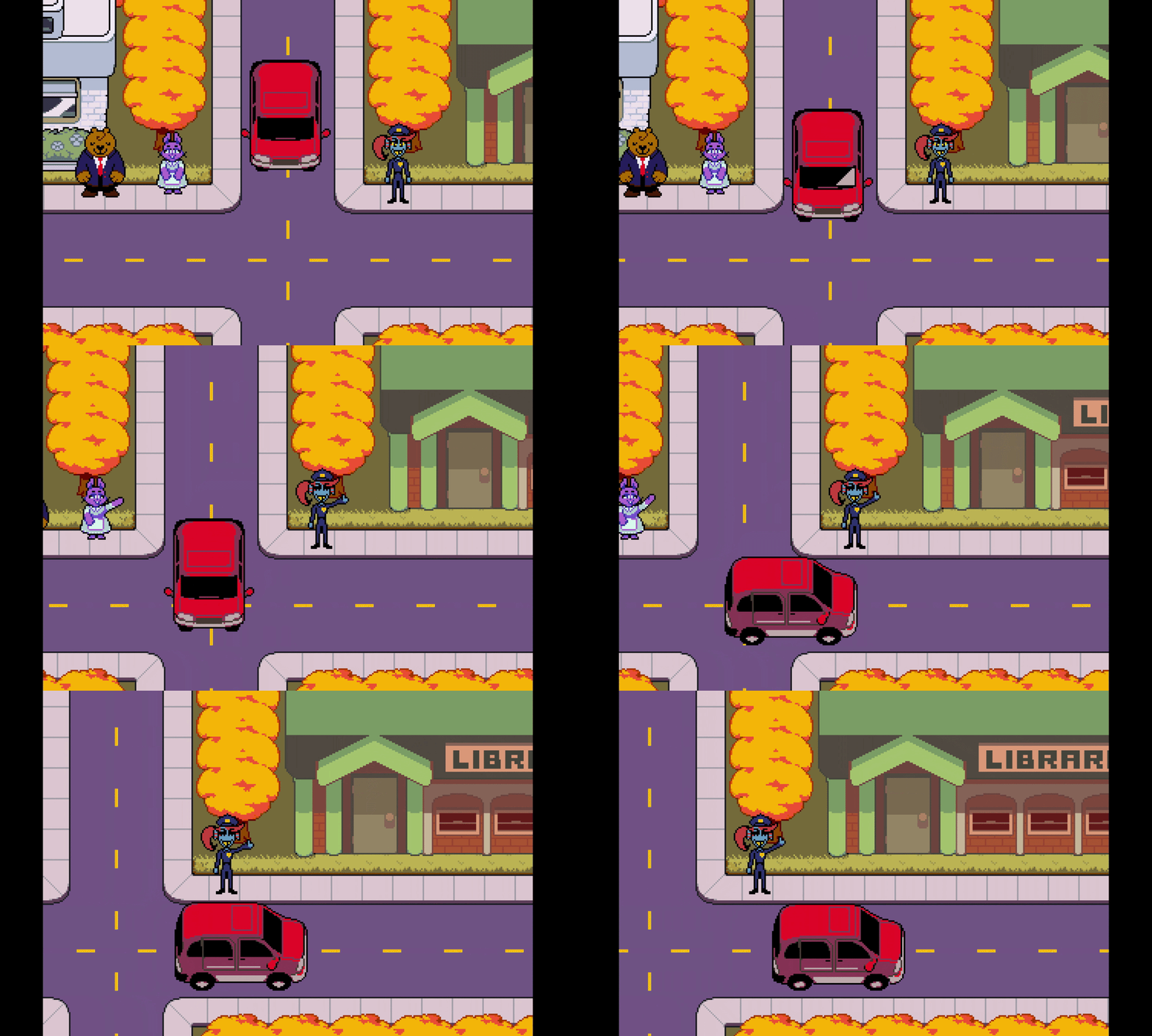
Let’s get the comparison out of the way. Deltarune features the same gameplay and interfacing concepts as Undertale, complete with an upgraded version of familiar battle mechanics. It also features a lot of familiar characters from Undertale, playing different roles in a different universe, and makes sparing references to the former game. It even has similar ways to play through the story peacefully or violently, although there’s reportedly only one ending regardless.
All in all, familiarity with Undertale acts as a good foundation for this similar universe of monsters and (singular) human and dodging bullets while convincing enemies to be friends. But this is where we can stop comparing the two, because Deltarune is neither its sequel nor its spinoff. It has its own story and gameplay charms, and deserves to be judged on its own terms.
In fact, what really surprised me was the fact that, aside from adding some nostalgia, this game honestly didn’t need to rely on any repurposed Undertale characters at all; it could just as easily have used new original characters. I’m not really sure why it made this choice, except maybe to rope in longtime fans, but ironically this is the one thing that threatened to lessen the experience even marginally for me. The game is not Undertale 2, and it doesn’t have to be. When it shakes off that mantle is when it really starts to shine.
A concept that builds and builds
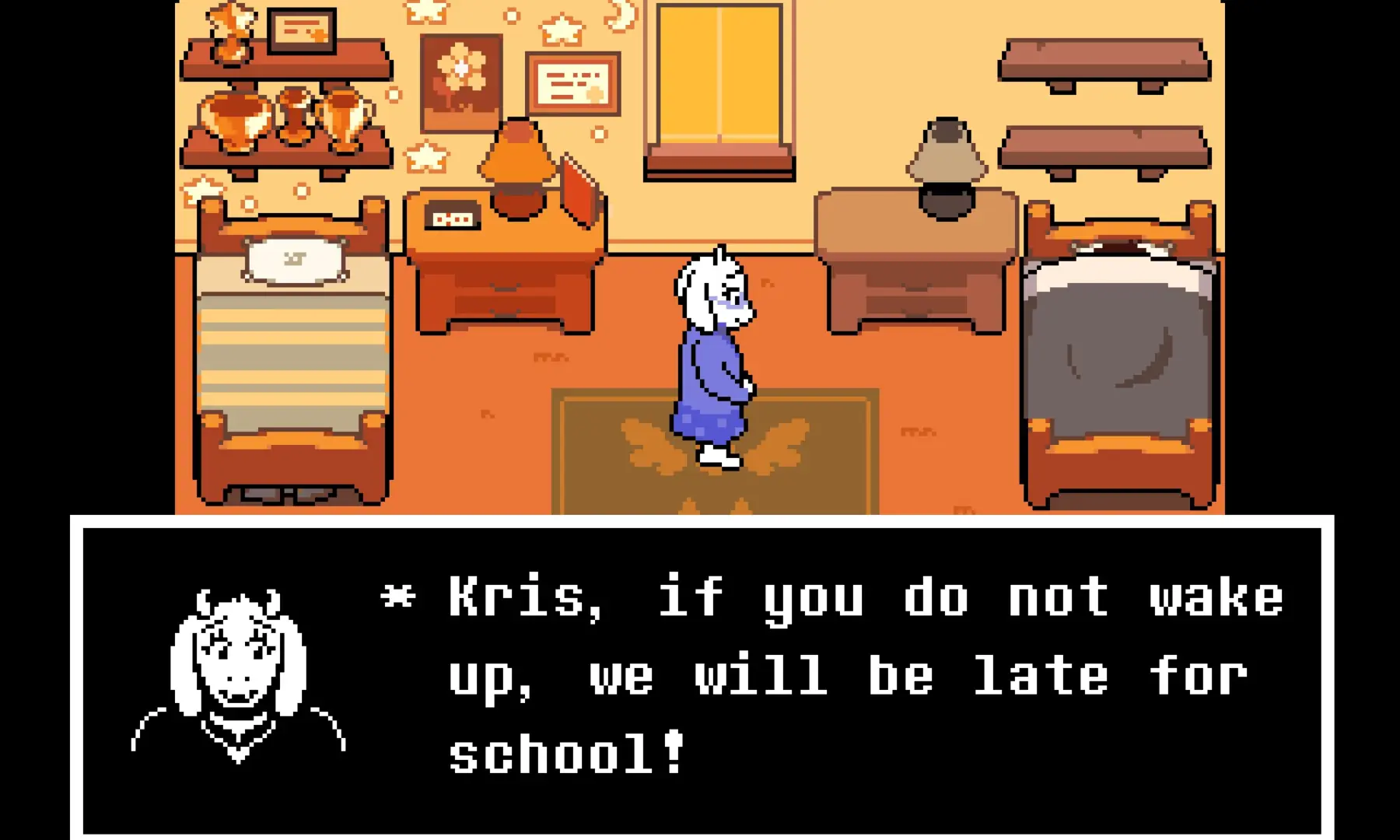
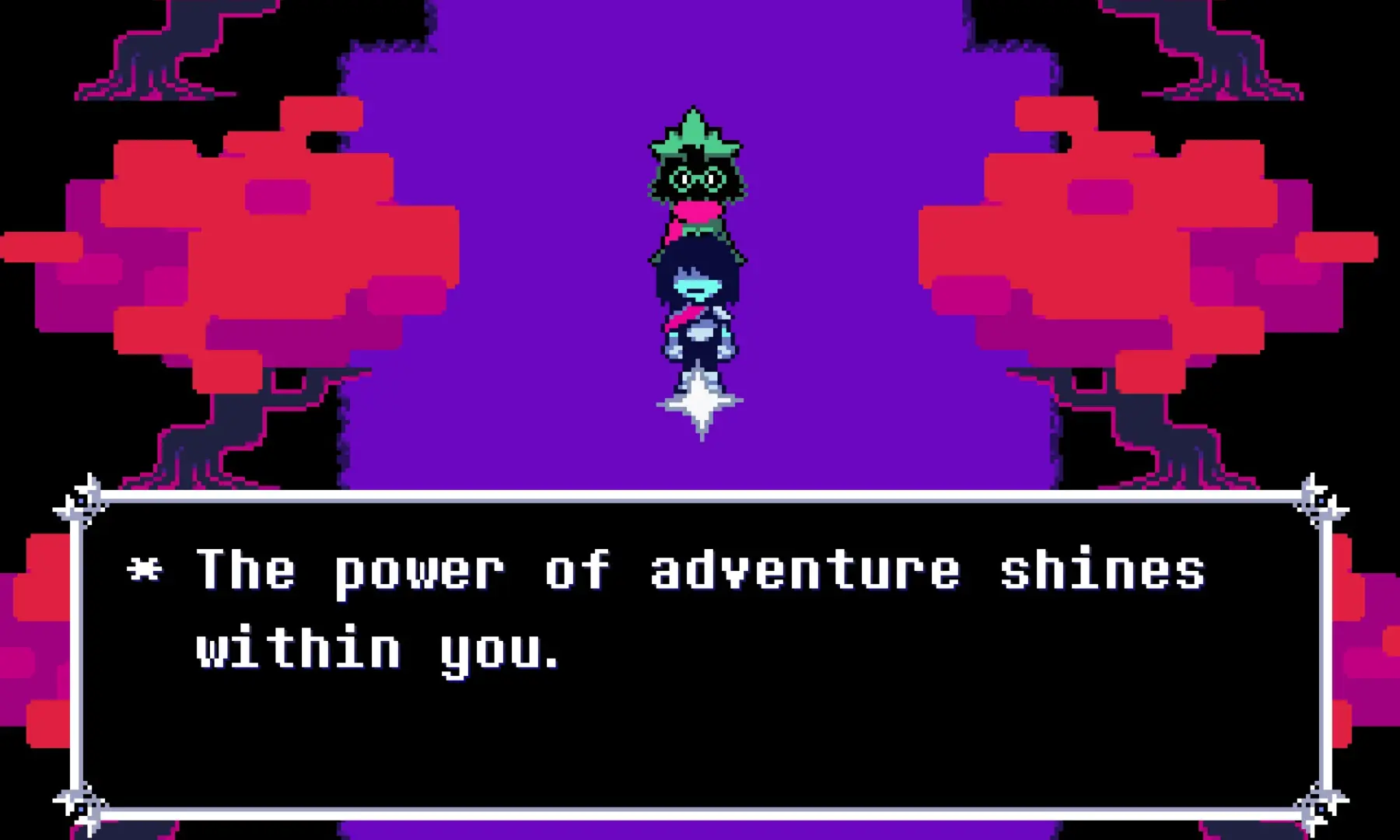
Without spoiling too much: Deltarune introduces you to Kris — a human raised in a small town of monsters — and antagonistic deuteragonist Susie. Then it throws the two into a strange ‘Dark World’ with a mysterious prophecy at its core. Along with Ralsei, a Dark World prince, they set out JRPG-style to explore new worlds and seal the fountains at their centre — meeting friends and enemies of all kinds as they go.
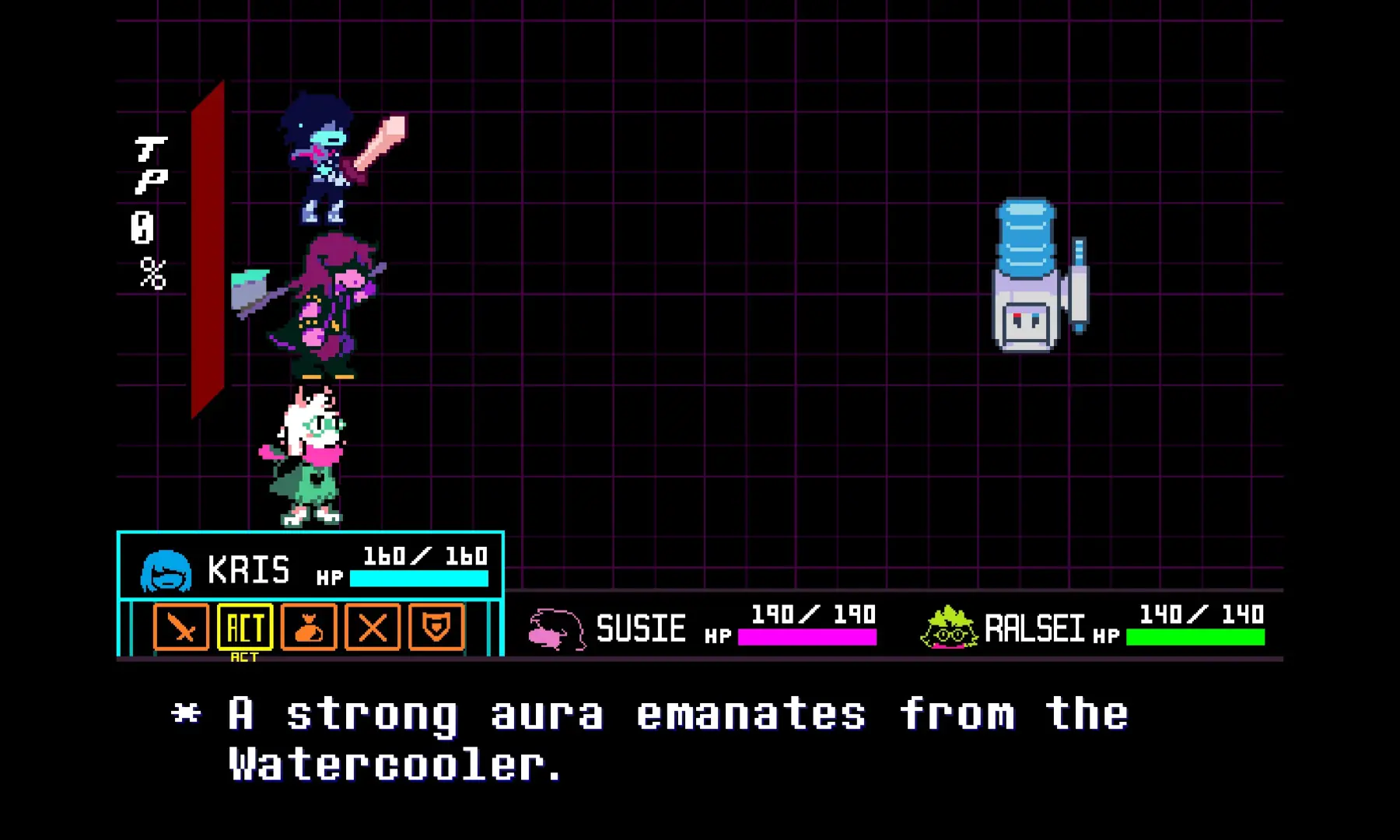
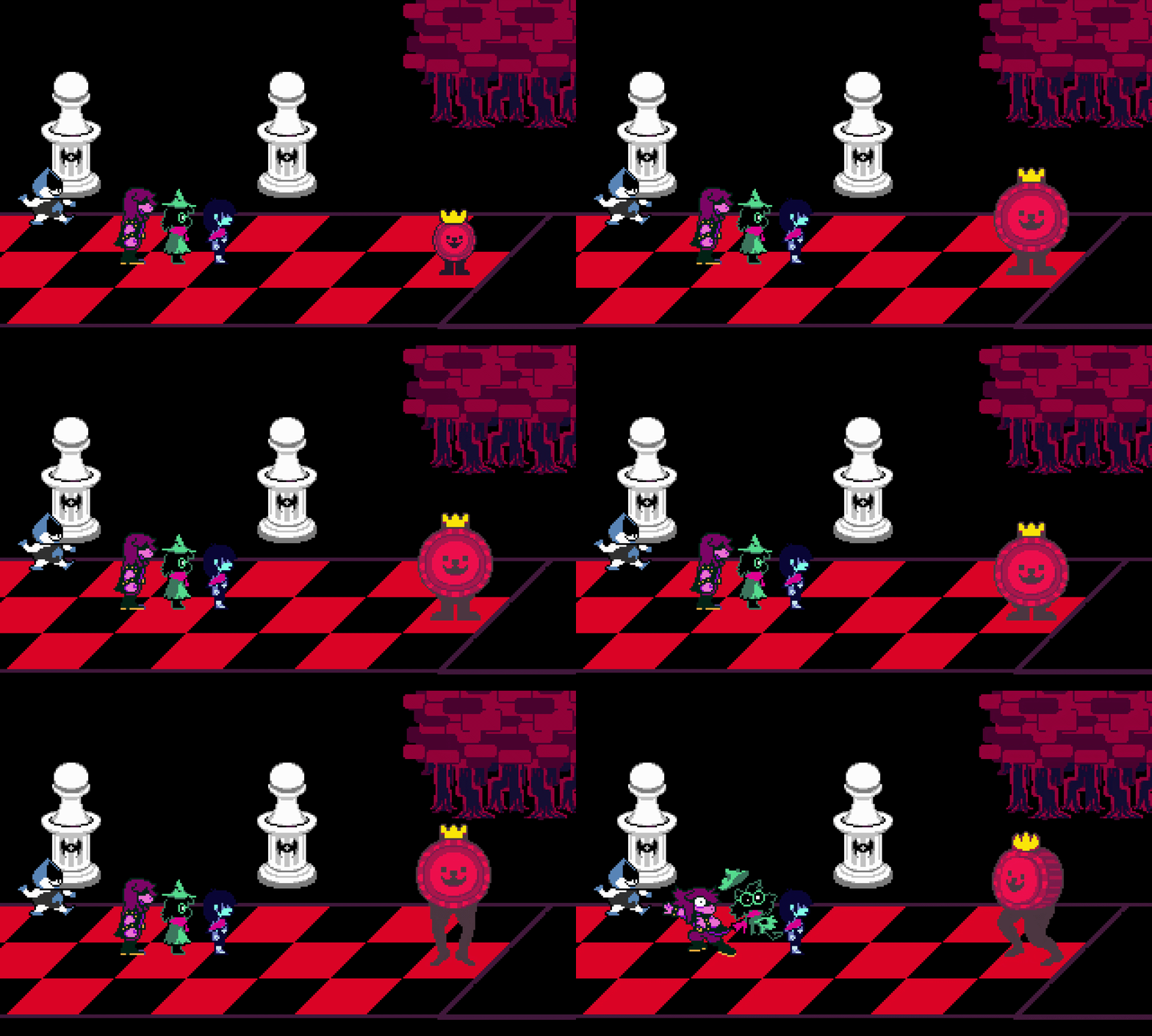
Every chapter brings a new quest, and while Chapter 1 functions more as a proof of concept, by Chapter 2 the game has firmly found its footing and started sprinting. Everything from the underlying narrative to the zany boss fights just keeps heightening. There are points that I just don’t know how the game can surpass itself, and then it does.
Sound design integrated into everything
Sound is a huge part of Deltarune from both an aesthetic and gameplay standpoint. In some areas, it’s integrated thoroughly into gameplay and interfacing itself, to the point where you might want to play with your headphones set to stereo. Elsewhere, it elevates humorous and narratively powerful moments alike, and suffuses every element of the surroundings and interface with life. Close attention to detail here plays a major role in shaping a living, breathing world.
Fox’s soundtrack steals the show in every way, though. Every track is electric, bright, powerful and infuriatingly catchy, making the soundtrack an obvious standout feature. Each new theme compliments its area or battle perfectly, keeping you in the moment during the most tedious of puzzles and holding your attention when tough bosses threaten to get frustrating.
I would love to keep singing praises of the music, but I’ll just provide an example. Have a listen as you read the rest of this review, or after.
Evocative, expert pixel art
The interface is retro and JRPG-esque, with nostalgically pixelly battle screens and movement mechanics. Overall, the visuals are striking, with gorgeously popping colours; there are some plainer elements, but they’re usually used deliberately for dramatic effect.
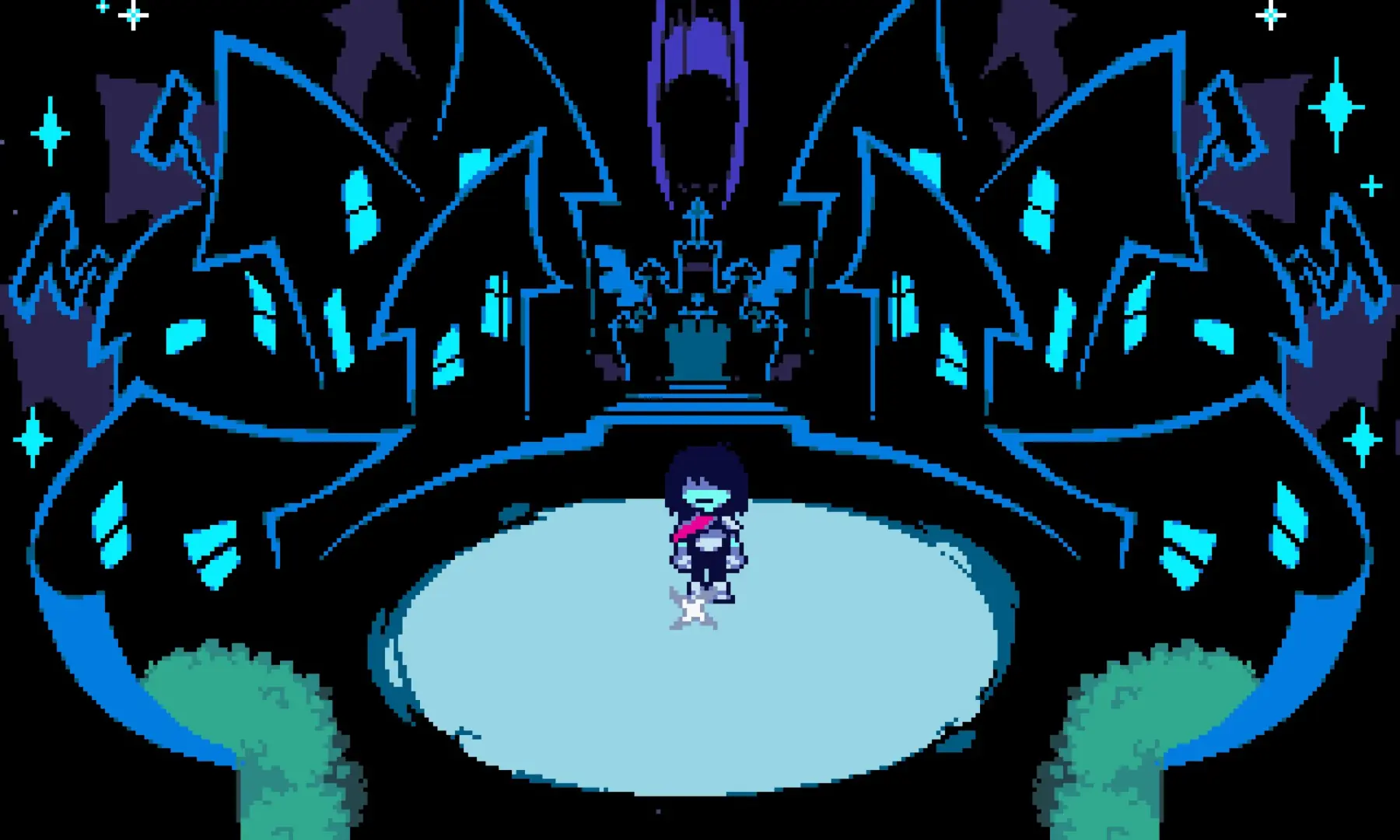
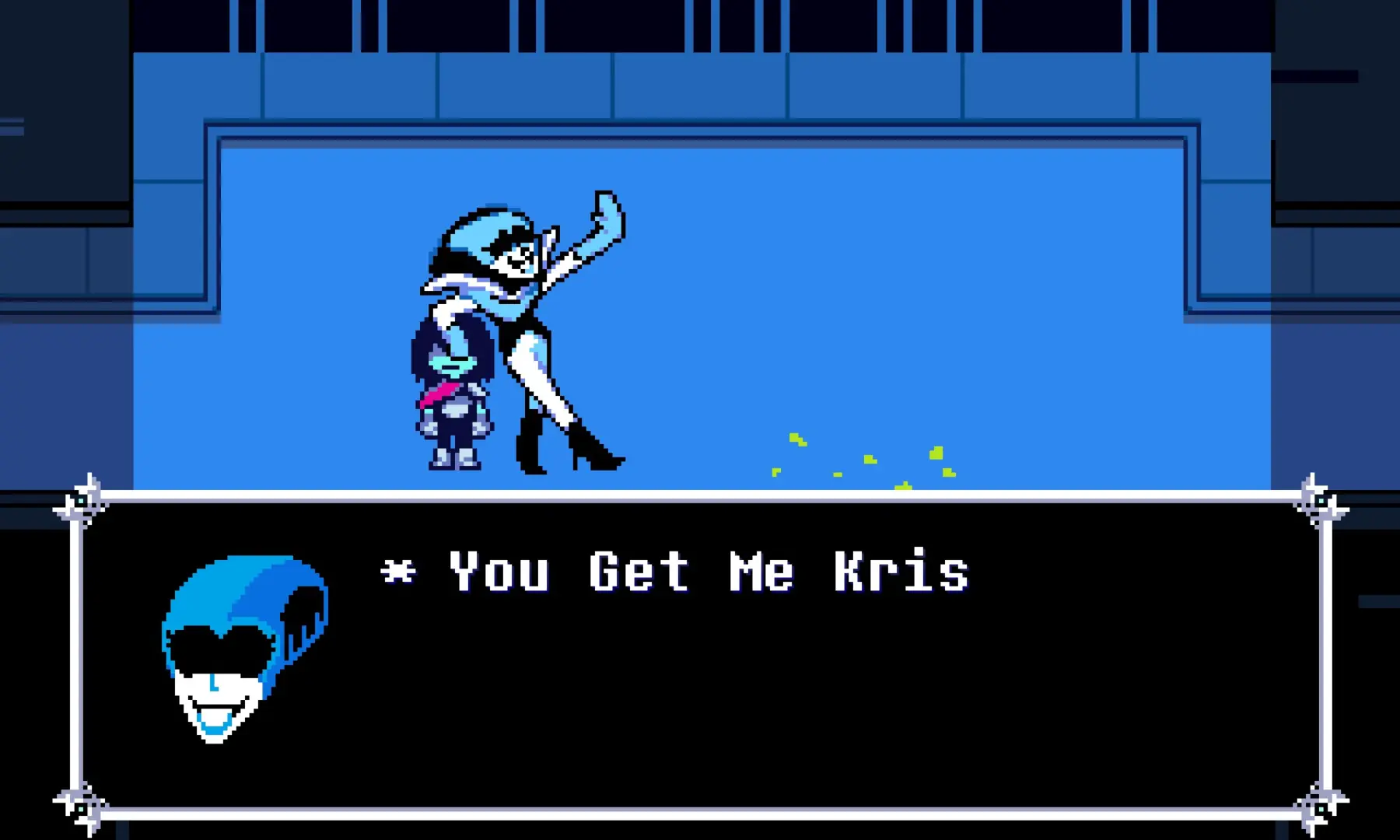
And the sprites are — mostly — amazing. Some are… not, especially in the first chapter. This might be for visual gags that don’t always land, but I’d guess the reason is simpler — certain aspects of Chapter 1’s art suggest a budget of somewhere between $31 and a handwritten note saying “please”.
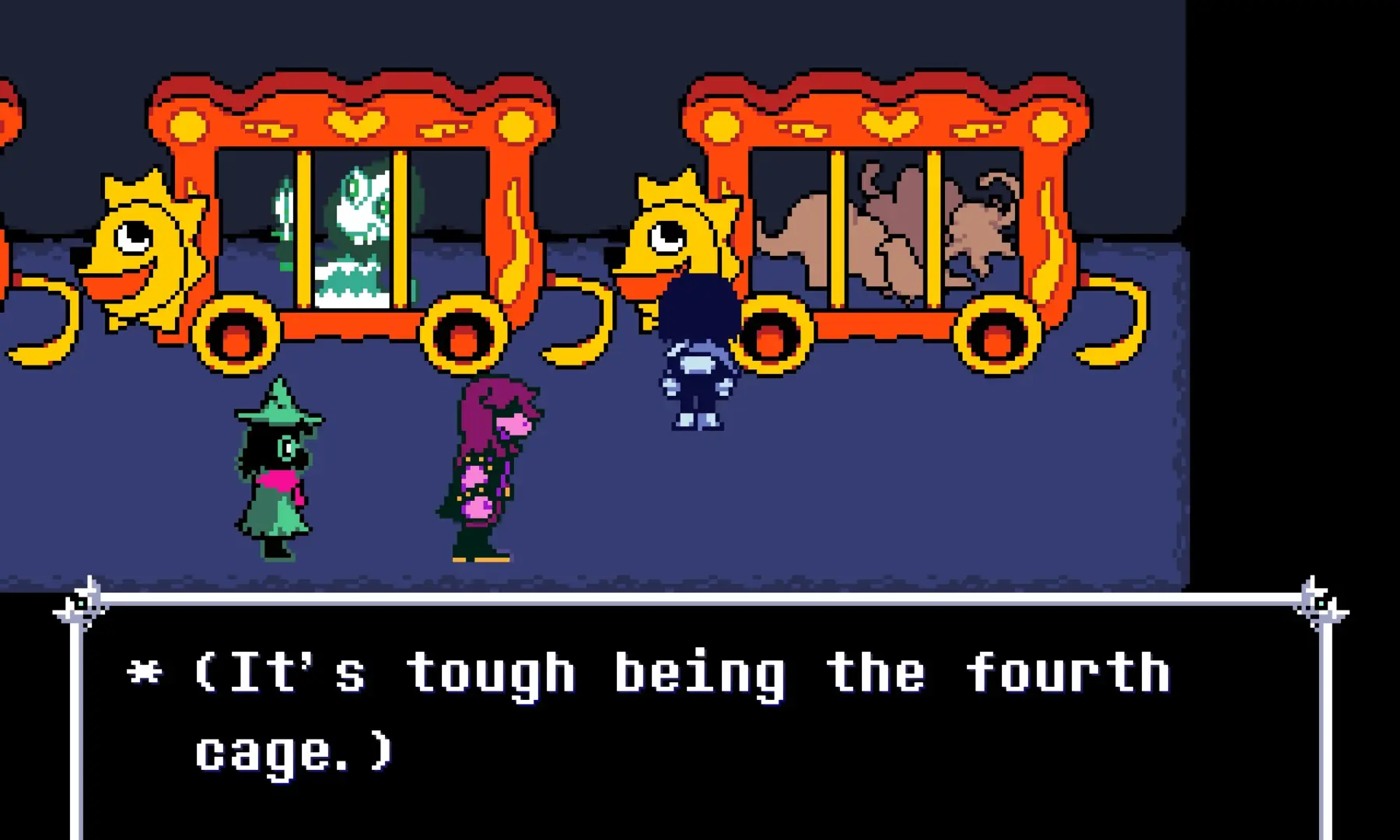
Thankfully, the visual design gets better every chapter. One must note that the game isn’t particularly ‘cute’, so the art isn’t afraid to get a little creepy, and have its characters pull big faces. I love the unfiltered expressiveness, and I really like it when the visual design breaks boundaries.
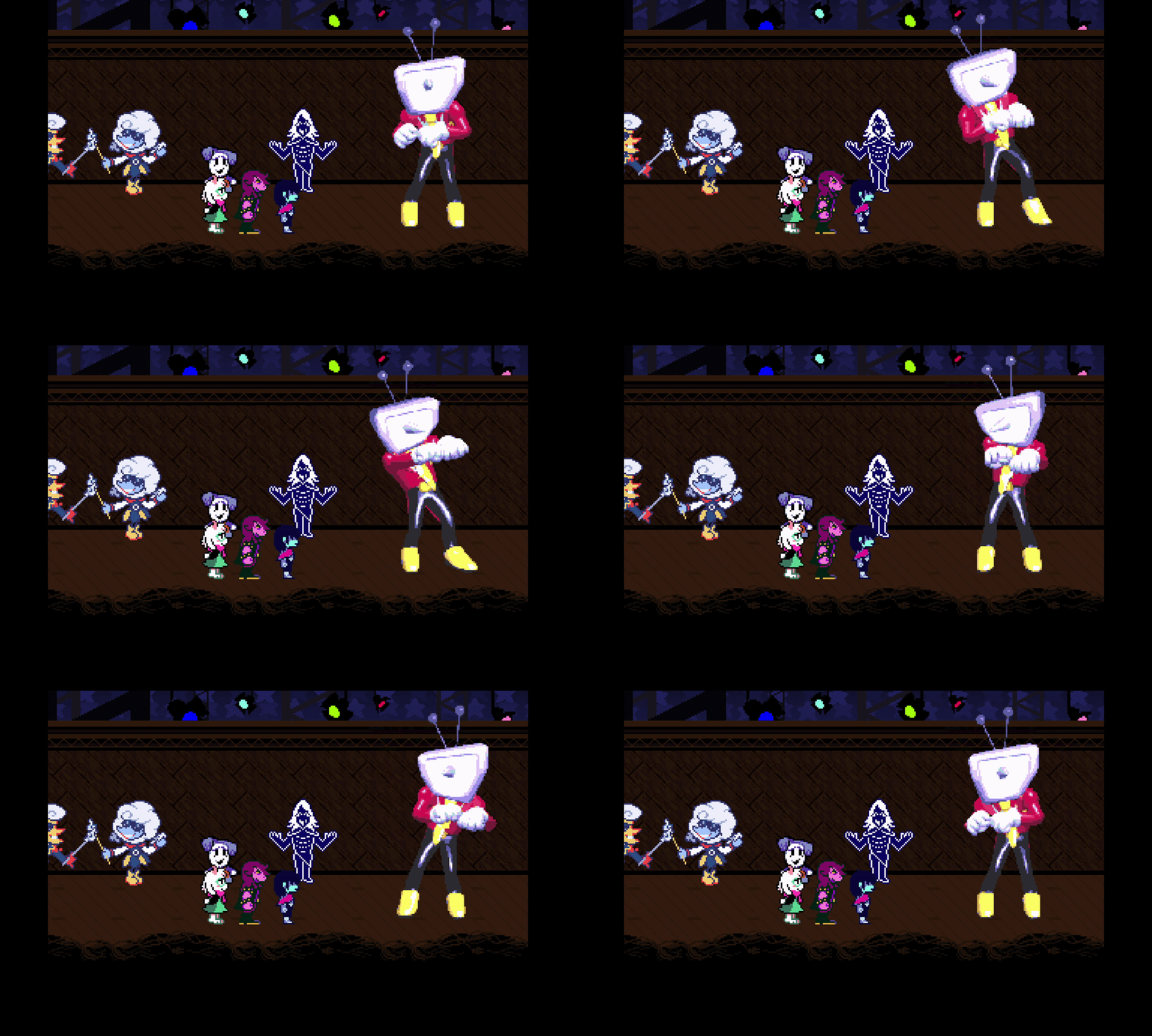
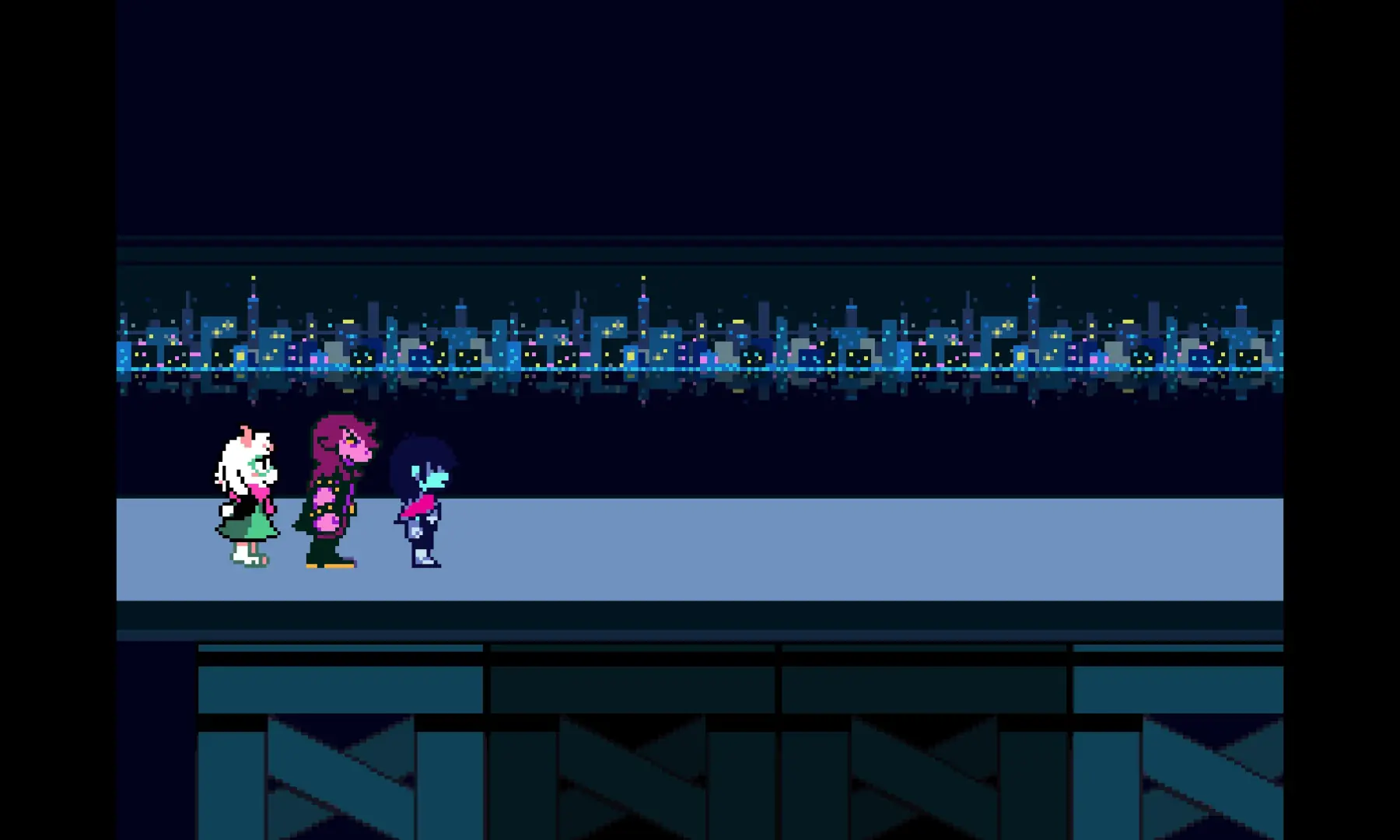
Two standout features are the scenic backgrounds and the incredible sprite animations, both masterclasses in pixel art. The backdrops of your journey are impressively intricate, especially later, and lend a sense of grand scale to offset some flatness in the map.
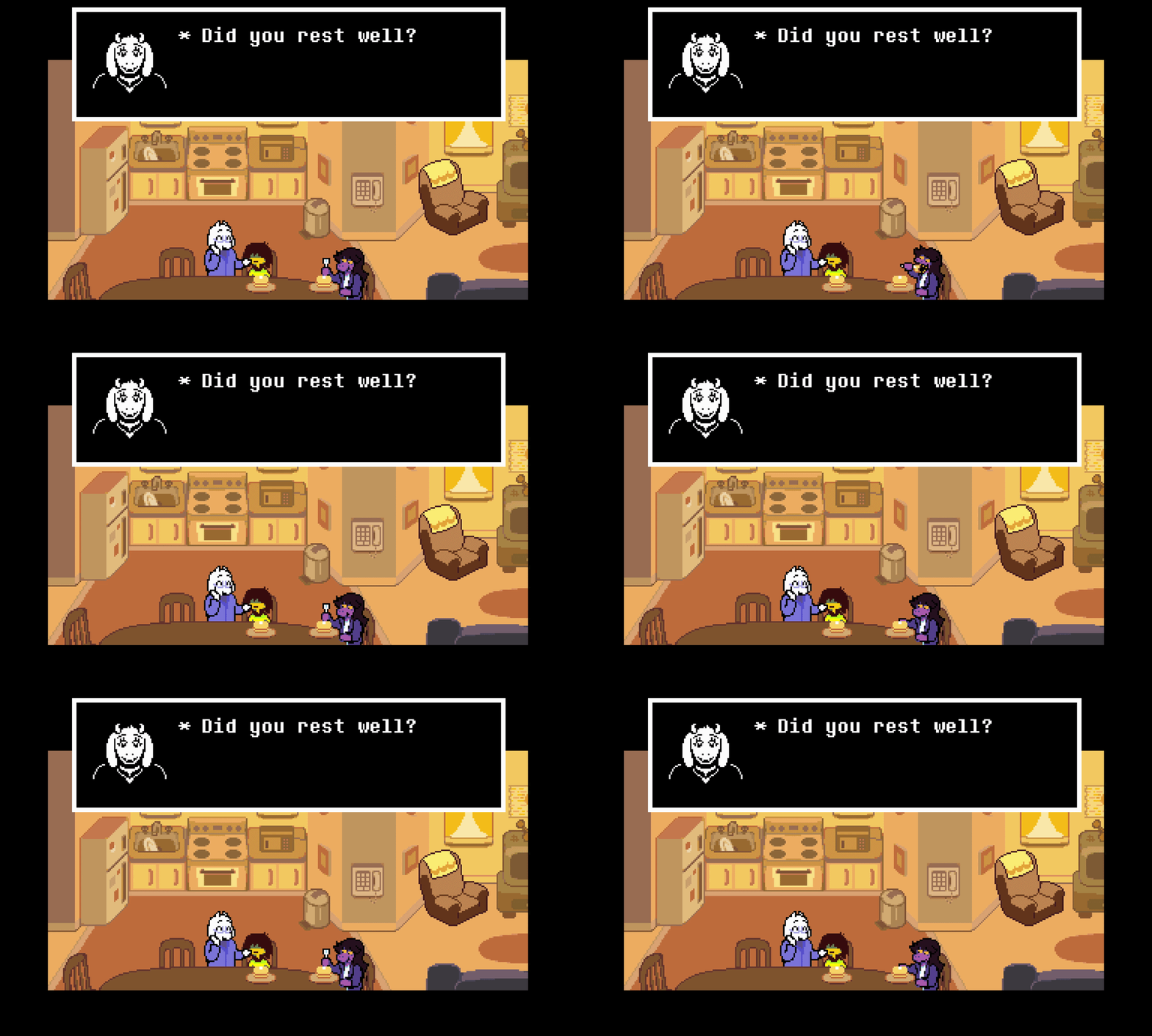
Meanwhile, sprite animations are super detailed and rendered with astonishing effort and purpose, grounding the characters firmly in the world and making them feel super real. Lead artist Temmie Chang, responsible for the pixel animation, knocks it out of the park.
Battles
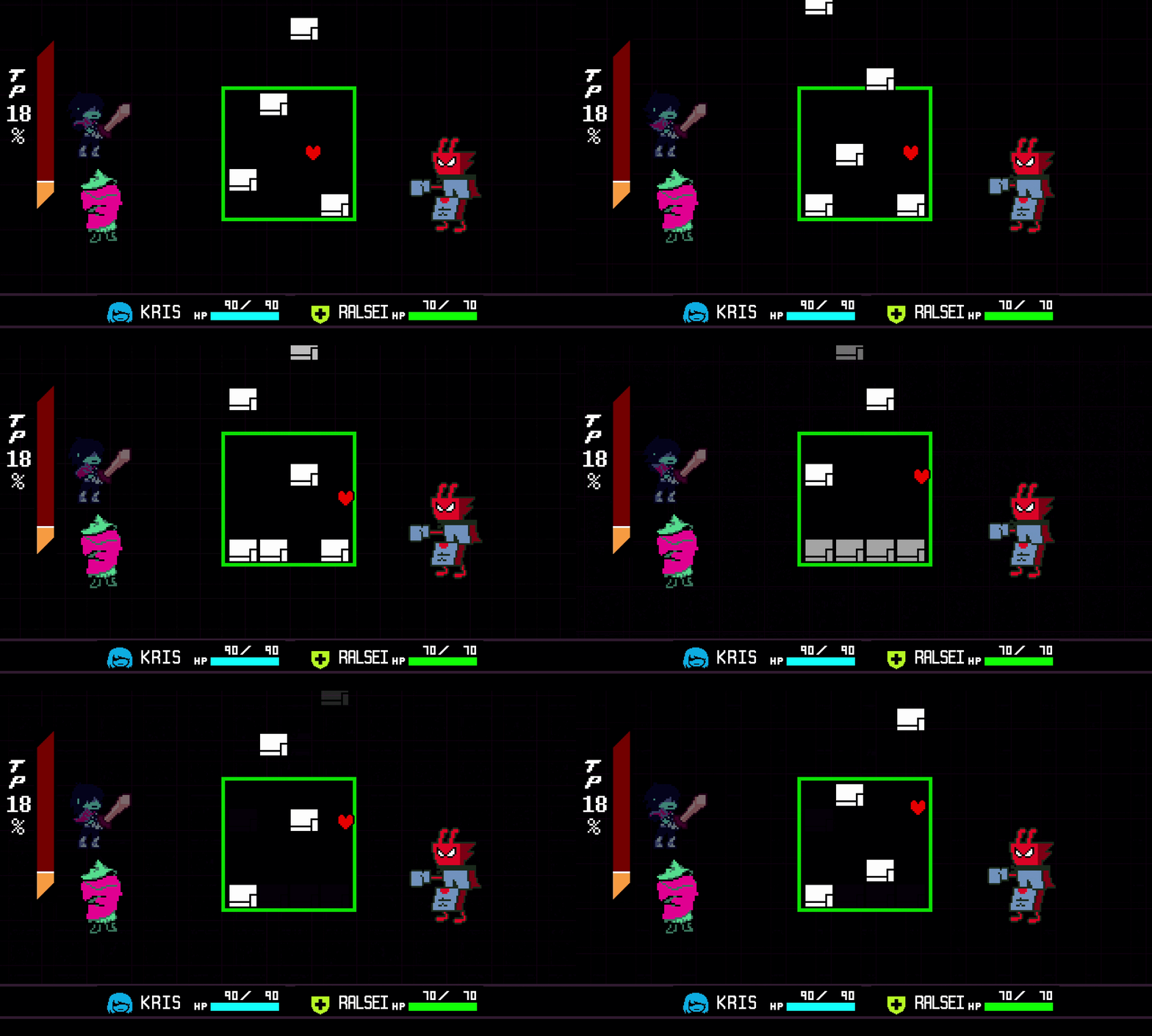
At its core, the battle system is a beautiful bullet hell bonanza. But it’s so much more than that.
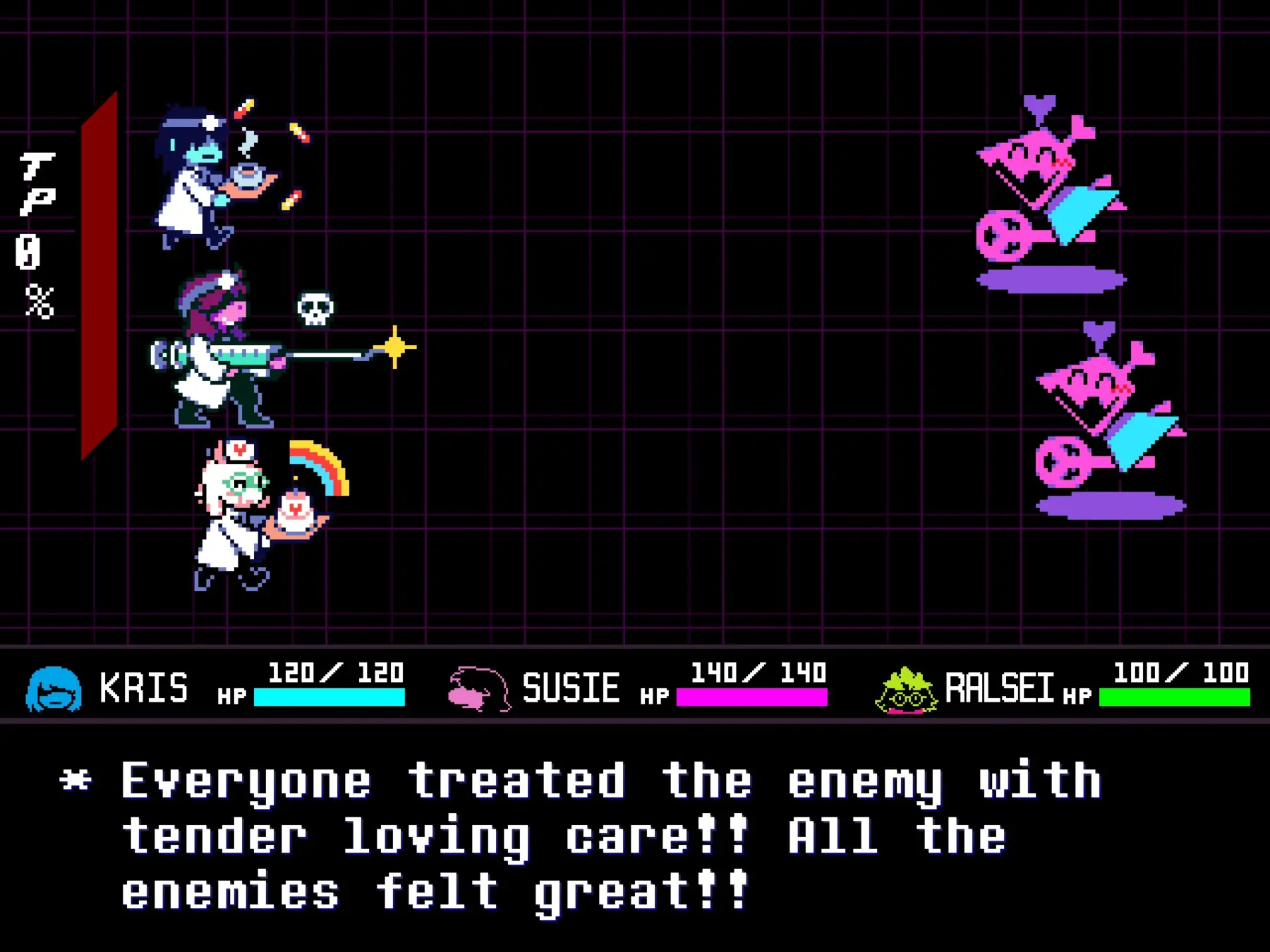
A simplified overview: you can choose to ‘fight’ enemies — using magic or melee — or disavow violence entirely to ‘act’ instead until you gain an enemy’s mercy. Acting looks different for every enemy, and it’s always fun and personality-filled.
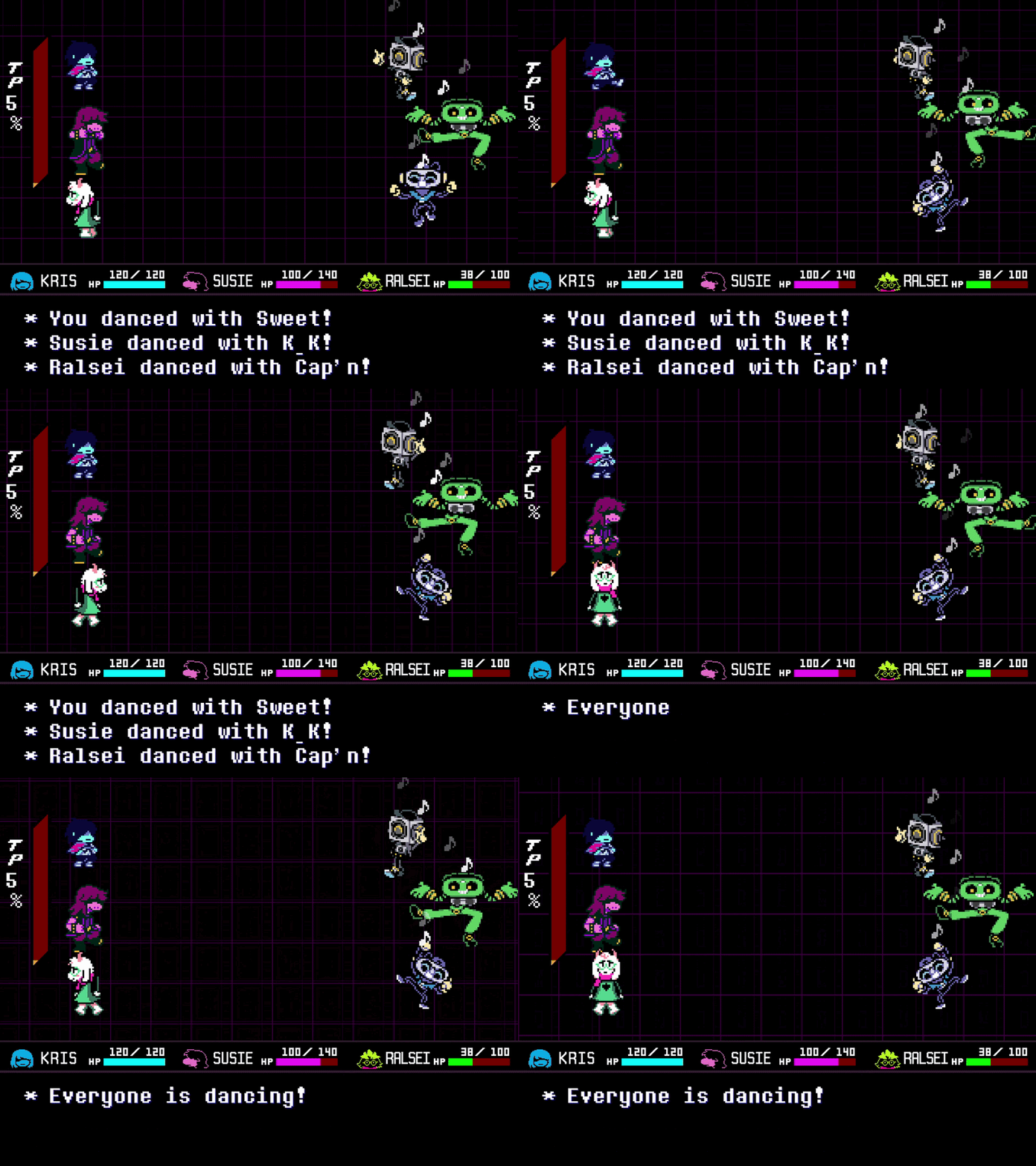
This game is absurdly inventive with its battling, with some really creative ways of utilising the entire battle interface. It never runs out of concepts: gimmick fights and minigames abound as it throws rhythm game mechanics, arcade-style punch-outs, and full-fledged Pac-Man your way as it likes.
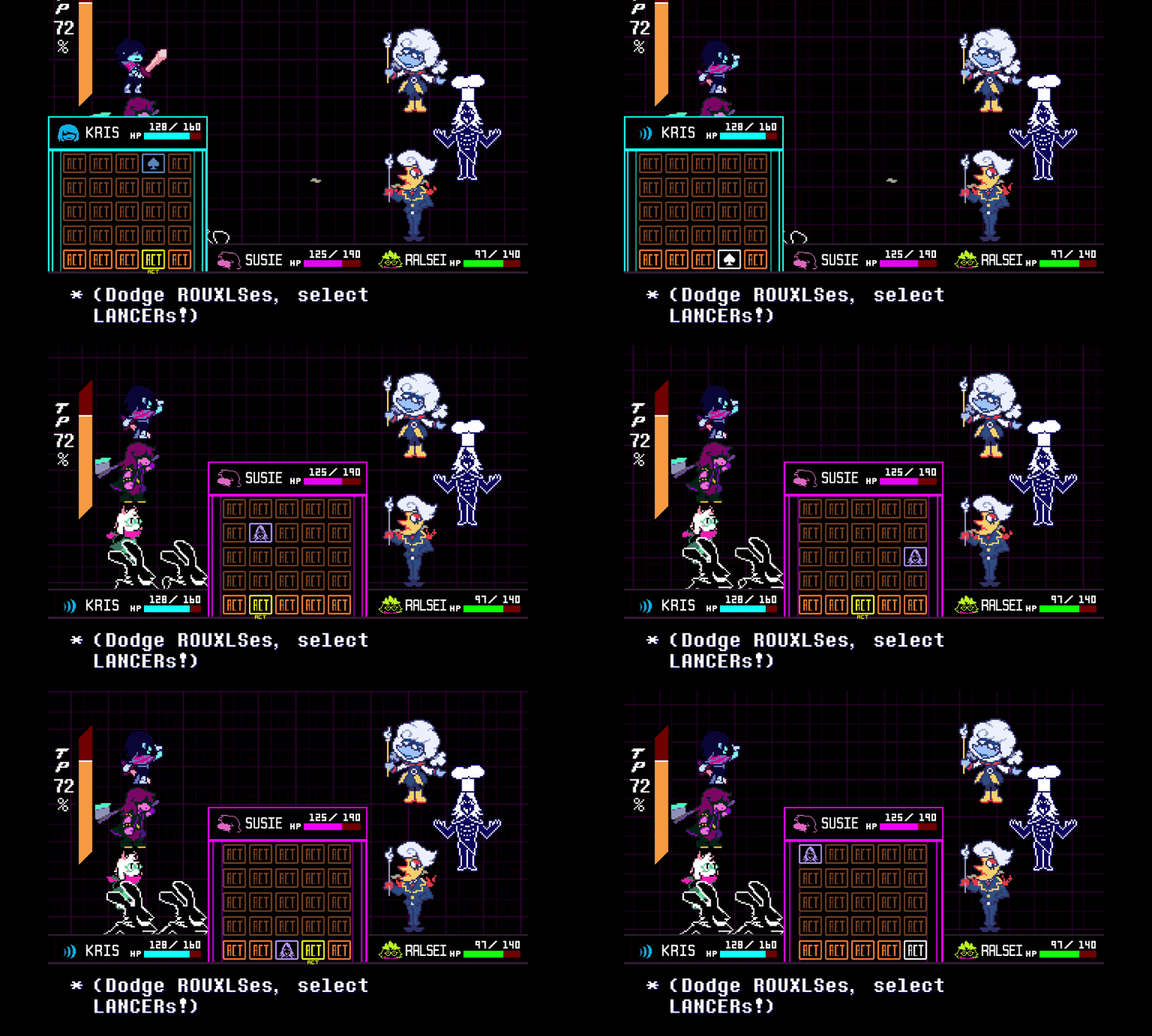
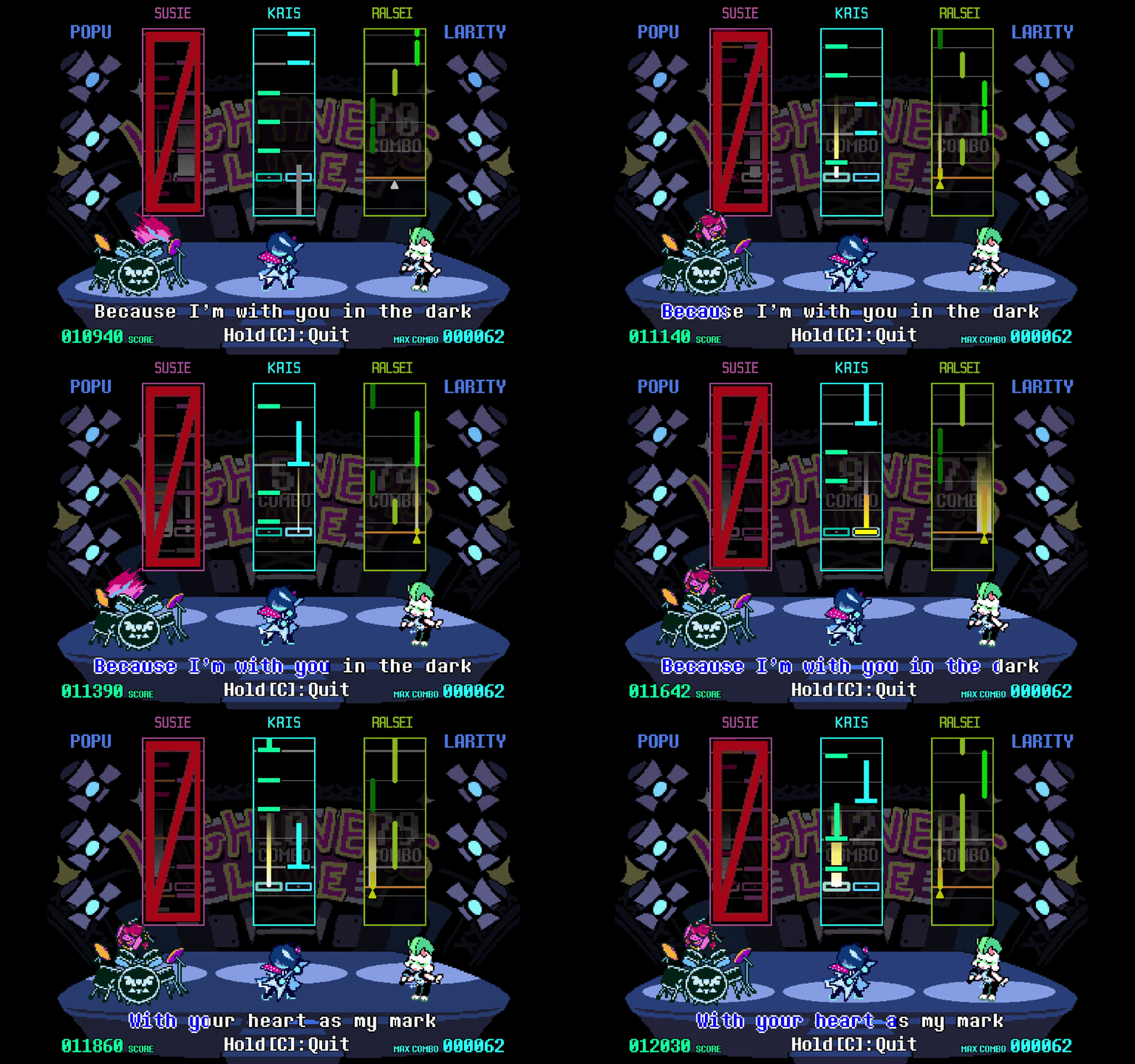
There are also secret bosses to reward exploration — they can be hard, but are super worthwhile if only for bragging rights. The challenge is optional, so you never feel stuck.
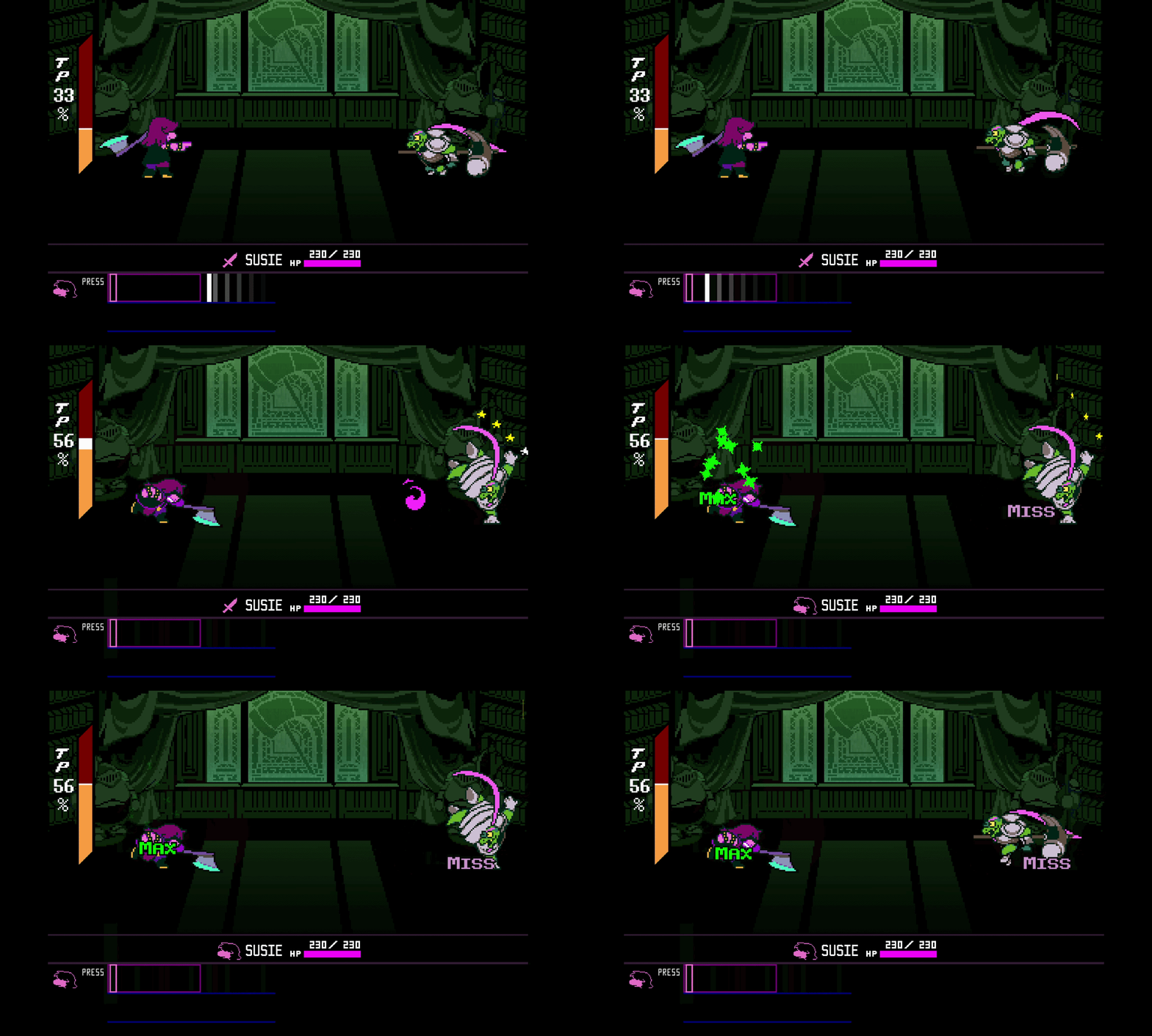
Although the game supposedly only has one ending, chapters have their own ‘routes’ that can permanently affect the later game. I prefer playing mercifully, but fighting your way through is a perfectly valid way of experiencing the story with its own rewards.
Compelling characters with a fantastically human script
Speaking of which, the story absolutely bangs, with phenomenal narrative and comedic pacing and some of the most interesting and rich characters I’ve encountered in a while. I refuse to spoil too much, but for only four chapters, the narrative is substantial and constantly packed with interesting new turns.
Whatever Kris has got going on as a (creepy, mysterious) player character is a class apart from your typical silent protag. And the core cast is especially vibrant to fill Kris’ silence, blooming quickly into multi-dimensional characters with rich inner lives and a great variety of personality.
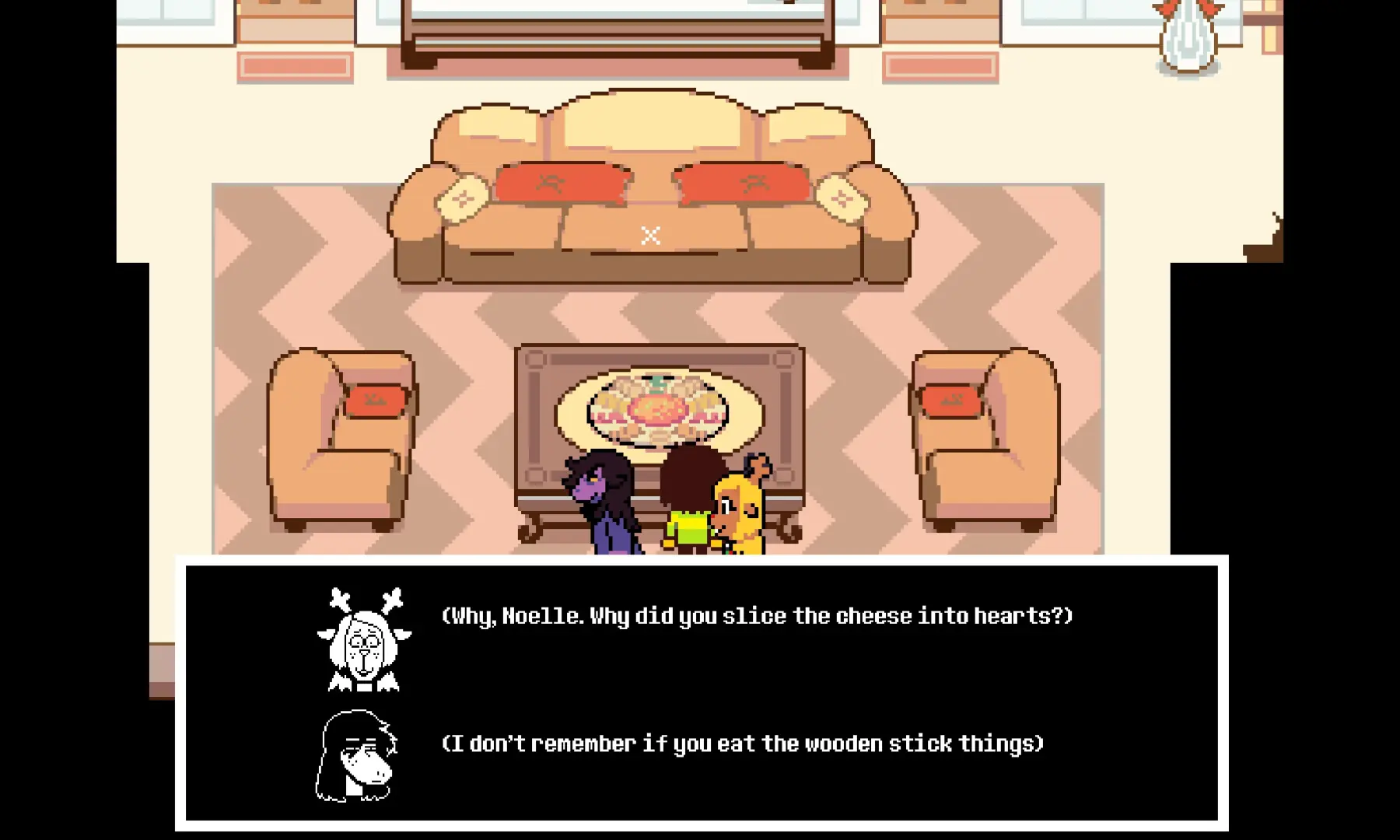
Everyone is really lovable, and the scripting makes them doubly so: even at its most heroes-save-the-day, it never gets too hammy to take seriously. It’s a script that is fun rather than just funny; more than anything, it captures a human side to the characters that evokes the kind of dumb, playful conversations I might have with my own friends.
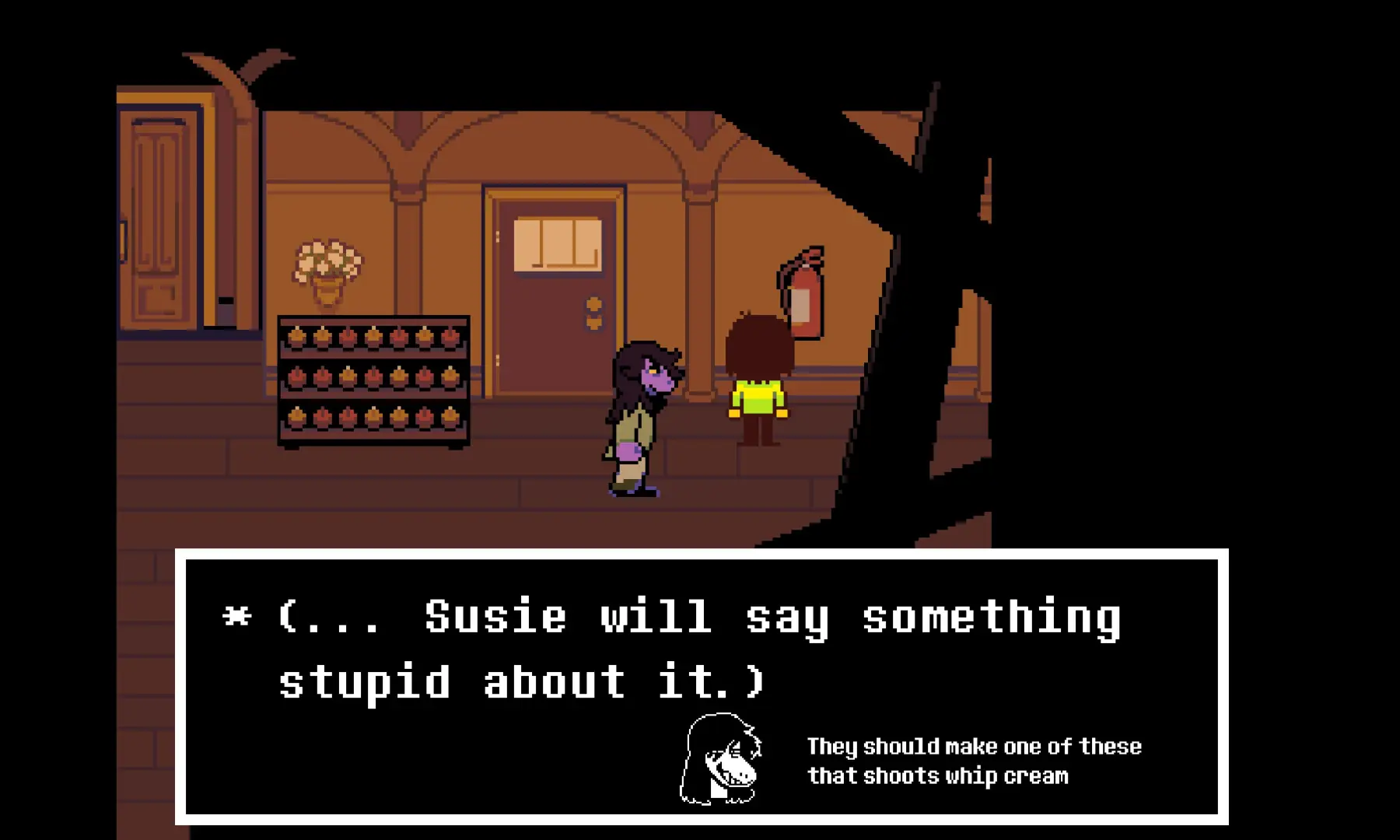
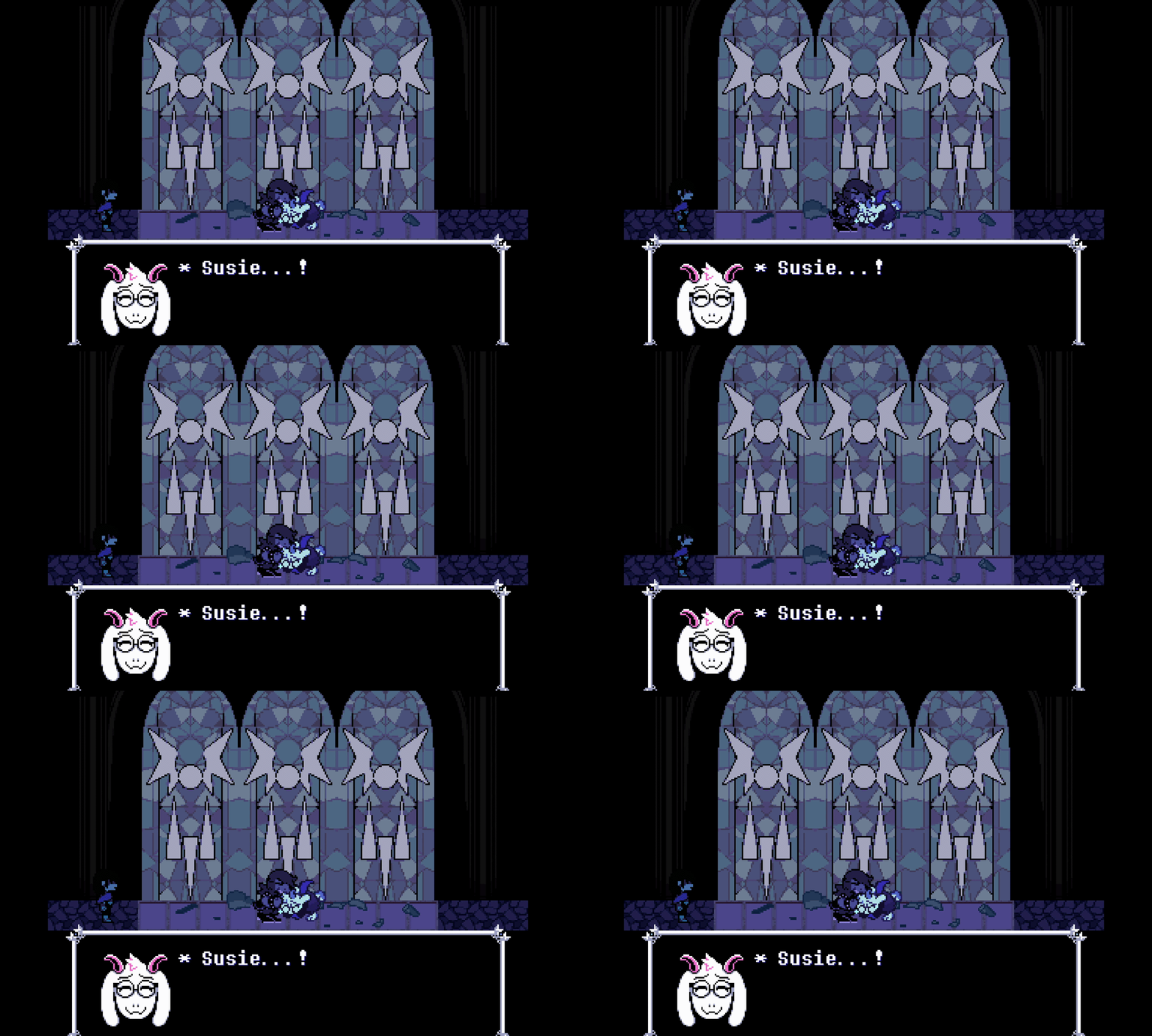
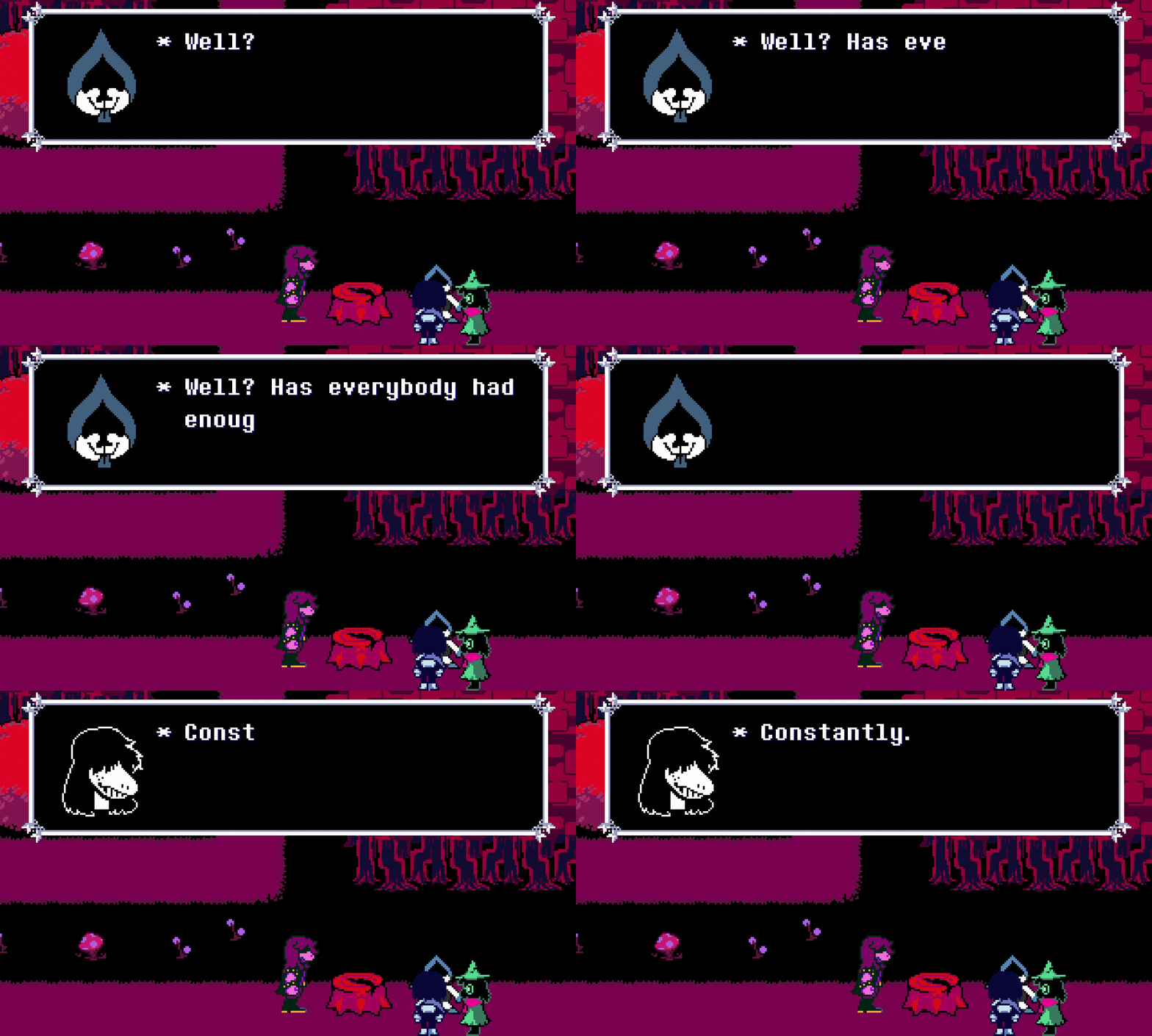
Verdict: PLAY IT
Above all, the game is perfectly cohesive. Art, sound, gameplay and narrative all refract off each other in a dazzling interplay, becoming greater than the sum of their parts. Battles have narrative weight and sound design builds humour; music and visuals work in constant harmony to inform gameplay.
I struggle to find anything bad to say about Deltarune. It’s fantastic, and whatever minor nitpicks I had early on were thoroughly steamrolled by massive improvement later. The fact that it’s not yet fully released can’t count against it (I did choose to play it unfinished); in fact, these four chapters are enough to cement it among the best of the best games I’m going to play this year.
The only thing I would ask of Fox is that he embrace his new stories for what they are: new. Undertale nostalgia may have roped in old fans, but Deltarune shines brightest when it steps out of the other game’s shadow. The adventuring party, inventive game design elements and unique emotional core are easily some of its best assets.
Deltarune’s first four chapters are out on Steam for $12.49, with the first two available as a free demo.
.single.story {
background-image: url(‘https://i.dawn.com/large/2026/02/191917201803c97.gif’);
background-repeat: repeat-y;
background-attachment: fixed;
background-size: 100vw 100vh;
}
body:not(.newskit) .story { color: #ffffff; }
.story a { color: #ff9d1f !important; }
article.box, .story .template__main { background: #000000; opacity: 0.95; }
article.box { padding: 5px; border: 0; }
.story__time { color: #aaa; }
.story__title, .comments {
background: #000000;
padding: 10px;
}