
IT takes courage to fly, whether as a pilot (or as a passenger) in a metal coffin, assembled, as the astronaut Alan Shepherd put it, “from hundreds of parts supplied by the lowest bidder”.
It took courage for IAF Wing Commander Namansh Syal to die with his plane, when his Tejas Light Combat Aircraft malfunctioned on Nov 21 during the Dubai Air Show 2025. (The Sanskrit word ‘tejas’ is used in the Devi Mahatmya and refers to “the divine, fiery energy or brilliance of the gods that coalesced to form the goddess Durga”.)
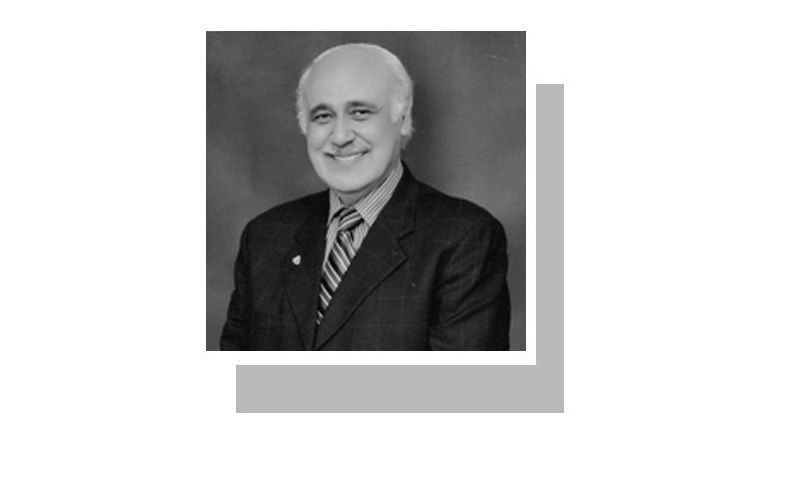
It took courage of a special sort for a retired PAF air commodore (Pervez Akhtar Khan) to pay a tribute to his comrade in wings Namansh Syal. His requiem will never be as famous as other tributes like, for example, Abraham Lincoln’s immortal Gettysburg address of November 1863. It is twice as long as Lincoln’s succinct 271 words, but it deserves a wide audience, for writers in the armed forces are a rare breed. Warrior poets who can distil their emotions into words are even rarer.
In the first year of the 1914-18 war, the young poet Rupert Brooke wrote The Soldier, for which he has remained famous. He died the following year, not in combat but unpoetically, of septicemia (blood poisoning) from a mosquito bite.

Aviation history is replete with loss and poetry.
His contemporary T.E. Lawrence (of Arabia) opened his memoir Seven Pillars of Wisdom: A Triumph (1926) with these lyrical words:“So I drew these tides of men into my hands/ and wrote my will across the sky in stars.”
Another poet of their time — the Irishman W.B. Yeats — took a more prosaic view of war: “I think it better that in times like these/ We poets keep our mouths shut, for in truth/ We have no gift to set a statesman right.”
Two notable British author/ warriors of World War II were Lt-Col Airey Neave and Wing Commander Douglas Bader. Neave succeeded in escaping from the impenetrable Colditz Castle and recounted his feat in his book They Have Their Exits (1953). Douglas Bader, despite having lost the lower part of both his legs, flew in the RAF until he crashed over France in 1941 and was imprisoned by the Germans, also in Colditz Castle. His story — Reach for the Sky (1954) — became a best-seller.
Here, in Pakistan, senior officers have inflicted their memoirs on a credulous readership. Most of these recollections are self-serving. Exceptions are those by lower ranking officers such as Col (later brigadier) Siddique Salik. A student of English literature before he joined the army, Salik wrote with moving candour of his incarceration as a prisoner of war in India after the 1971 war. His books include Witness to Surrender (1977) and in 1984, The Wounded Pride: Reminiscences of a Pakistani Prisoner of War in India (1971-73). He died with his commander-in-chief Gen Ziaul Haq in the Bahawalpur air crash in 1988.
More of us should remember the late Sq Ldr Sayed Sajjad ‘Nosey’ Haider — one of our ace fighter pilots, honoured for his “exceptional leadership, courage and flying skill” when, in 1965, he destroyed “four enemy aircraft, 11 enemy tanks and damaged three tanks”. His distinguished career came to an abrupt end when he told Gen Ziaul Haq some unwelcome truths about the perils of dictatorship. Haider’s candid memoir Flight of the Falcon (2009) deserves better recognition.
And the most recent achievement of his PAF was demonstrated during the aerial skirmish in May this year, when a number of Indian aircraft (Donald Trump swears seven) were downed by Pakistani pilots.
Air Commodore Pervez Khan’s tribute should be viewed against this backdrop. “Courage,” Khan writes, “needs no passport”. He lauds the daring of such pilots: “These are not performances for cameras [at air shows]; they are testimonies of human mastery, flown by souls who accept the unforgiving contract between gravity and grace… .”
He continues: “The sky demands everything and promises nothing. At the moment an aircraft goes quiet, there are no nationalities, no anthems, no flags. There is only the terrible democracy of loss, and families left clutching photographs of men who once touched clouds.” And finally, he reminds us that we are “all of us trying to touch something infinite before gravity reclaims us”.
Lord Tennyson defined the fatal union of obedience and patriotism in these lines, familiar to every schoolboy: “Theirs not to reason why, Theirs but to do and die.” Rupert Brooke, in his less well-known poem Second Best (c. 1908) echoed the same call: “Go to greet/ Death as a friend.”
That friendship ends only when eternity ends.
The writer is an author.
Published in Dawn, November 27th, 2025