
FT says some Gulf states have started internal reviews whether force majeure clauses can be invoked
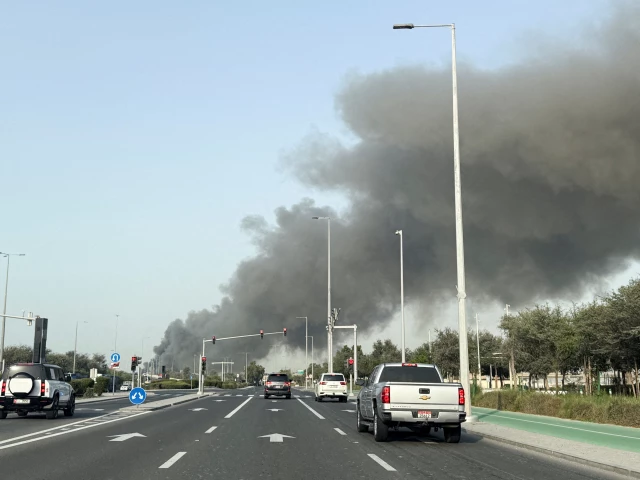
Smoke billows from Zayed port after an Iranian attack, following United States and Israel strikes on Iran, in Abu Dhabi, United Arab Emirates, March 1, 2026. Picture taken with phone. PHOTO: REUTERS
Gulf states could review their overseas investments and future commitments as they consider options to ease pressure on their budgets following the US-Israeli attacks on Iran, the Financial Times reported on Thursday.
FT Exclusive: Pressure on the Gulf states’ budgets could cause them to review their overseas investments and future commitments as they consider options to ease the financial strain caused by the US-Israeli war against Iran. https://t.co/PcoXLREol0 pic.twitter.com/9oYLGfJRPO

— Financial Times (@FT) March 5, 2026

“A number of Gulf countries have begun an internal review to determine whether force majeure clauses can be invoked in existing contracts, while also reviewing current and future investment commitments to alleviate some of the anticipated economic strain from the war,” a Gulf official told the FT.
The FT did not disclose the name or position of the official.

According to Reuters, the Gulf’s economic rise has long rested on two assumptions: that its rapidly expanding cities offered a safe haven in an unstable region and that wealth from uninterrupted energy exports would continue to flow. Recent events have shaken both pillars.
The official told the FT the strain on national budgets could affect a wide range of financial activities, including investment pledges to foreign governments and companies, sports sponsorships, business contracts, and potential sales of existing holdings.
The official said three of the four largest Gulf economies — Saudi Arabia, United Arab Emirates, Kuwait and Qatar — have held discussions about the economic pressures resulting from the conflict but declined to specify which countries were involved.
The official said the review was aimed at easing economic strain, particularly if the war and related costs continue at the current pace.
The official described the review as a precautionary step in response to growing fiscal pressures, including declining energy revenues due to reduced output or shipping disruptions, as well as losses in tourism and aviation. Increased defence spending has also added to the burden.
In the same report, an adviser to a Gulf government told the FT that the possibility of an investment review by wealthy Gulf states had drawn attention in Washington.
Gulf states control some of the world’s largest sovereign wealth funds, and Saudi Arabia, the UAE and Qatar last year pledged to invest hundreds of billions of dollars in the United States following a regional visit by Donald Trump.
Gulf states are also major sponsors of global sporting events and have invested heavily at home to support economic diversification and development.
Read: Trump says not currently considering US ground forces in Iran
Any move affecting investments in the US or other Western countries could increase pressure on Trump to pursue diplomatic efforts to end the conflict.
The oil-rich Gulf states have been pulled deeper into the war launched by the US and Israel against Iran, with Tehran launching retaliatory attacks against Washington’s regional allies.
The conflict has also disrupted maritime activity through the Strait of Hormuz, a critical shipping route through which around one-fifth of the world’s oil and gas supplies pass. Shipping traffic has slowed significantly, and at least ten tankers have reportedly been struck in the Gulf.
Qatar, the world’s second-largest producer of liquefied natural gas, declared force majeure earlier this week after suspending production following a drone strike on its main LNG facility.
Meanwhile, one of Saudi Arabia’s largest oil refineries has also been hit.
Iran has also targeted US bases and embassies in the region, along with airports, hotels, and residential buildings, causing major disruptions to air travel and tourism.
Before the conflict escalated, Gulf states had urged Trump to delay military action and instead pursue a diplomatic approach with Iran. However, they have since faced the impact of Tehran’s retaliatory strikes.
Prominent Emirati businessman Khalaf al-Habtoor echoed frustration in the region in a message addressed to Trump on social media.
سيادة الرئيس دونالد ترامب،
سؤال مباشر: من أعطاك القرار لزجّ منطقتنا في حرب مع #إيران؟ وعلى أي أساس اتخذت هذا القرار الخطير؟
هل حسبتَ الأضرار الجانبية قبل أن تضغط على الزناد؟ وهل فكّرت أن أول من سيتضرر من هذا التصعيد هي دول المنطقة!
من حق شعوب هذه المنطقة أن تسأل أيضاً: هل كان…
— Khalaf Ahmad Al Habtoor (@KhalafAlHabtoor) March 5, 2026
“A direct question: Who gave you the authority to drag our region into a war with #Iran? And on what basis did you make this dangerous decision?” he said on X. “Did you calculate the collateral damage before pulling the trigger?”
He also said Gulf states were expected to play a major role in financing Trump’s plan to rebuild Gaza and support his broader regional peace initiative.
He said Arab Gulf countries had “contributed billions of dollars to support stability and development”, adding that they had the right to ask whether the funds were supporting peace efforts or financing a war that exposed the region to danger.