

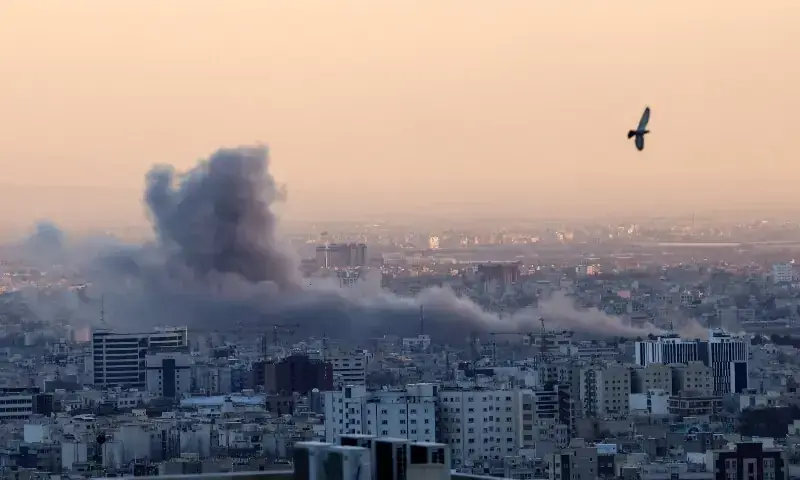

ISLAMABAD: As the conflict in the Middle East escalates, Pakistan’s Planning Commission has cautioned about possible economic impacts on the country, including increased energy costs, strain on remittance inflows, and potential interruptions to exports and financial stability.
The ministry warned that instability in the region, especially around the strategic Strait of Hormuz, could drive up global oil prices and sharply increase Pakistan’s import costs, given the country’s heavy dependence on petroleum imports from the Middle East, according to the Ministry of Planning’s Monthly Development Update for March.
Such developments could also fuel domestic inflation, raise production and freight costs for exporters, and place additional pressure on the exchange rate and fiscal position, according to the report released here on Saturday.
At the same time, prolonged conflict could affect remittance inflows from Gulf countries, where millions of Pakistani workers are employed, and create uncertainty for Pakistan’s exports to the region.

Planning Commission report warns of surge in inflation, import costs, exchange rate pressures

Rising oil prices driven by disruptions around the strategic Strait of Hormuz, through which around 20 percent of global oil passes, could significantly increase Pakistan’s import bill, as petroleum products account for nearly one quarter of the country’s total imports and more than 85pc of these imports originate from the Middle East.
Higher energy prices may also raise domestic inflation and weaken export competitiveness due to increased production and freight costs. In addition, exports to the Middle East, which account for around 11pc of Pakistan’s total exports, may face pressure amid regional disruptions.

Remittance inflows could also be affected if the conflict prolongs, as about 4.5 to 5 million Pakistanis are employed in Gulf countries, which account for more than half of Pakistan’s total remittance receipts. The report notes that the evolving situation could also influence exchange rate stability, investment inflows, and fiscal pressures, underscoring the need for energy diversification, stronger export facilitation, and contingency planning to safeguard overseas workers and maintain external sector stability.
Against this backdrop, the report cautions that rising global geopolitical tensions and uncertainty in major trade and energy routes continue to pose risks to international markets and investor sentiment, highlighting the need for careful monitoring and policy consistency.
Despite these risks, the report states that Pakistan’s development trajectory from FY25 to FY26 remains positive, underpinned by stabilised macroeconomic conditions, broad-based industrial recovery, and sustained fiscal and external-sector performance. With a clear focus on infrastructure, social sectors, governance reforms, and foreign-funded priority projects, development momentum is expected to translate into job creation and inclusive growth.
Planning Minister Ahsan Iqbal said Pakistan’s economy has demonstrated notable stabilisation and is steadily moving on a recovery path during the first eight months of FY26. He noted that the region is currently facing a major oil crisis affecting both developed and developing economies, adding that the coming months will determine the extent of the increase in global oil prices.
He urged citizens to adopt responsible consumption practices, advising them to avoid unnecessary travel and to prefer using a single vehicle instead of multiple vehicles wherever possible.
Published in Dawn, March 8th, 2026