


The Bangladesh Nationalist Party (BNP) and the Jamaat-i-Islami were locked in a tight race on Thursday, early counting showed, after tens of millions of Bangladeshis voted in a pivotal national election — the first since the 2024 Gen Z-driven uprising that toppled long-time premier Sheikh Hasina.
Analysts say a clear outcome is crucial for stability in the nation of 175 million, after months of deadly anti-Hasina protests disrupted everyday life and hit major industries, including the garment sector, the world’s second-largest exporter.
It was the first national election to follow the recent under-30, Gen Z-led uprisings scattered around the world, with Nepal set to hold a vote next month.
Counting began at 4:30pm (3:30pm PKT) at most booths, immediately after polls closed, with clear trends expected around midnight and results likely to be clear by Friday morning, election commission officials said.

Contest between former allies
The race pits two coalitions led by former allies, the BNP and Jamaat, with opinion polls giving the BNP a slight edge.

BNP was leading in 10 seats and Jamaat in seven of the nearly 20 seats for which early trends were available, local TV news stations said. Bangladesh’s parliament, the Jatiya Sangsad, has 300 seats, with 151 required for a simple majority.
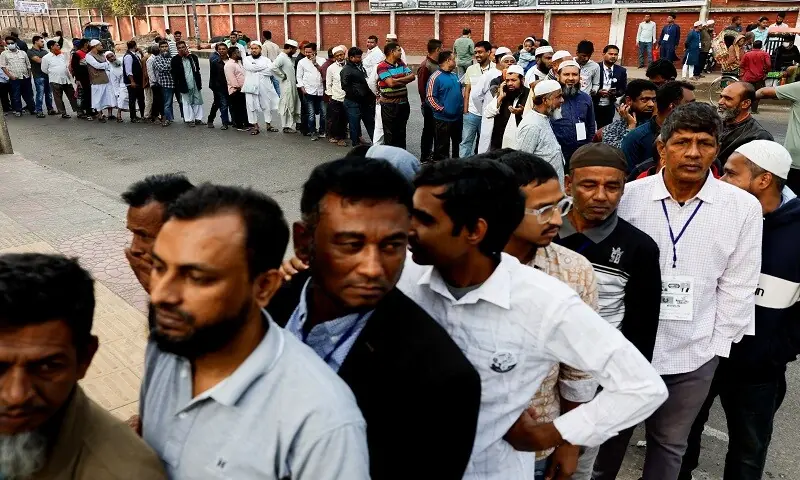
Turnout appeared on track to exceed the 42 per cent recorded in the last election in 2024. Local media reported that more than 60pc of registered voters were expected to have cast ballots.
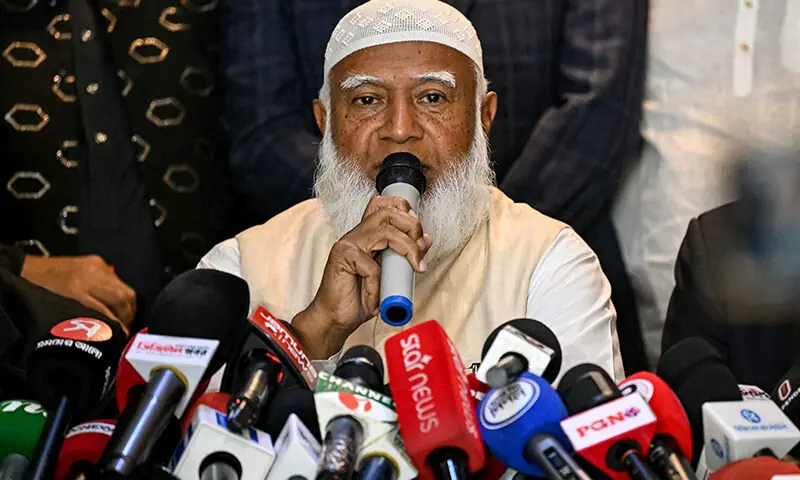
Both prime ministerial candidates — the BNP’s Tarique Rahman and Jamaat chief Shafiqur Rahman said they were confident of winning.
The two men are not related.
“I am confident of winning the election. There is enthusiasm among the people about the vote,” Tarique Rahman told reporters, while the Jamaat’s Shafiqur Rahman called the election a “turning point” for Bangladesh and said the people were eager for change.
Hasina calls vote a farce
Hasina’s Awami League is banned, and she remains in self-imposed exile in long-term ally India, opening the window for China to expand its influence in Bangladesh as Dhaka’s ties with New Delhi fray.
Elections under Hasina were frequently marred by boycotts and intimidation, critics say.
In a statement sent to journalists on WhatsApp, Hasina denounced the election as a “carefully planned farce”, held without her party and without real voter participation. She said Awami League supporters had rejected the process.
“We demand the cancellation of this voterless, illegal, and unconstitutional election … the removal of the suspension imposed on the activities of the Awami League; and the restoration of the people’s voting rights through the arrangement of a free, fair, and inclusive election under a neutral caretaker government,” she said.
Alongside the election, a referendum was held on a set of constitutional reforms, including establishing a neutral interim government for election periods, restructuring parliament into a bicameral legislature, increasing women’s representation, strengthening judicial independence and a two-term limit for the prime minister.
More than 2,000 candidates, including many independents, were on the ballot and at least 50 parties contested — a national record. Voting in one constituency was postponed after a candidate died.
Long lines of voters, heavy security
There were no reports of major violence.
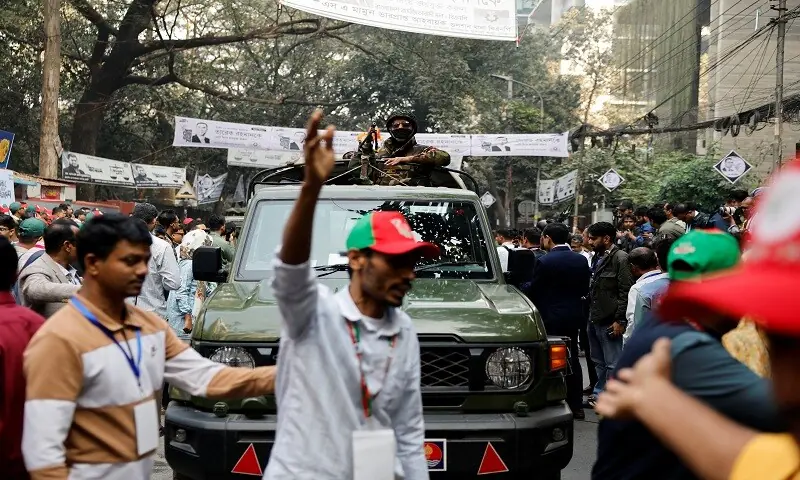
Around 958,000 personnel from the police, army and paramilitary forces were deployed throughout the country, the Election Commission said. Police and army personnel were stationed outside most polling booths.
“I am feeling excited because we are voting in a free manner after 17 years,” Mohammed Jobair Hossain, 39, said as he waited in line. “Our votes will matter and have meaning.”
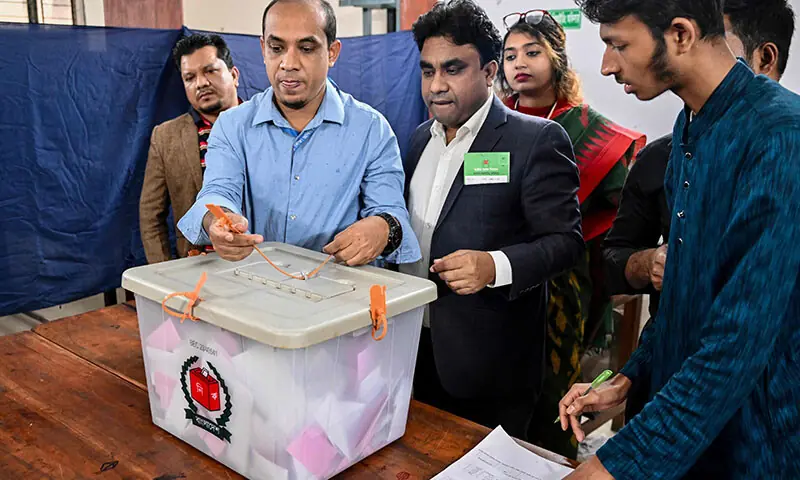
Many voters echoed that sentiment, telling Reuters that the atmosphere felt freer and more festive than in previous elections.
Kamal Chowdhury, 31, who works as a driver for a company in Dhaka and travelled to his hometown in the eastern district of Brahmanbaria to cast his vote, said: “It feels festive here.”
Outside a polling booth in Dhaka, where BNP chief Rahman and head of the interim government Muhammad Yunus voted, policemen were on horses with saddle blankets proclaiming: “Police are here, vote without fear.”
President Zardari hopes for peaceful process
President Asif Ali Zardari said he hoped for a peaceful election process in Bangladesh, according to a post by the president’s official account on social media platform X on Thursday morning.
“President Asif Ali Zardari extends best wishes to the people of Bangladesh as over 127 million voters head to the polls today to elect representatives to 300 seats,” the statement said.
He expressed hope for “a peaceful process that strengthens democracy and stability”, the post added.