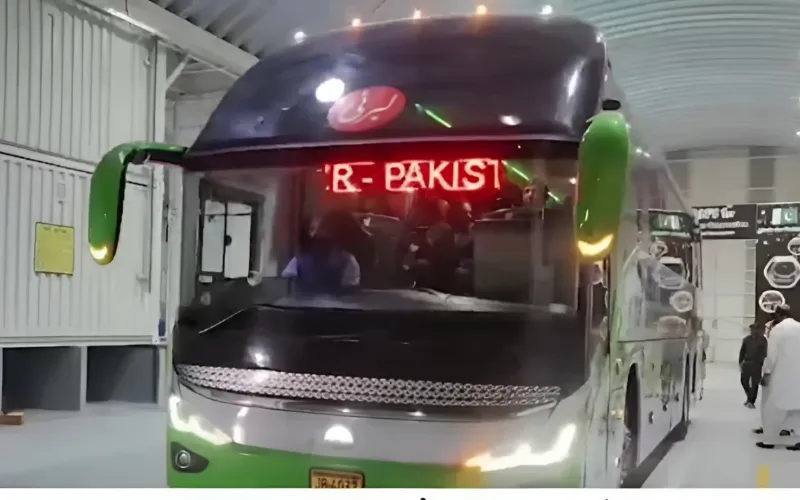

Engineers at Liberty Power Plant Dharki, under the aegis of Asia Pak Investments, have undertaken a pioneering feat by retrofitting a diesel-powered bus into an electric vehicle a first of its kind in Pakistan.
While lauded as an environmentally progressive initiative, the project remains symbolic rather than systemic, raising questions about scalability, cost-efficiency, and long-term viability.
The bus reportedly achieves a range of 415 kilometers per charge and has traversed routes to Islamabad and northern regions. Yet, skeptics caution that the conversion of a solitary vehicle offers marginal impact on the broader environmental and urban transport challenges confronting Pakistan.
The inauguration was presided over by Mujahid Pervez Chattha, Chairman of Liberty Power Plant, who extolled the engineers for their “commitment and technical acumen.”

However, the reliance on local conversions, as opposed to purpose-built electric buses, underscores the piecemeal nature of the initiative and highlights the gap between innovative demonstration and scalable public transit reform.

CEO Imran Ahmed and Director Faisal Siddiqui also commended the engineers’ technical prowess. Siddiqui acknowledged that while Liberty Power Plant is incrementally electrifying its fleet, retrofitting existing diesel buses is incremental at best and unlikely to match the efficiency, reliability, and durability of commercially manufactured electric buses.
Ahmed asserted that the bus’s technical specifications are comparable to imported models. Yet, independent observers contend that retrofitted vehicles inherently carry operational limitations and may struggle under the rigors of high-frequency public service.
The bus, sanctioned by the Road Transport Authority, boasts 45 seats, full air-conditioning, and a single-charge range of 415 kilometers.
Despite these specifications, the initiative remains largely demonstrative, revealing that Pakistan’s foray into electric public transport is still in its nascent and experimental stage.
The ceremony concluded with engineers receiving certificates of recognition. While their accomplishment is technically commendable, analysts warn that this singular success does not equate to a sustainable or transformative solution for the country’s transportation sector.