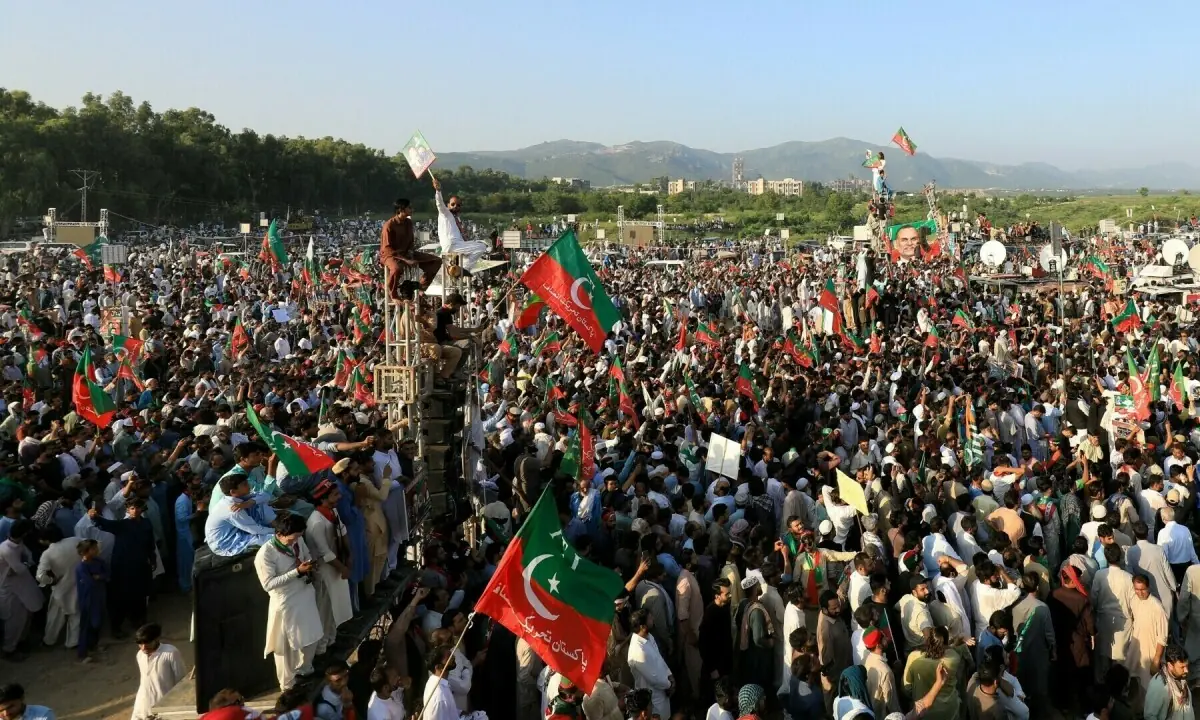


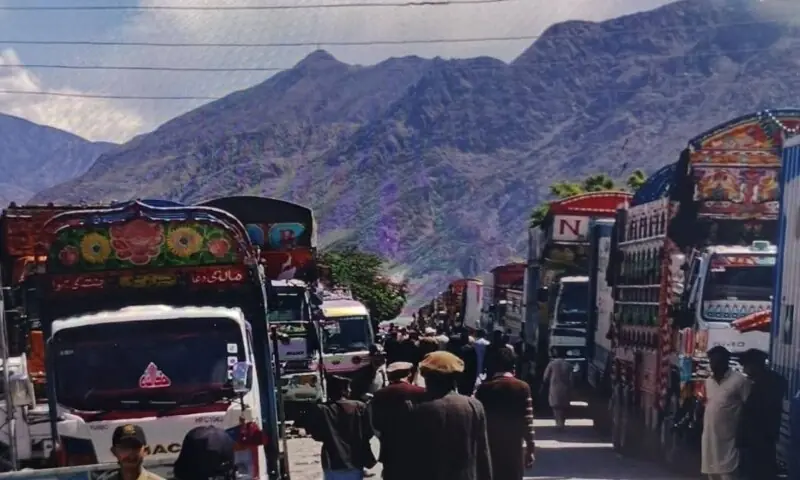
Protesters called off their sit-in blocking the Karakoram Highway (KKH) in the Thore area of Diamer on Tuesday morning and reopened the highway for traffic after successful negotiations with the district administration.
Police said that stranded passengers and vehicles, which had been stuck since Sunday, started moving towards their destinations from both sides after the restoration of traffic on the KKH.
Maulana Hazratullah, the chief organiser of the protest, said that after negotiations with government representatives and the district administration, a time frame has been agreed for the implementation of an agreement signed in 2025 with the Diamer-Bhasha dam land-affected people.
He said, hopefully, the implementation of the 2025 agreement will now be ensured.

Since Sunday, people affected by the Diamer-Bhasha Dam have been staging sit-ins at Thore and other areas of Diamer, blocking the KKH and demanding the implementation of the agreement.

Hundreds of passengers, including tourists and patients, were stranded. Despite several rounds of negotiations with the administration and the GB caretaker government, the protesters refused to reopen the road.
The organisers said the final round of negotiations early on Tuesday was successful, and the protesters called off their sit-in, reopening the KKH for traffic.

A sit-in was also staged in Chilas, the district headquarters, where the highway was blocked near Masjid Aqsa.
In a statement issued on Monday, a spokesperson for the Water and Power Development Authority (Wapda) said the authority was undertaking comprehensive measures not only for the construction of dam project but also for the socio-economic development of the local population under a well-defined and integrated strategy.
He said Wapda remained fully committed to implementing the 2025 agreement and that progress was continuing steadily in coordination with all stakeholders. He further added that priority was being given to employing local youth on the project, while contract employees recruited through proper testing and interviews had been regularised.
The spokesperson emphasised that large-scale projects of this nature require time for approvals and execution, urging the public to cooperate and avoid creating obstacles. He warned that such disruptions could delay the project — which is of national importance — and add to the burden on the national exchequer.
The Wapda official said that in order to address issues faced by the Diamer district administration and resolve the legitimate demands of the local population, Wapda Chairman retired Lt Gen Muhammad Saeed had earlier convened an immediate meeting of the Supreme Court’s Diamer-Bhasha and Mohmand Dams Implementation Committee, where key decisions were taken. These recommendations have also been approved by the federal ministerial committee.
Under the 2025 agreement, scholarships have been awarded, schools and colleges established, and funds allocated for higher education. Several development projects, including in health, water supply and sewerage, have also been initiated.
The protesters’ 31-point charter of demands includes 80 per cent royalty from the Diamer-Bhasha dam and 30pc from the Dasu Dam for Gilgit-Baltistan, free electricity for Diamer district, subsidised power for the rest of GB, compensation for 18,000 acres acquired for the dam, and a financial package for the remaining 3,000 affected families.
Other demands include allocation of commercial and residential plots, development projects in education, health and sewerage, employment of local people from grade one to 16, and regularisation of contingent and daily-wage workers.
In February last year, Prime Minister Shehbaz Sharif formed a seven-member committee to address the grievances of those affected by the project amid an earlier sit-in in Chilas.
Meanwhile, GB caretaker Information Minister Ghulam Abbas said the government was committed to protecting the rights of the dam-affected people and resolving their legitimate demands on a priority basis. He said caretaker Chief Minister retired Justice Yar Muhammad was fully aware of the sensitivity of the issue and was taking it up with the federal government.
Abbas described the matter as primarily between Wapda and the affected people but said the GB caretaker government was playing an active role in resolving it. He also appealed to protesters to refrain from blocking highways in the public interest, noting that road closures caused severe hardship to citizens, travellers, the elderly and children, and inflicted damage on tourism and the regional economy.