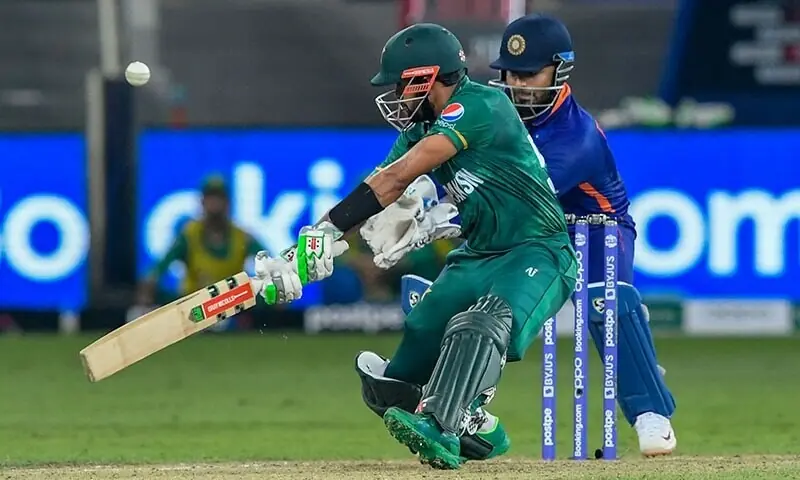

NOTHING is certain in life, wrote Benjamin Franklin, except death and taxes. He was wrong. There is one other certainty in life, and that is a Pakistan-India match at an ICC tournament.
This truism was close to being debunked this year, but the bountiful stars aligned to deliver us a contest that is — to borrow a phrase from a leading Chinese car-maker — beyond your dreams.
Suddenly, the match is bigger than ever and a focal point of international attention. Pakistan is resurgent on the field; the progression in performance is clear.
Meanwhile, the Pakistan Cricket Board (PCB) has created a mini-political earthquake off the back of the ‘un-boycott’, as it were. The question is whether Pakistan can back up its political game on the cricket field.

The country must set out a longer-term strategy that can maximise commercial value of its 200 million population, and turn its erratic team into one of the world’s strongest

The ‘un-boycott’ gave each interested party something to walk away with. Bangladesh will not be punished; on the contrary, it is being rewarded with an ICC tournament of its own.
India has secured its cricketing border with Pakistan and satisfied its bankers. Pakistan stood up for Bangladesh, avoided harming its enduring ally Sri Lanka, and extracted some positive rhetoric from the ICC.
Some argue that the boycott was never a serious one; just a piece of elaborate theatre. Others insist that the PCB has exposed what is rotten in the state of international cricket.
India may think itself an emperor of cricket, believe others, but it is now ruler without a Lunghi.
India’s ‘questionable leadership’
Amid the euphoria, it also important to examine Pakistan’s concrete gains from the boycott threat.
The reality is that India always held the whip hand, being the most financially powerful cricket board in the world. That power allows it to control international cricket through the ICC.
The world’s other so-called leading cricket nations, notably England and Australia, all bend the knee to India. Money talks, cricket walks, and integrity is benched.
Pakistan took the Bangladesh opportunity to draw attention to India’s malign rule of international cricket. Its options were few and it had little support; only holding the trump cards of either withdrawing from the tournament, or refusing to play against India in the $200m contest.
Pakistan spoke openly about India’s unjust domination of international cricket — a reality that everybody knows, but nobody dares to speak up about. Perhaps triggering the conversation is an achievement in itself, but in concrete terms, Pakistan hasn’t gained much here, although it may stand to reap benefits later.
Thinking more positively, talks are now promised about fairer distribution of tournament revenue among states. Those talks might also deliver some future concessions — albeit unspecified — in Pakistan’s favour. That would be a good outcome.
Another talking point is the restoration of bilateral series between Pakistan and India. This would be a veritable win and India has no credible argument to oppose it, other than its domestic populist politics.
India is clearly in the wrong, and the outcome of those deliberations will deliver a definitive verdict on the credibility of India’s leadership of this international sport.
What Pakistan must do next
Pakistan may have not won this battle outright, but it might yet make advances in the war. However, the country has now restored its financial prospects by fulfilling its commitments in relation to the ICC tournament. It also pays due reverence to co-host Sri Lanka, who have unfailingly stood by Pakistan’s side through decades of struggle.
What we also come away confirming is that the strategy for Pakistan, if it seeks real change, remains two-pronged. You can only hold sway in the world of cricket if you sit on a lucrative commercial market, or if your team is one of the most powerful – ideally both. That is the strategy the PCB must pursue, but is one that was never seriously adopted before, because of politics and short-termism.
There are two ways this scenario ends up well for Pakistan. First, if the ICC does make changes and offers concessions after the tournament — this is, admittedly, a long shot. Negotiations will need to take place, and perhaps by maintaining a firm position against India’s twisted rule of international cricket, momentum and support for genuine change will grow among other nations.
Second, Pakistan must grit its teeth and do some hard thinking to set out a longer-term strategy that will lead to maximising the commercial value of its 200 million population, and at the same time turn its erratic, and sometimes disappointing, team into one of the world’s strongest.
There must be no compromise on either of these strategic agendas — and Pakistan can begin this new era by defeating India in Sri Lanka on Feb 15. Pakistan needs a big performance to back up its big rhetoric. This is the time; this is the hour — and a victory against India would certainly be an outcome beyond the recent dreams of Pakistan’s supporters.
Published in Dawn, February 12th, 2026