
THE clouds of ambiguity still hang over Pakistan’s diplomatic position amid the escalating tensions in the Gulf triggered by the joint US-Israeli attack on Iran.
Although Islamabad has signalled what its position might be if forced to choose between Saudi Arabia and Iran, the unfolding crisis continues to test Pakistan’s delicate diplomatic balancing act with both countries. As Tehran responded to the strikes with retaliatory attacks on its Arab neighbours, the confrontation has quickly moved beyond a regional dispute, evolving into a crisis with broader global implications.
Recently, Prime Minister Shehbaz Sharif and Chief of Defence Forces Field Marshal Asim Munir visited Saudi Arabia, where they met Crown Prince Mohammed bin Salman in the presence of his aides National Security Adviser Musaed Al-Aiban and chief of the intelligence directorate, Khalid Al-Humaidan.
As usual, the formal statement issued by both sides noted little other than their close bilateral ties and exploring ways to further strengthen and promote cooperation across various fields. They also discussed regional developments, particularly the repercussions of the ongoing military escalation on the security and stability of the region and the world. However, the Saudi statement added that the leadership of both sides also “reviewed coordinated efforts in this regard”.

This part of the statement could be interpreted as validation of an earlier remark by the prime minister’s spokesperson for foreign media, who said that Pakistan would stand with Saudi Arabia “before it is needed” and “no matter what, no matter when”.

Pakistan’s real leverage lies in maintaining open communication channels with Iran.
However, Pakistan is maintaining its communication channels with the Iranian leadership as well. As per the record, the Pakistani and Iranian foreign ministers have talked to each other three times, and even before the prime minister talked by telephone with Iranian President Masoud Pezeshkian.

Apparently the impression is given that Pakistan is facilitating communication between Iran and the Saudis; it is perhaps more apt to say that Pakistan is trying to minimise tensions between the two countries so that Iran does not hit Saudi interests. Pakistan would have to choose a side, which obviously would be Saudi Arabia if the confrontation increases between the Saudis and Iranians. Strategically, this situation suits Israel, which is more than willing to expand the scope of the war and find the Arabs on its side, but it is also a test of the new Iranian leadership and especially the Islamic Revolutionary Guard Corps (IRGC) to see how far up they can go on the ladder of escalation.
Nothing is clear about the future course of events in West Asia. The political haziness surrounding the crisis may prove more dangerous than the war itself. While the US and Israel imposed the conflict on Iran, the IRGC appears to have pushed the confrontation towards a full-spectrum level. Yet this escalation seems to lie primarily in Iran’s domain; for Washington, it remains another global strategic venture, with Israel acting as its key partner in testing the limits of its military capabilities.
Iran may be able to maintain a certain level of deterrence for some time. However, its actions risk turning much of the region against it and could prompt regional states to adopt measures to reduce Tehran’s leverage over the Strait of Hormuz.
For Pakistan, the uncertainties of the scenario matter not only for its dependence on the Gulf for workers’ remittances and its energy and economic needs but also for defence cooperation in the region, as the situation will affect Pakistan’s border regions and sensitive projects such as CPEC and Gwadar.
Strategic clarity is important to secure maximum interests in a chaotic situation, and this is what Pakistan appears to be pursuing as it prioritises its relationship with Saudi Arabia. However, Pakistan is still engaged in a form of hedging strategy or calibrated diplomacy as part of its broader balancing approach. Domestic pressure, mainly from a religious segment influenced by Shia groups, is a real concern for Pakistan, as some of these groups have had associations with the IRGC, which could potentially be used to create internal divisions in the country. Such a scenario would obviously have a political cost.
These are the challenges Pakistan is trying to balance, and this became evident during the recent UN Security Council debate on the Iran war, where Pakistan’s support for two seemingly opposing resolutions, one presented by Bahrain and the other by Russia, appeared paradoxical. While Pakistan backed Bahrain’s resolution to express solidarity with Bahrain, Kuwait, Oman, Qatar, Saudi Arabia, the UAE and Jordan, following what it described as “unprovoked attacks”, it also supported the Russian draft that called for halting military operations, reducing tensions and initiating negotiations. Pakistan’s representative to the UN stated that the conflict should never have started and that both resolutions were consistent with Pakistan’s position.
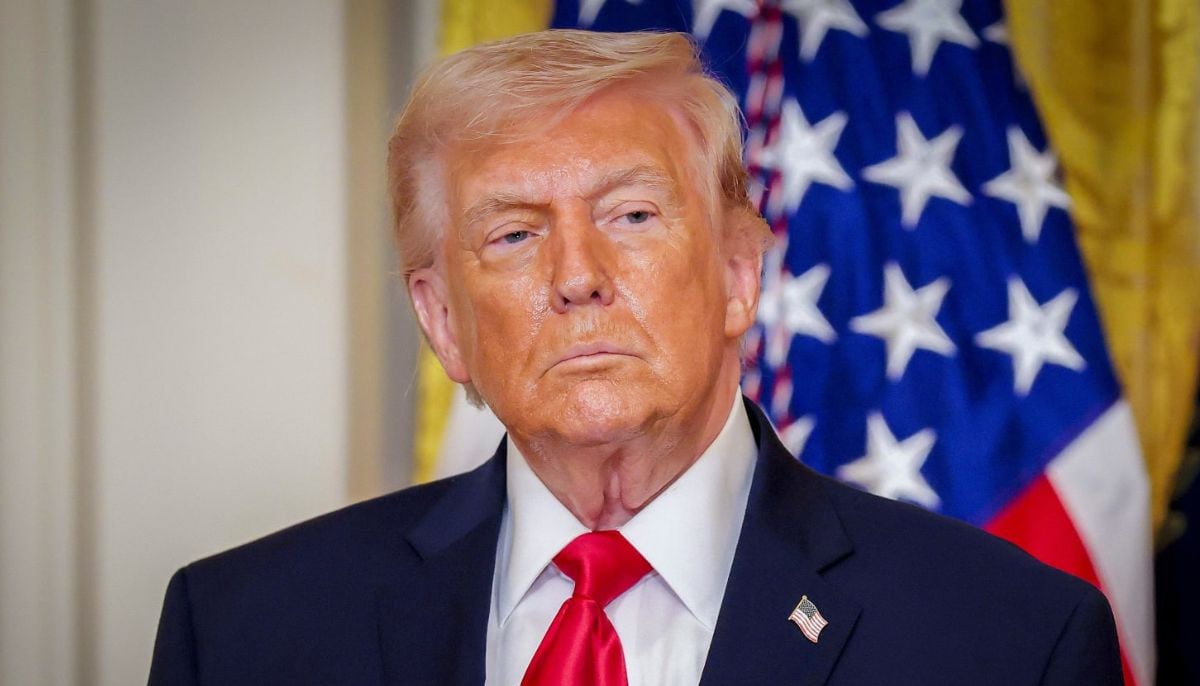
Many Pakistani analysts suggest that Pakistan should offer a conciliatory role to the Gulf nations. However, this war was imposed by US President Donald Trump and strategically manoeuvred by Israel. Pakistan does not possess the diplomatic capital to offer mediation, something even the UN, China and Russia may struggle to achieve, while India — once a close ally of Iran — is also maintaining a strategic silence. Pakistan’s real leverage lies in maintaining open channels with Iran and potentially serving as a post office among Gulf states, as, in an atmosphere of mistrust, they all require a secure line of communication.
However, if tensions escalate and the Arab states decide to retaliate, this communication channel may not hold for long, as Pakistan could then become an active participant in the conflict, especially after assuring Saudi Arabia that it would stand with the kingdom even “before it is needed”.
The writer is a security analyst.
Published in Dawn, March 15th, 2026