Aurangzeb says govt to move towards providing targeted relief amid global fuel supply concerns

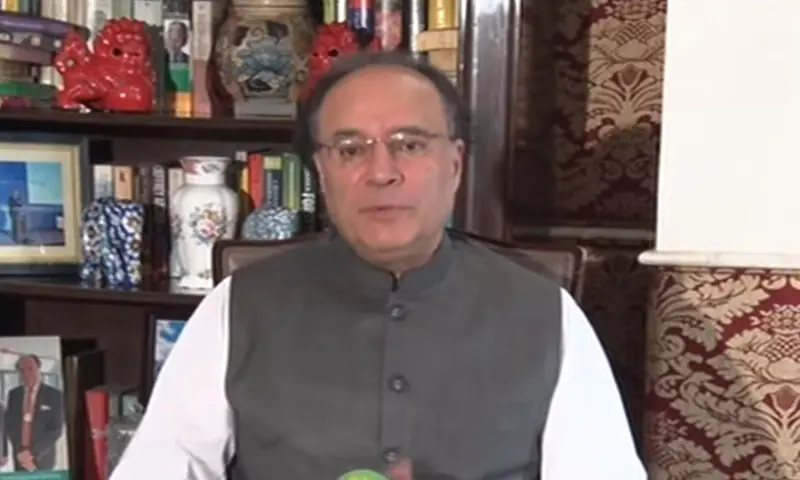

Finance Minister Muhammad Aurangzeb on Sunday said that the government was moving towards “targeted relief” so that the benefit is passed onto the deserving.
Aurangzeb’s remarks came amid spiking global fuel prices caused by the US-Israeli war on Iran.
Delivering a televised address, the minister referred to Prime Minister Shehbaz Sharif’s address to the nation on Friday night, where the latter mentioned the steps taken to minimise the burden on the public
“He spoke clearly and said that the government has taken on Rs69bn of the burden using our own fiscal resources,” the finance minister said.

“Yesterday, my honourable colleagues in the cabinet, Petroleum Minister Ali Pervaiz Malik and Information Minister Attaullah Tarar, had a detailed talk,” he said.

“Ali Pervaiz Malik sahib especially said in detail that all our efforts are focused on making sure we have supplies, so that we have no supply disruption in the chain [and] we can ensure the uninterrupted supply of petrol, diesel and other molecules,” Aurangzeb said.
The finance minister added that daily meetings were being convened to look at procurement and its sources of procurement, logistical issues, maritime affairs and diplomatic efforts, noting that on that basis, the government believed the country was “in a good place until April in terms of the supply situation”.

“We are hopeful that the war and regional conflicts will end soon, but as I said in my very first conference with [Deputy Prime Minister and Foreign Minister Ishaq] Dar sahib and Ali Pervaiz sahib, hope is not a strategy,” Aurangzeb added.
“However, the manner in which matters have escalated, especially with how energy infrastructure has been hit, it is possible that the situation may carry on for weeks or, God forbid, months, until this disruption does not end.”
In view of the current situation, the finance minister stressed the need to move towards more sustainable solutions.
On the premier’s instructions, the government was working to minimise the burden on the public, Aurangzeb added, noting the reality that Pakistan’s resources were not infinite.
“This is why we need to pursue a structural solution and take firm, lasting steps to move this situation toward permanence, given our resources,” he stated.
“As a result, we are now in active planning and various steps are being considered. The petroleum and information ministers noted that we will move toward demand management and conservation, as well as targeted relief, so that relief is passed on to deserving people.”
Aurangzeb said that the petroleum, IT, and finance ministries, among others, were cooperating to develop more structural solutions.
He expressed gratitude to the public for “brilliant recommendations” over the past seven to 10 days on price transmission and the rationing of available fuel.
“I must admit, some of these recommendations can really lead us towards sustainable growth once this shortage ends,” Aurangzeb emphasised. “As we say, never let a good crisis go to waste.”
Calling some of the suggested measures “very well thought through”, the finance minister pledged that the government would consider them as some of the “important and absolutely critical” would be announced and rolled out.
“I just want to say that the conversation is presently focused on supply and pricing, and rightly so. But this does not mean that the wider economic situation is being ignored,” he clarified.
Aurganzeb added that ministers of commerce and maritime affairs, as well as the State Bank governor, were also present at daily meetings.
“We are looking at the impacts on trade and industry if this situation continues, as well as wider economic impacts, whether it’s our current account, balance of payments, [or] forex reserves,” he explained.
“We are planning scenarios for all of these and planning proactively. If you have any further recommendations, send those in, and we will take them into account over the next few weeks and the next few months.”
Concluding his address, Aurangzeb stressed the need for the private sector to “lead this country”, noting that austerity measures and conservation efforts adopted by the federal and provincial governments and state-owned enterprises had yet to be applied by private entities.
“I again request my friends, brothers and sisters in private sector leadership, please step up,” he said.
“We have only spoken in an advisory capacity thus far, but we have to come together and lift this country out of this crisis.
“I am very, very confident that if the public sector and private sector come together, we will come out of this crisis stronger as a nation and as an economy.”
Two weeks ago, the government announced unprecedented austerity measures to cope with the fuel crisis triggered by the US-Israeli war on Iran after hiking petroleum products’ prices earlier this month.
The measures included a 50 per cent cut in fuel allowance for official vehicles and a four-day work week. It was also decided that 50pc of staff in the public sector would work from home; however, those providing essential services are exempt.
On Thursday, the government had appealed to the public to adopt fuel-conservation measures to “avert the risk of petroleum products’ supply getting affected in the coming days”.
A day later, Prime Minister Shehbaz Sharif said that he had rejected recommendations for further increasing the prices of petroleum products. However, he said he had instructed relevant ministries to devise a mechanism to ensure that the “relief” was restricted to only the deserving and needy.