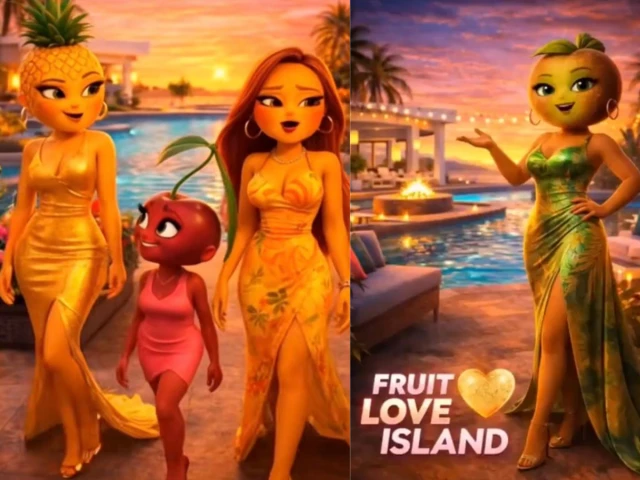

So far, 20 episodes have collectively generated nearly 300 million views and more than 23 million likes
AI-generated videos inspired by Love Island have gained significant traction on TikTok, attracting hundreds of millions of views while prompting debate over the rise of automated content online.
The series, informally known as Fruit Love Island, features anthropomorphic fruit characters in a format closely mirroring the popular dating show. Characters such as “Cherrita”, “Bananito” and “Strawberrina” appear in a villa setting, adopting the structure, style and tone associated with the original programme, including similar music and audience interaction elements.
Uploaded by the account @ai.cinema012, the series has released 19 short episodes within nine days, each lasting between two and four minutes. The videos have collectively generated nearly 300 million views and more than 23 million likes, with individual episodes frequently surpassing 10 million views. The account has also gained over 3.2 million followers in a short period.

TikTok has labelled the clips with a standard notice stating: “Contains AI-generated media”, though the specific tools used to create the content have not been disclosed. The creator has encouraged audience participation through polls and suggestions, asking viewers to contribute ideas involving “drama,” “messiness” and “backstabbing,” which has likely contributed to increased engagement.

The trend has also attracted attention from public figures and social media personalities, with some sharing reaction videos that further amplify its reach. The hashtag associated with the series has appeared in more than 25,000 posts, reflecting its rapid spread across the platform.
However, the content has faced criticism, with some users describing it as “AI slop” and questioning its creative value. Concerns have also been raised about potential copyright issues, as the series replicates elements of the original Love Island format. It remains unclear whether the rights holders have authorised the use of its intellectual property.