
As the charred Gul Plaza building smoulders and cools down, the public anger surrounding it continues to flare.
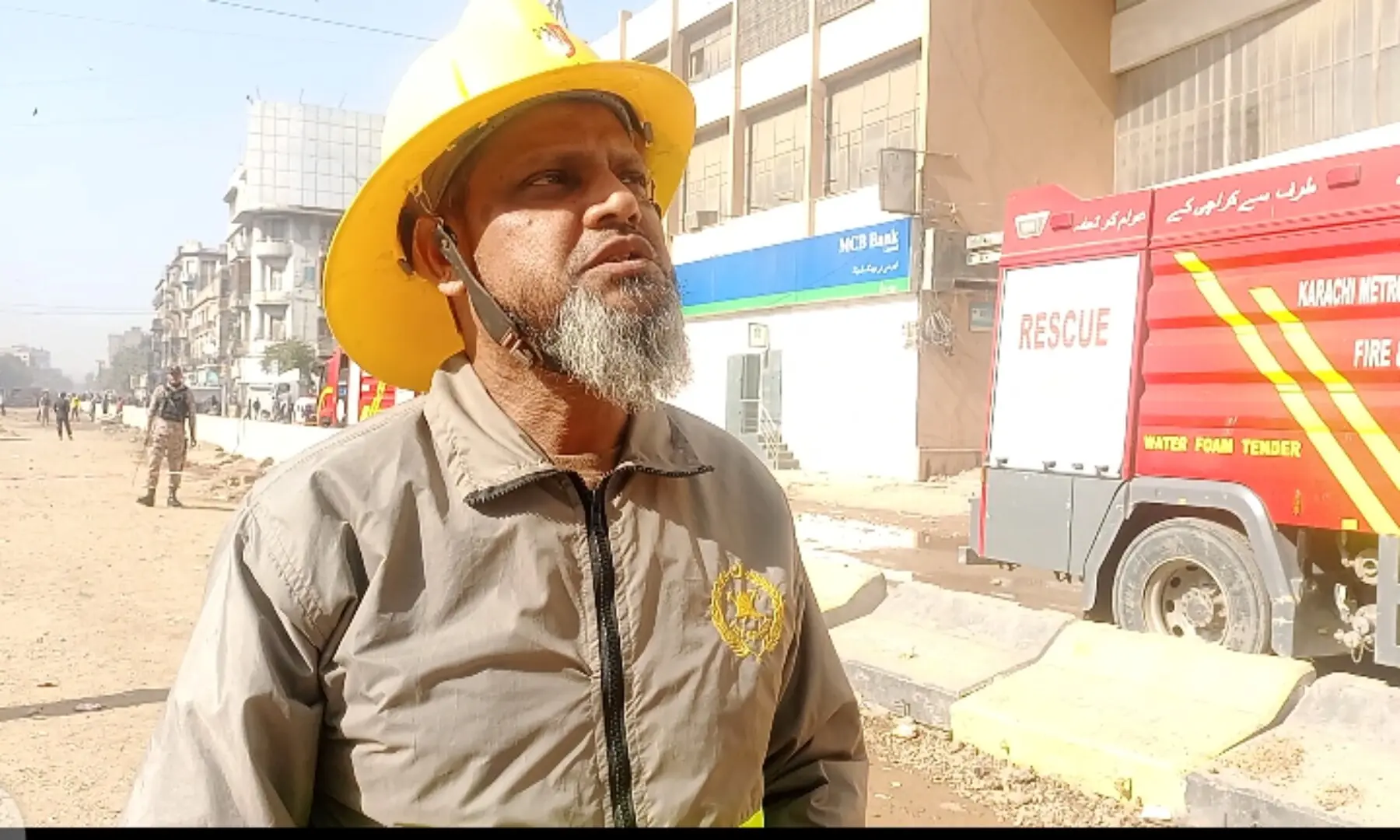
Zafar Khan, a fire officer, has not left the site of this shopping mall in Karachi since the night of January 17, when the iconic building caught fire. The raging blaze claimed 28 lives, while rescue teams continue to search for more than 60 missing people amid the charred rubble.
Being the most visible part of the response, much of the blame has fallen on the firefighters. But days later, with smoke still seeping from the building, Zafar can still be seen standing amid the blackened debris and angry murmurs, explaining again and again why it has been such an uphill task to douse the fire.
Amid the accusations and smoke, lies a quieter truth that must not be forgotten: fires may erupt in minutes, but the conditions that allow them to rage unchecked fester over years and years.

Where plastic or similarly inflammable material is present, he says, fire has a habit of re-erupting the moment it receives oxygen. “That is why, even now, firefighting and cooling continue side by side.”

When asked how he copes with public accusations of “incompetence” and “undue delays”, he barely pauses. “We are here to save people’s lives and property. It is part of our training not to get too emotional as we focus on our work while being confronted by people who are freaking out. We understand that ours is also a thankless job. People also yell at and curse doctors in hospitals who are caring for their loved ones.”
The Gul Plaza inferno and its aftermath have given rise to a storm of allegations, with the first finger pointed squarely at the firefighters.

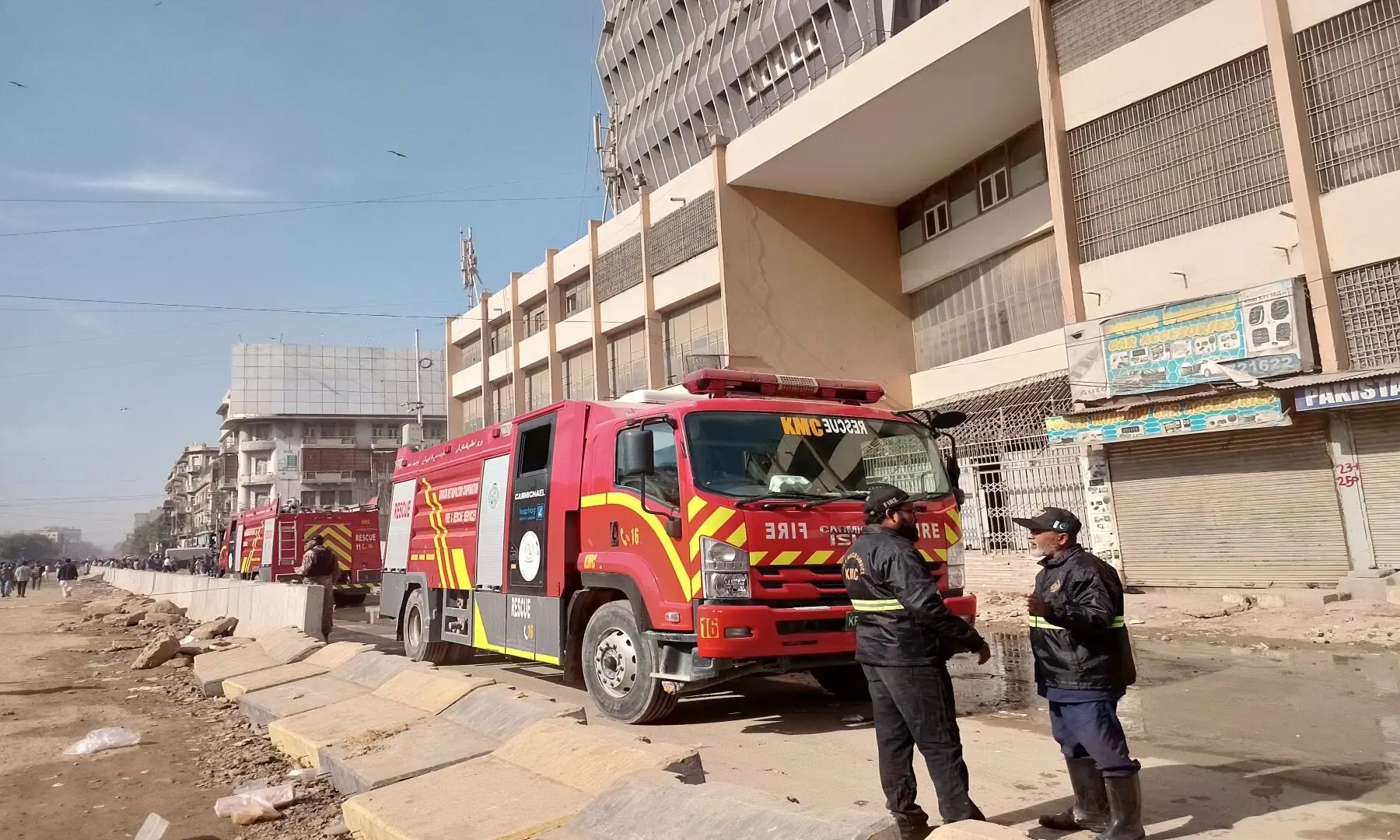
Citizens, angered, frustrated and left helpless by the tragedy, accused the fire crew of arriving late, running out of water, lacking equipment and skill, and failing to control a fire that broke out around 10.15pm on Saturday but continued to smoulder until Tuesday morning.
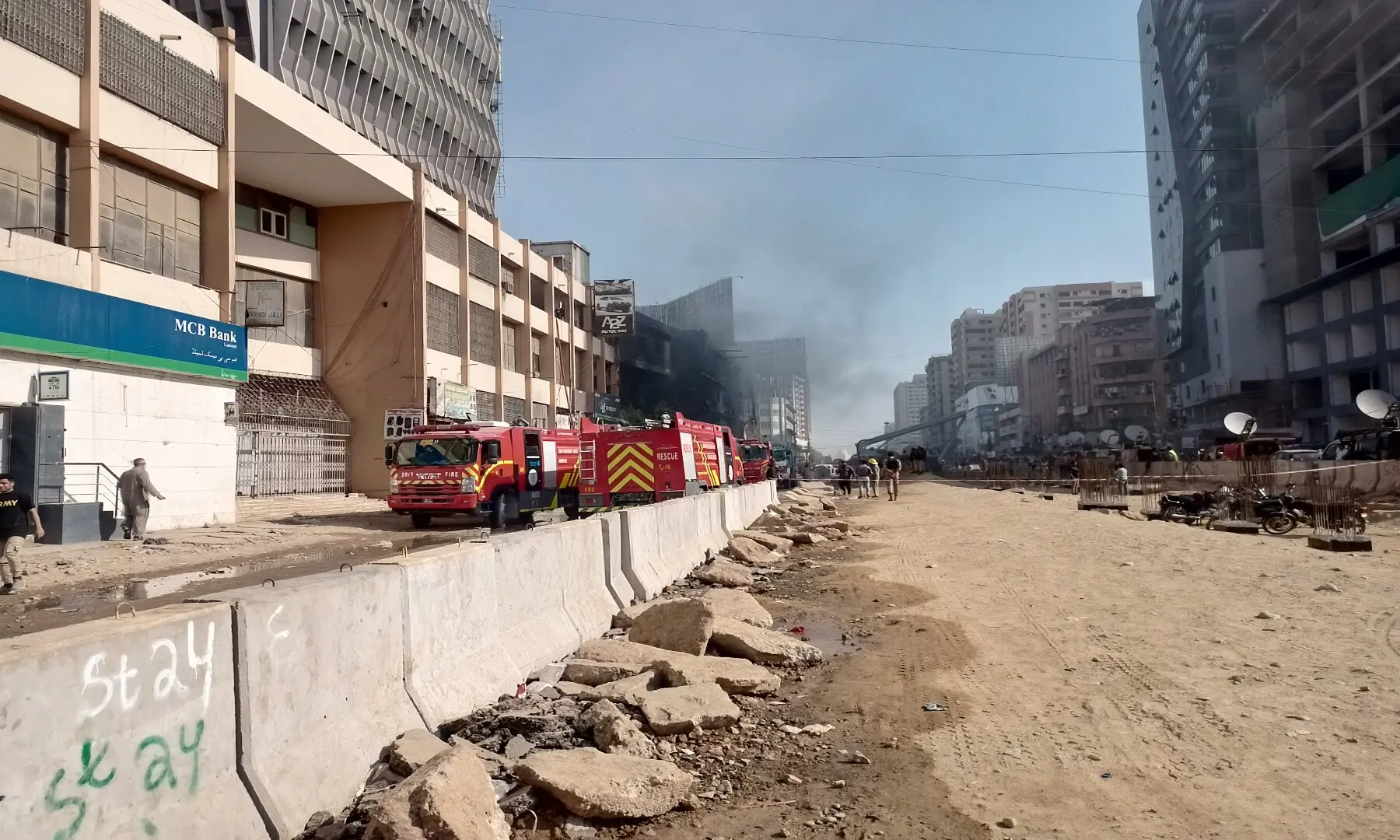
Smoke billowing from the building’s eastern side fuelled public suspicion that something inside was still burning, but firefighters had left it “unchecked”.
Karachi Metropolitan Corporation’s Chief Fire Officer, Humayun Khan, however, explains his crew’s side of the story, one that rarely surfaces or makes news.
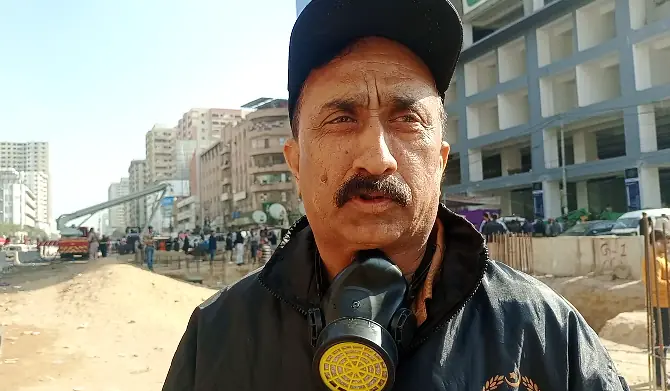
“We responded to the distress call about the fire at Gul Plaza almost immediately and reported here within 10 to 12 minutes of receiving that call,” he tells Dawn.
By the time fire tenders reached the site, however, a crowd of 10,000 to 12,000 people had gathered at the site, turning panic into a physical obstacle. “Yes, we understand their anxiety, but coming in our way in their panic is not right. In fact, it is a violation,” he adds.
He further explains how each distress call made to the helpline is digitally registered with the caller’s ID, followed by a confirmation call, a process which leaves little room for dispute over response time.
He also says how, upon arrival, firefighters had to face competing demands from shopkeepers, each insisting their shop be saved first, while ambulances that had reached the site earlier blocked the access routes for the fire trucks.
“There is a need to keep ambulance routes separate,” the fire chief says. “Ignoring such standard operating procedures [SOPs] can make even small incidents big.”
What puzzled him most was that many shopkeepers decided to stay inside the burning building instead of running outside immediately.
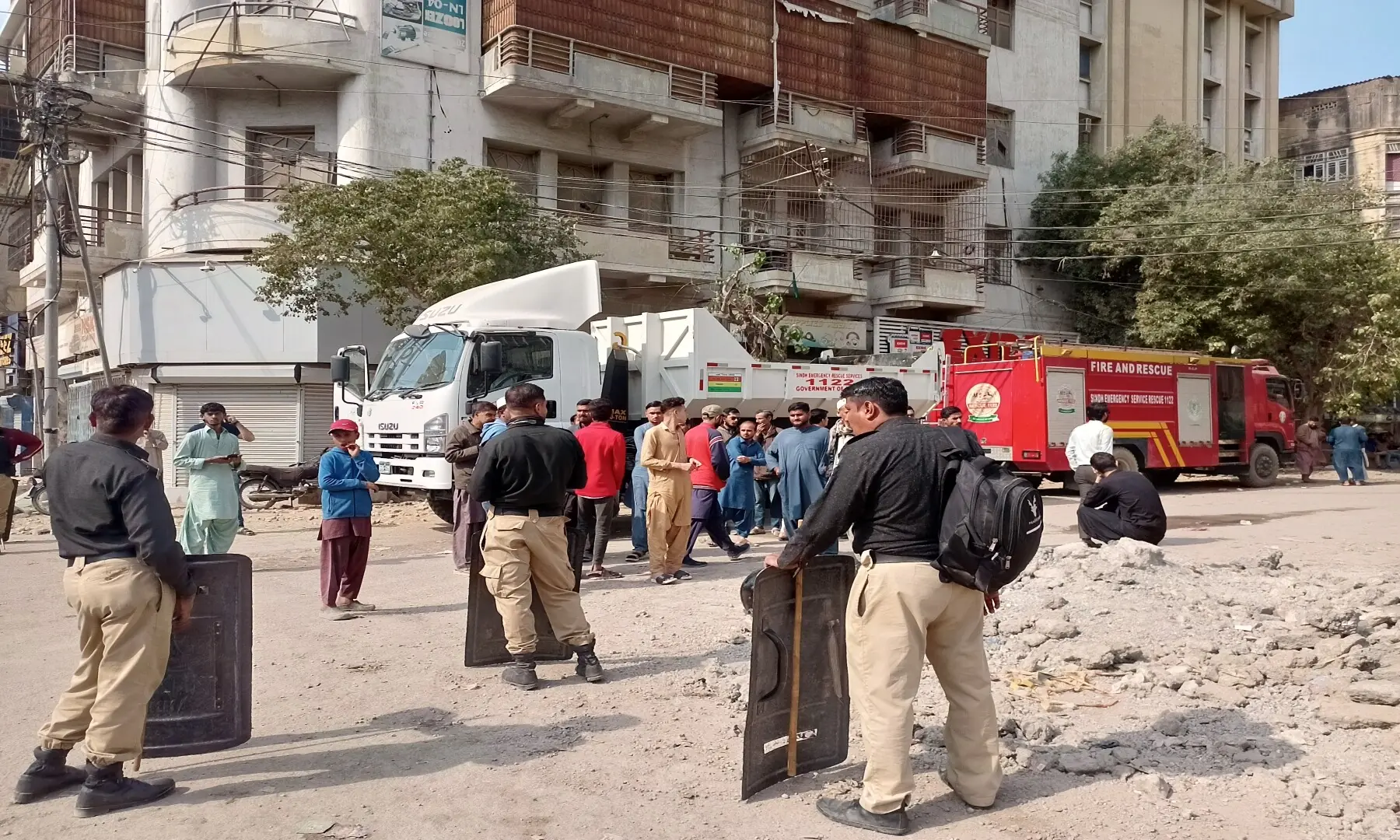
Even after 12 fire tenders and three snorkels were deployed, he recalls, his crews had to struggle to manoeuvre hoses amid pressure from shopowners, which created a lot of confusion. “Still, we were able to help the shopkeepers grab their valuable documents that were left behind, along with cash worth millions,” he shares.
According to members of the fire crew, people also questioned them about their tactics. Would foam or chemical agents not have been more effective against a fire that kept flaring up?
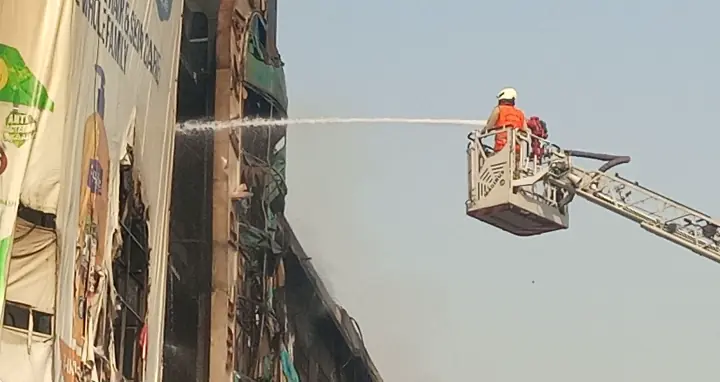
Officer Zafar agrees in principle, but said that there were limitations.
“Foam needs to reach the precise area, which we were unable to reach in this case. It is ineffective if sprayed from afar,” he explains.
When asked why all firefighters were also seen wearing plain disposable masks and not specialised ones or helmets with torches, Fire Chief Humayun quickly shook his head.
“We are not short of such equipment,” he says. “But we use them when needed. The fumes carry particles that choke the gas masks. Putting them on to take off again and go back to have them cleaned will take too much time.”
Besides, he says, his team wore disposable masks and plain helmets when firefighting from outside. “We will use whatever is needed after going inside. We have already started doing that now, as the fire is more or less under control. We are just waiting for the building to cool.”
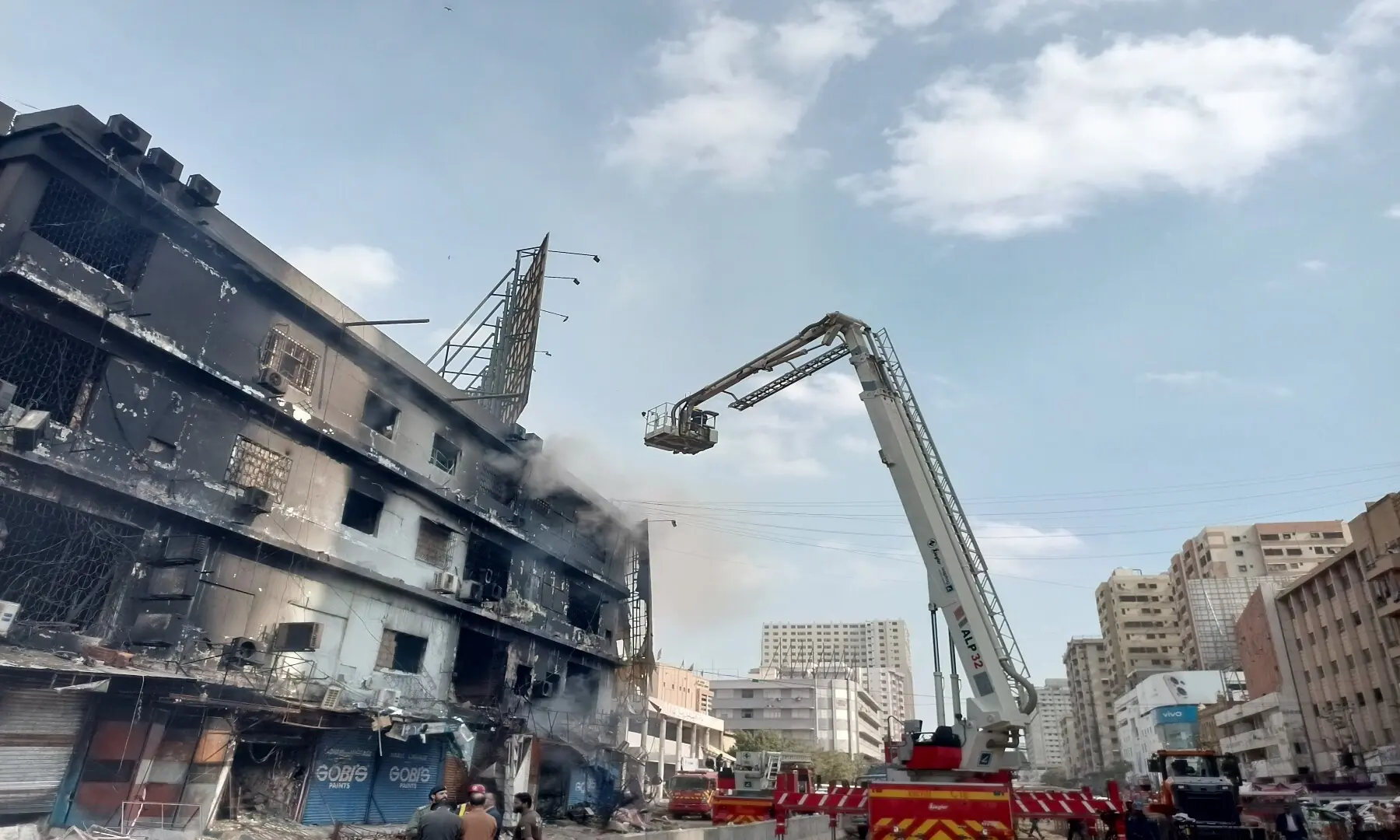
It is also a structure in danger of collapsing, he says, explaining, “We also need to be careful as we have already lost one firefighter when a portion of the building fell on him.”
The martyred fireman, Furqan Ali, 36, was associated with the Nazimabad Fire Station and had been serving in the KMC Fire Department since 2018. He was appointed on a deceased quota after his father, also associated with the fire department, passed away while in service.
For those on the ground, the deeper problem lies far beyond a single blaze. According to Sub-Fire Officer Sajid Ali Khan, the commercial complex, which was spread over nearly two acres of land, had not a single fire hose reel or extinguisher.
“It is life insurance to have an extinguisher. You only need to refill it once a year, which costs about Rs1,000. Gul Plaza generated revenue in millions each day, and no one there thought about this?”
“If they had a fire extinguisher in the first shop where the fire initially erupted, they could have put it out there and then,” he maintains.
Leading Firefighter Riazuddin points to a systemic failure. He says that large buildings that lack fire exits, smoke alarms, or sprinkler systems pose serious risks. “There is a lack of awareness regarding fire safety here. There are no fire drills, so people don’t know what to do if a fire breaks out,” he says.
He explains that in the past, there used to be civil defence training in schools, which was no longer imparted to students. “Do you know that fire doesn’t kill, but smoke and suffocation do?”
“If you stay low during a fire (stay close to the ground), you can easily crawl out to safety because smoke gathers about a foot above the ground,” he points out.
“But who’s to spread such awareness in a land where you have no time or use for fire drills?”
Back at the front of the blackened plaza, Zafar remains at his post, watching the structure exhale wisps of smoke. For him and his fellow firefighters, the work is not about public approval or blame, but about staying long enough to make sure the fire does not return, and leaving only when it is finally safe to do so.
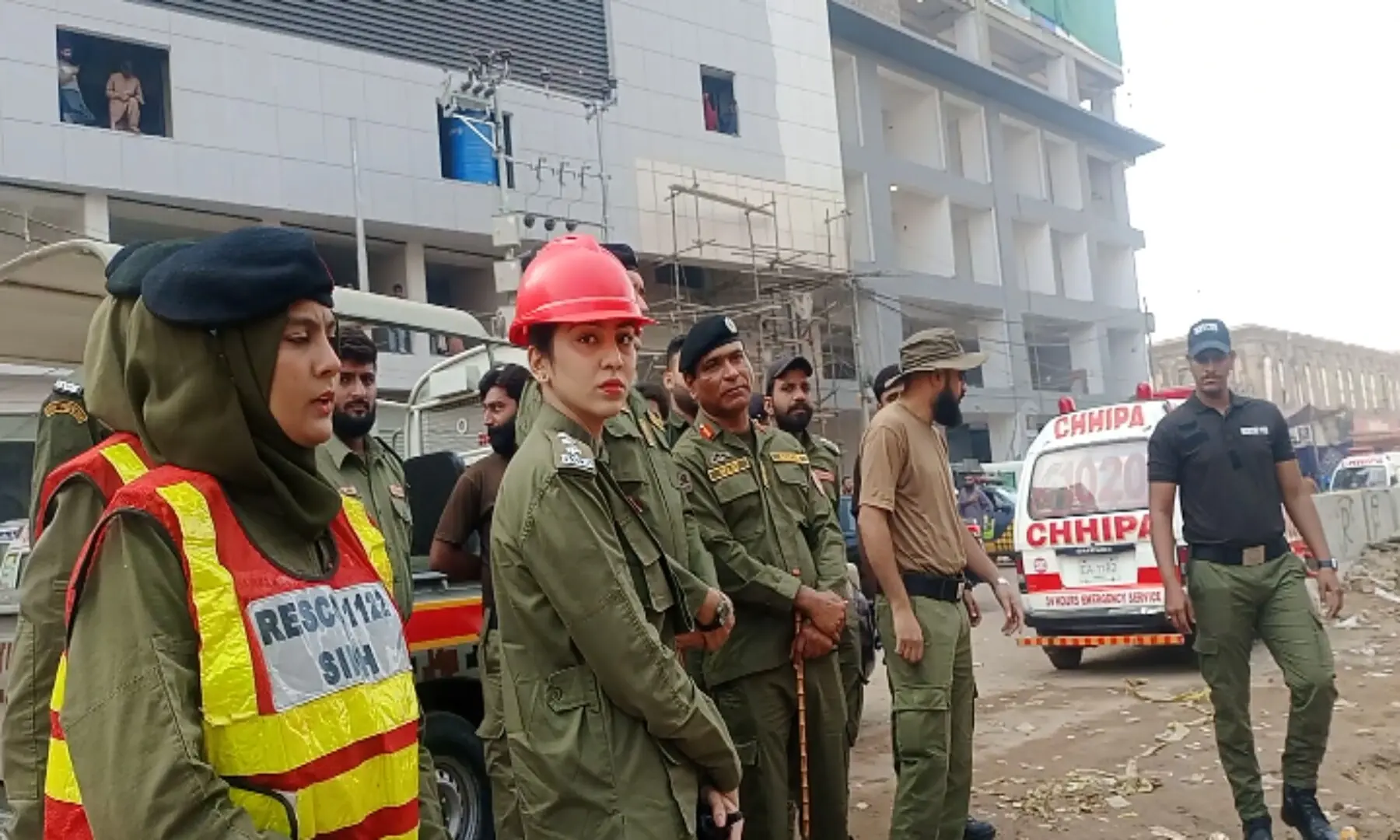
Header image: Firefighters busy walking past fire trucks near Gul Plaza in Karachi, where a fire incident killed 28 people on Saturday, January 17, 2026. — Shazia Hasan