




The exceptional El Nino weather phenomenon is approaching and set to intensify, shattering all climate records as per the latest forecasts.
The latest warning comes from the UN Secretary General Antonio Guterres. According to the UN chief’s dire warning, “El Nino is being supersized before our eyes. The science leaves no room for doubt: the planet is in uncharted waters, and those waters are heating up.”
As per the latest update from World Meteorological Organization WMO on Thursday, the El Nino will persist until February 2027. It could be the strongest for more than 70 years.
The UN weather agency also warned that in the coming months El Nino will worsen, wreaking havoc on the world by exacerbating the risks of extreme heat, dangerous flooding and life-threatening drought conditions. Collectively, all these conditions could damage economies and livelihoods while displacing millions of people around the world.

The natural phenomenon is combining with long-term human-induced global warming, pushing global temperatures into uncharted territory.

WMO head Celeste Saulo said in a press conference in Geneva that, on the current trajectory, “the El Nino, may be stronger than anything since our monitoring began, so literally off the charts we have used for the past four decades.”
World is in danger zone
The stronger El Nino can cause serious implications for marine ecosystems marked by marine heatwaves. Sub-surface Pacific temperatures are more than 8C above average.
“Subsurface ocean temps are also exceptionally high and in some areas more than 8 degrees Celsius above normal during July and early August,” Saulo said.
“We have no time to lose,” she said.
Similarly, Southern Australia faces severe risks including stronger marine heatwaves, algal blooms, bird flu outbreaks and threats to wildlife.
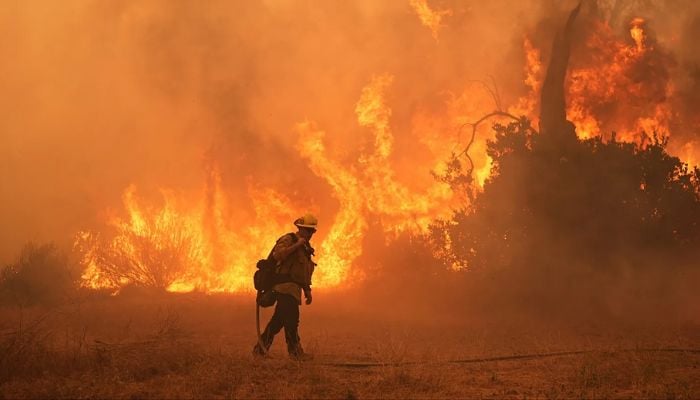
In Southeast Asia and America, there are severe risks of wildfires and extreme drought conditions. For instance, Indonesia is battling with severe dry-season wildfires spanning over 107,000 hectares while deploying cloud-seeding aircraft.
Similarly, in the Panama Canal, vessel traffic has declined by 10 percent due to lower rainfall, threatening global trade and a critical $3 billion source of income.
Other zones Central America, northern South America, and parts of Southern Africa are at high risk of drought zones.
El Nino is also expected to bring stronger typhoons. For example, China anticipated seven typhoon rainfalls linked to the super El Nino as the country already faced destructive storms and mass evacuations over 1 million driven by Typhoon Dolphin.
Wetter-than-average conditions are expected in eastern Africa, southern Brazil, and the southern US.
High vulnerability to flash flooding and landslides in urban centers. The US deployed the USNS Comfort to the Peruvian coast to provide medical assistance.

