




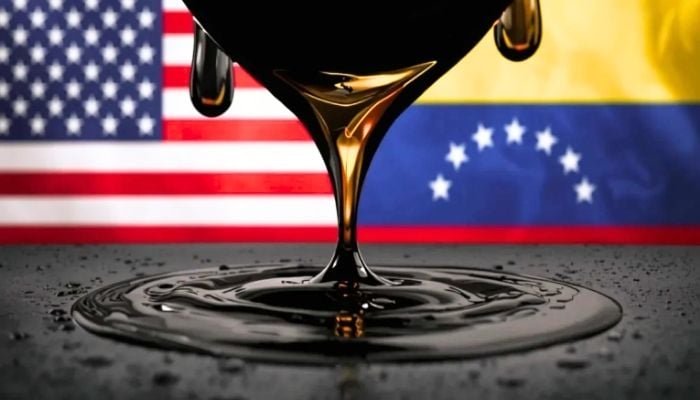
The landmark energy pact between Washington and Caracas—brokered under the Trump administration following the removal of former President Nicolás Maduro—has upended traditional energy geopolitics.
Hailed by U.S. leadership as “the biggest oil deal in world history,” the agreement grants the United States significant leverage over a massive portion of the world’s largest proven crude reserves.
The agreement establishes long-term (100-year) operational concessions across 17 major oil fields (primarily concentrated in the Orinoco Belt and Lake Maracaibo), housing roughly 65 billion barrels of proven reserves—over 20% of Venezuela’s total national wealth.
Through a newly established corporate framework, the U.S. government secures an effective 55% share of the output, divided between an equity ownership stake and guaranteed rights to purchase crude oil at cost.

Oil acquired directly through this mechanism is designated to reinforce the U.S. Strategic Petroleum Reserve (SPR) and fulfill direct requirements for the U.S. military.

Venezuelan interim President Delcy Rodríguez has projected that the accord will catalyze upwards of $100 billion in private capital investments to revive battered extraction infrastructure, generating more than $209 billion in tax revenues for the state.
The agreement takes on heightened urgency against the backdrop of severe global supply strains, notably following prolonged disruptions to tanker traffic through key Middle Eastern chokepoints like the Strait of Hormuz.
Securing heavy crude locally within the Western Hemisphere serves as a vital cushion for Washington
With retail fuel prices remaining a major political flashpoint ahead of U.S. midterm elections, the White House has heavily leaned on the narrative that expanding long-term Western Hemisphere supplies will eventually drive down costs at the pump.
By embedding Western corporate infrastructure deep into Venezuela’s energy sector, the arrangement systematically elbows out rival economic influence from powers like China and Russia, reinforcing traditional U.S. regional primacy.
Despite holding massive raw potential, decades of severe underinvestment, mismanagement, and sanctions have left Venezuela’s physical oil infrastructure pipelines, upgraders, and drilling rigs in heavy disrepair.
Energy analysts emphasize that scaling production back up to historic highs will require years of sustained capital injection, meaning the deal offers little immediate relief to short-term retail prices.
As reported by the Guardian, the agreement faces fierce criticism from domestic opposition factions inside Venezuela, who argue that signing away long-term resource control under current post-intervention conditions violates national sovereignty and bypasses constitutional frameworks.
Meanwhile, U.S. opposition lawmakers have signaled intent to launch legislative probes into the transparency and execution of the pact.

