



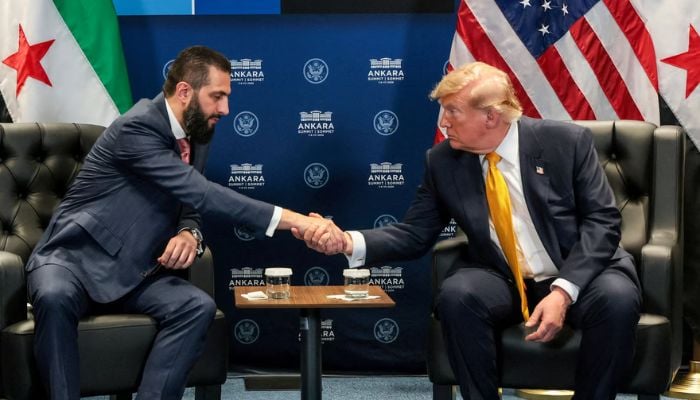
The United States in a historic decision announced to remove Syria from its list of “State Sponsors of Terrorism (SST)”, marking a shift towards rebuilding the country after 14 years of civil war.
The removal took place after a 45-day congressional review period. On July 8, President Donald Trump formally notified Congress of his intent to revoke Syria’s decade-old designation.
“These actions were all taken in recognition of the positive actions taken and further commitments by the Syrian government under President Ahmed al-Sharaa to fully distance Syria from acts of international terrorism,” U.S. Secretary of State Marco Rubio said in a statement.
Syrian President Ahmed al-Sharaa hailed it as “historic”, calling this move as a removal of “last obstacle” in the way of attracting investments for the reconstruction of a war-bettered country.

He also thanked Trump and said Syria was tearing a “page from its painful past, in order to launch itself into the realm of development, reconstruction, and building.”

Under SST designation, Syria was barred from using the international banking networks. Even it was impossible to carry out trade-based financial transfers and send remittances. Now, the reversal of the status will make the transfers easy without evoking harsh international secondary sanctions or compliance risks.
According to Syrian Foreign Minister Asaad al-Shibani, the move on the part of the Trump administration would also help reconnect Syria to the global financial and economic system and increase investment.
However, Despite the removal of broader US sanctions on Syria, this designation continued to deter banks and investors because it strictly limits foreign aid, military sales, dual-use technology, and financial transactions.
The governor of Syria’s central bank, Safwat Raslan, said on X that this is “a historic step that restores the country to its natural place in the global economic system,” adding the bank is “working to build a modern and reliable financial system”.
Syrian Finance Minister Mohammed Barnieh also called this move a way to strengthen Syria’s integration into the global economic and financial system. It will also attract development opportunities and modern technologies.
As the country’s infrastructure is deeply dilapidated after decades of civil unrest, the investments can be helpful in rebuilding housing, telecommunications and delivery of public services.
In 1979, the US government accused the former Syrian president Hafez al-Assad of supporting militant groups and placed the country on the list.
After the removal of Syria, Cuba, North Korea and Iran are still on the list.

