
Official reiterates US interest in region as he called for greater burden-sharing and ‘partnership, not dependency’
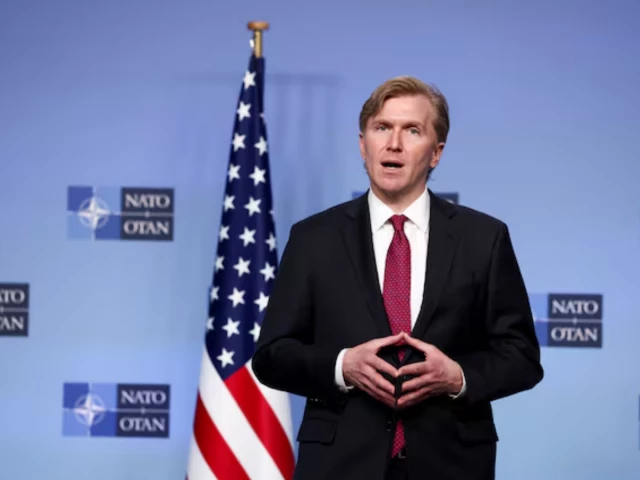
US Undersecretary of Defense for Policy Elbridge Colby attends a NATO Defence Ministers meeting at the Alliance headquarters in Brussels, Belgium February 12, 2026. PHOTO: REUTERS
The United States is not disengaging from Asia and is instead “digging in” to maintain a favourable balance of power in the Indo-Pacific, but wants its partners to shoulder more responsibility for their defence, a senior Pentagon official said on Monday.
Seeking to counter concerns about Washington’s reliability, Elbridge Colby, Undersecretary of Defence for Policy, reiterated the US interest in the region as he called for greater burden-sharing and “partnership, not dependency”.

“America is definitely not disengaging from Asia,” Colby said in a speech in Manila. “We are not leaving; in fact, we are digging in to ensure a favourable balance of power where it matters most.”

The Philippines, the United States’ oldest treaty ally in Asia, is the first stop on a Southeast Asian trip that also will take Colby to Indonesia, Thailand and Cambodia.
Read: Iran says no reason to fear Pakistan-Turkey-Saudi security pact
Colby said maintaining a favourable balance of power in the Indo-Pacific required a “posture of deterrence by denial along the First Island Chain” and pointed to what he described as a growing US military commitment in the region.
The First Island Chain refers to an area stretching from Japan down to Taiwan, the Philippines and Borneo.
The strategy could not rest on American forces alone, he said, arguing that allies should invest more in their security.
“When we ask our allies and partners to step up, to invest more in their own defence, and to take responsibility for their own sovereign security, we are not signalling abandonment,” Colby said. “We are looking for partners, not protectorates.”
“When our partners are strong, deterrence is strong,” he added.