


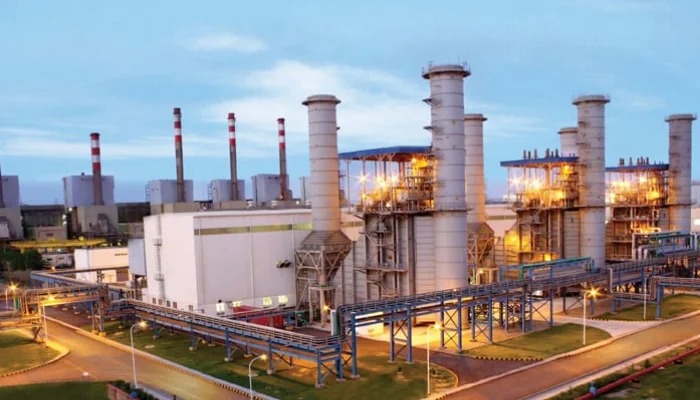

KARACHI: The Central Power Purchasing Agency (CPPA-G) is conducting a one-time heat rate test on Independent Power Producers (IPPs) operating under the 2002 Power Policy.
The move is aimed at verifying the actual efficiency of the plants against the performance figures reported in their most recent annual financial statements.
CPPA would engage a reputable international independent consultant to carry out the tests, which will measure plant efficiency under prevailing site conditions on the date of the assessment.
The initiative comes as part of an efficiency-sharing mechanism already agreed upon in the Master Agreement with the IPPs.

The decision follows mounting pressure from parliamentarians over the rising cost of electricity and allegations of financial irregularities in the power sector.

Last month, a parliamentary committee directed the National Electric Power Regulatory Authority (NEPRA) to conduct comprehensive investigations into IPP performance, including capacity and energy payments, as well as contract extensions granted to the producers.
Lawmakers raised concerns over alleged over-invoicing, delays beyond agreed project timelines, and the absence of a formal, periodic verification process by the regulator to confirm actual generation capacity.
Some members also questioned NEPRA’s tariff-setting procedures, noting the lack of independent technology studies or performance tests prior to approval.
An official confirmed that a prior study conducted in 2019 and released in 2020 found that IPP profits exceeded 27% after accounting for returns on investment. However, budget constraints at the time prevented a full assessment of the technology in use, and no heat rate or efficiency tests were performed. The official added that NEPRA approved tariffs for those IPPs without independently verifying their heat rates.
When NEPRA later attempted to conduct its own efficiency and heat rate audits, the IPPs secured stay orders from the courts, stalling the regulatory reviews.
In a related development in July, the Senate Standing Committee on Cabinet Secretariat voiced strong criticism over billions of rupees in capacity payments made to non-operational IPPs.
The committee also accused NEPRA and the IPPs of undermining the government’s solar energy policy and unanimously called for accountability. It ordered a comprehensive performance audit of NEPRA and referred the matter of unauthorized salary and allowance increases for the regulator’s chairman and members to the Public Accounts Committee for further examination.
Meanwhile, the Ministry of Finance has released ownership and capacity data for Pakistan’s 100 IPPs, revealing a cumulative installed capacity exceeding 24,000 megawatts (MW) across a range of fuel types, including residual furnace oil (RFO), gas and RLNG, hydel, coal, bagasse, solar, and wind.
The data lists project sponsors for each plant, with several major business groups holding stakes across multiple projects. The Habibullah group appears as sponsor or co-sponsor in the Hub Power Project, HUBCO-Narowal, New Bong Escape Hydropower, and the China Power/Hubco and Hubco Thar coal projects. The Mansha Group holds ownership in Lalpir, Pak Gen, Nishat Power, and Nishat Chunian Power, all RFO-based facilities.
The Fauji Foundation and Fauji Fertilizer Company are listed as sponsors for Fauji Kabirwala, Foundation Power, and Foundation Wind Energy I and II, while China Three Gorges Corporation is identified as the sponsor for the Karot Hydropower Project and three wind projects.
By fuel category, gas and RLNG-based plants form the largest capacity bloc at 9,867.5 MW across 19 projects, led by the Haveli Bahadur Shah, Balloki, Bhikki, and PTPL plants, each exceeding 1,180 MW, and the 1,638-MW Kot Addu Power Project (KAPCO). RFO and LSFO-based plants follow with 3,993 MW across 15 projects, headed by the 1,292-MW Hub Power Project.
Coal-based capacity, combining imported and Thar coal, totals 7,260 MW across eight projects, with Sahiwal, Port Qasim, and China Power/Hubco each rated at 1,320 MW. Wind projects account for more than 1,800 MW across 36 IPPs, the largest number of projects in any single category, while solar PV contributes 680 MW across 10 projects.
Hydel capacity stands at 1,053 MW across four projects, led by the 720-MW Karot Hydropower Project, with bagasse-based cogeneration from sugar mills adding 259.1 MW across eight projects.