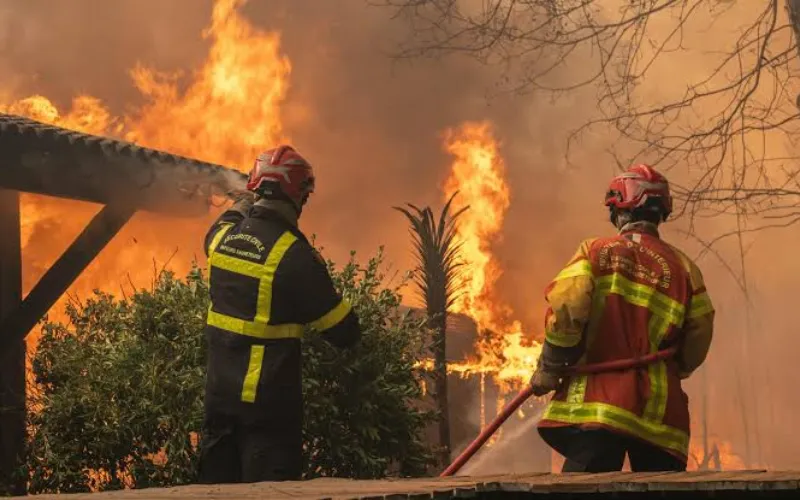

Wildfires advanced towards the outskirts of the historic French city of Bordeaux, at the heart of the country’s winelands, on Sunday as France and Spain battled blazes that have already forced the evacuation of hundreds of thousands of people.
Authorities said about 220,000 people have been evacuated in France. In Spain, more than 75,000 people have been evacuated, while another 30,000 have been ordered to shelter in place.
In France, the fires have burned across the Cap Ferret peninsula on the Atlantic coast, a popular tourist destination, and spread to areas surrounding Bordeaux. Firefighters have been working to prevent the flames from reaching the city.
Bordeaux Mayor Thomas Cazenave said the fire was about 15 kilometers (9 miles) from the city’s main entry points. Interior Minister Laurent Nunez said in a post on X that the situation remained “difficult.”

As the fire continued to spread, police officers went door to door overnight in the towns of Marcheprime and Cestas, evacuating residents one home at a time. Video released by French authorities showed officers knocking on doors in the dark and urging people to leave.

In Spain, Prime Minister Pedro Sanchez visited fire-affected areas in Avila, one of three central provinces hit by major wildfires, along with Madrid and Toledo.
Environment Minister Sara Aagesen said the fires have destroyed more than 50,000 hectares (123,500 acres) of land in Avila, making it the largest wildfire in Spain’s recent history.
A separate wildfire in Spain’s eastern Castellon province has burned more than 4,300 hectares, regional authorities said.
Juanfran Perez, the regional leader of Valencia, said the fire remains out of control and is extremely difficult to contain because of adverse weather conditions that are expected to continue throughout the day.
The wildfire has also spread into Sierra de Espadan Natural Park, which is home to large forests of pine trees and cork oaks.
The fires are the latest disasters linked to prolonged drought and repeated heat waves, which scientists say have been intensified by climate change.
According to the Reuters Climate Monitor, the average high temperature in July reached 32 degrees Celsius (90 degrees Fahrenheit) in both Bordeaux and Avila, nearly 6 C above the average July high recorded between 1961 and 1990.