



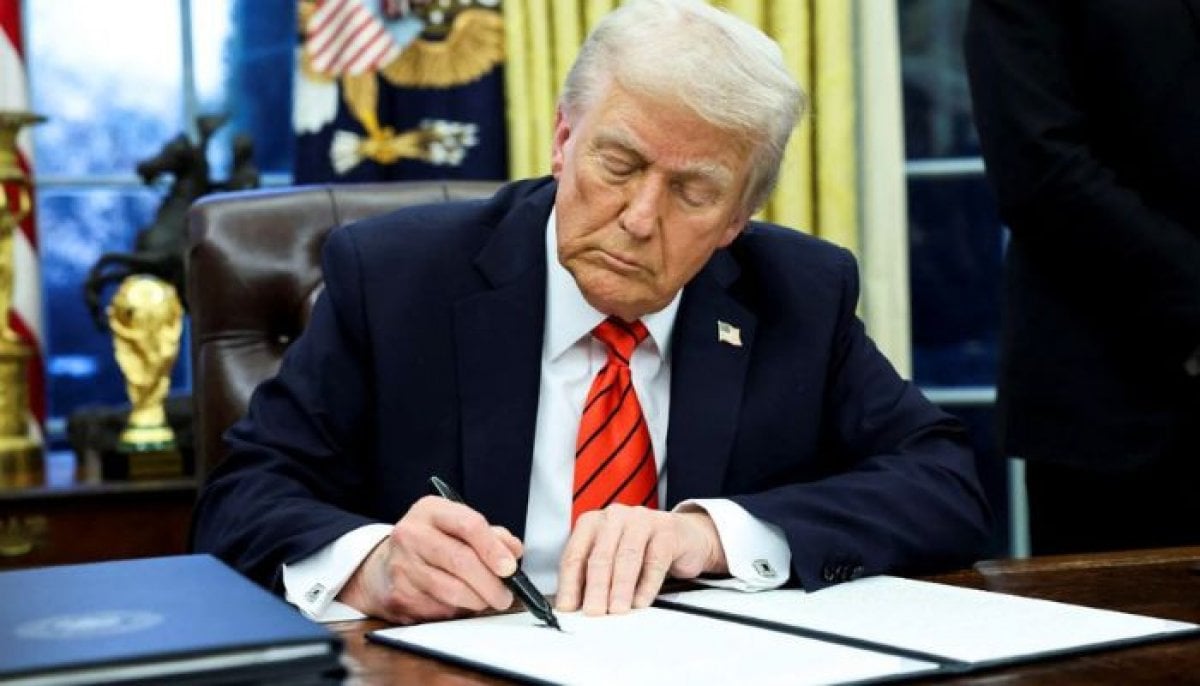

US President Trump signed an executive order titled “Securing America’s Defense Supply Chains and Ensuring Domestic Acquisition of Critical Materials”.
Trump on Monday signed the order, making it harder for U.S. defense contractors to obtain waivers allowing them to buy critical minerals and other materials from China and other prohibited foreign suppliers, the administration’s latest effort to reduce reliance on overseas supply chains for weapons production.
New Executive Order for Defense Supply Chain:
The new rules mean defense contractors will have to do more than simply show that a Chinese supplier is the easiest or cheapest option.
Companies seeking a waiver will need to prove they searched for alternatives, disclose the origins of their materials and also provide a plan to reduce reliance on prohibited suppliers.

This order directly targets defense contractors who rely on foreign suppliers—particularly in geopolitical rival nations like China, Russia, Iran, and North Korea—for critical minerals, specialty metals, and components used in military equipment.

Ending the “Waiver Racket”
Beginning January 1, 2027, defense contractors will no longer receive routine waivers allowing them to source restricted materials from prohibited foreign suppliers.
To obtain an exception, contractors must submit formal mitigation plans detailing exhaustive efforts to find compliant sources and commit to a strict timeline to phase out foreign components.
Simply claiming a foreign option which is cheaper or faster will no longer be accepted.
Deep Supply Chain Mapping:
Under the new orcer the contractors will be required to submit full, multi-tier supply chain maps “indentured Bills of Materials” tracing raw materials, parts, and software all the way down to lower-tier suppliers
Moreover, the order ensures contractors must vet lower-tier vendors for foreign ownership, financial stability, and manufacturing risks, replacing suppliers deemed unreliable.
Pentagon Pushes Supply-Chain Overhaul:
The Pentagon has been pushing defense contractors to rapidly expand weapons production while trying to identify and eliminate vulnerabilities buried deep inside the military supply chain.
Soon after the announcement Shares, in which the Pentagon has an investment of about 15%, turned positive after and closed 1% higher at $45.70 on Monday.

