



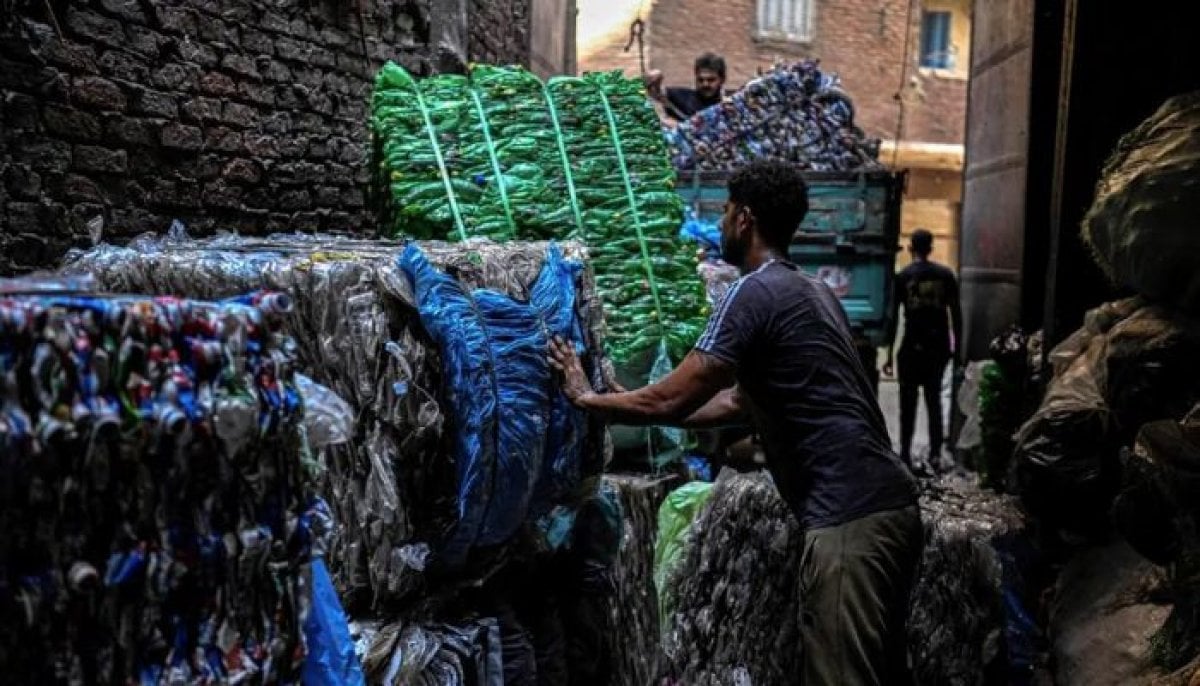

The geopolitical crisis stemming from the US-Israel war on Iran has reportedly caused a windfall of prosperity in Cairo’s Garbage City.
In the twisting corridors of Cairo’s Garbage City, recycling specialist Peter Romany finds himself fielding calls from factories competing for plastics to plug supply shortfalls caused by the US-Israel war on Iran.
The 25-year-old is among the hundreds of manufacturers across Egypt capitalizing on conflict-led demand ever since the United States-Iran conflict choked off the Strait of Hormuz-a crucial shipping lane for the raw materials from which plastics are made.
In this connection, Romany told AFP, “Before the war, we were the ones calling factories, trying to sell our material but after the war broke out, the factories started calling us. They ask: How much do you have? Can you deliver today? That never used to happen.”

Manshiyet Nasser is primarily a Coptic Christian neighborhood positioned beneath the Mokattam Hill and facing Cairo’s historic Citadel.

Families live under the same roof, frequently isolated from mountains of waste by little more than a curtain, which exposes them to plastic fumes and other serious health risks. Mothers prepare lunch and television sets compete against the living rooms; although background noise of hums lubricating the cutting head and squeal of baling presses.
According to the pricing agency Independent Commodity Intelligence Services, the Middle East is a significant global supplier of polyethylene with 85 percent of its seaborne trade navigating the waterway.
It is crucial to note that Egypt imports around 40pc of its raw plastic materials, especially from Gulf countries, Europe, China and South Korea.
Chief Executive of Sadat City Chemical Fibre Factory, Fayrouz EI-Sayed said: “We have been in this business for 16 years.”
Subsequently, Nesma El-Areef, the senior marketing and sales manager at Uflex Egypt, said that demand for the company’s reprocessed products surged to 40 percent.
“We saw a significant increase in orders, particularly from food and beverage manufacturers because we offered a more readily available alternative to imported materials,” Nesma El-Areef continued.
Nonetheless, Trump said the US was renewing its blockade of Iranian ports and taking over the Hormuz Strait as new hostilities erupted between both countries.

