



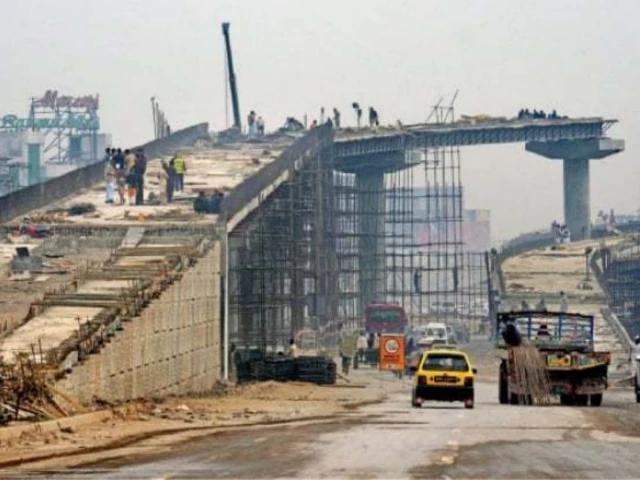

Govt may also allocate Rs3 trillion for defence spending and has finalised Rs50 billion relief for the salaried class
The federal government has slashed next fiscal year’s proposed development budget by Rs126 billion, while three provinces, except Balochistan, would freeze their uplift expenses at current levels to create around Rs500 billion worth of fiscal space for strategically important initiatives.
The government may also allocate about Rs3 trillion for defence spending and has finalised Rs50 billion relief for the salaried class, earning over Rs183,400 a month for the fiscal year 2026-27.
An understanding to rationalise development spending has been reached between the representatives of the Pakistan Peoples Party and the Pakistan Muslim League-N, the coalition partners since 2022.

This would now pave the way for the start of the much-delayed budget approval process, people privy to discussions between the coalition partners told The Express Tribune.

When contacted, Planning Minister Ahsan Iqbal confirmed that the proposed size of the Public Sector Development Programme of Rs1.126 trillion has been reduced by Rs126 billion. The finance ministry has shared the revised indicative budget ceiling of Rs1 trillion with the Planning Ministry, said Iqbal on Tuesday.
The government has cut the proposed PSDP by Rs126 billion or 11.2% compared to the size approved by the Annual Plan Coordination Committee (APCC) for fiscal year 2026-27 early this month. For this fiscal year, the government has also slashed the development budget to Rs820 billion, and so far, Rs590 billion have been spent.
Read More: Budget likely to be presented on June 12: Parliamentary affairs minister
This is probably for the first time that the federal PSDP has been slashed before it has landed in front of the National Economic Council (NEC), which would now finally be chaired by Prime Minister Shehbaz Sharif on Wednesday.
The government had postponed the NEC meeting four times to develop some initial understanding among the stakeholders over the next fiscal year’s budget.
Minister for Parliamentary Affairs Tariq Fazal Chaudhry said that the summary to convene the budget session has been moved and the budget would now likely be presented on Friday.
Iqbal said that the Rs1 trillion worth of proposed PSDP will be laid before the NEC, saying that no new development scheme will be included in the new fiscal year except for those projects proposed by the Ministry of Defence and the Ministry of Interior.
The minister said the provincial governments would also adjust their proposed annual development plans to create additional fiscal space.
Another government official said that the provinces would spare over Rs350 billion from their development budgets. According to the understanding, the newly reduced Rs1 trillion PSDP size can again be increased to Rs1.4 trillion once the federating units agree to give more resources to the centre.
Also Read: President, PM ease budget rift as K-P flags share cap
The government had demanded Rs1.2 trillion from the provinces for meeting its additional expenses and providing tax relief. However, no immediate consensus could be achieved to either deduct money from the National Finance Commission through a Presidential Order or seek the NEC approval. The IMF was also not comfortable with the NEC nod for additional spending.
The federal government wanted to allocate Rs335 billion for water sector critical projects like Diamer Basha Dam, Mohmand Dam and Dasu Dam. An additional Rs335 billion had been planned to be given for the strategically important initiatives.
The IMF has reflected Rs2.665 trillion for defence spending for the next fiscal year, but the government wanted to sanction around Rs3 trillion due to increased hostilities on eastern and western borders.
A senior parliamentarian said that the provinces would freeze their development budgets at this year’s actual spending. This will create some space for additional spending on strategic nature initiatives and funding the water sector projects.
Punjab, early this month, had informed the federal government that it would spend Rs1.45 trillion on development in the next fiscal year, but the provincial government is now expected to lower the spending envelope by over Rs150 billion.
Sindh had also been informed to spend Rs816 billion on development schemes in the next fiscal year, which too would go down in light of a new understanding among the shareholders. Khyber-Pakhtunkhwa plans to spend Rs564 billion, but it may freeze spending.
Balochistan’s new development budget is Rs308 billion, which is already Rs53 billion less than this year.
The IMF will also have to be taken on board. The global lender has set a condition that the National Assembly will approve only its endorsed budget to make sure that the government does not leave the fiscal stabilisation path.
Salaried tax relief
The sources said that the government may announce Rs50 billion relief for the salaried class in the budget by lowering tax rates on the monthly income of over Rs183,400, introducing a new slab and expanding the ceiling that will attract the highest income tax rate.
Read This: Budget 2026-27 signals reformist turn
The salaried persons are adversely hit by the government’s unwise moves to raise the petroleum levy to offset FBR shortfall and increase their tax burden over the past three years, resulting in their direct tax contributions to over Rs600 billion, excluding the impact of the levy.
On a monthly income of up to Rs267,000, the tax rate might be reduced by 5% to 20%. There are about 400,000 people falling in this bracket. On a monthly income of up to Rs341,000, the rate might be reduced to 25% with 160,000 taxpayers in this bracket.
The government may set a 29% rate on up to Rs467,000 per month and could introduce a 32% rate on a monthly income of up to Rs583,000. For the monthly income of over Rs583,000, Rs7 million plus annually, the government wants to charge the maximum rate of 35% by significantly relaxing the ceiling.
Corporate relief
The government may also reduce the minimum turnover tax rate to 1.25%, subject to the fiscal space, which could provide about Rs65 billion in relief. There is also a proposal to abolish the super tax on up to Rs400 million annual income of individuals and cut the highest super tax rate for companies to 8% to provide Rs100 billion relief.
The government also wants to give Rs80 billion in relief to exporters and has shared the final package with the IMF.

