


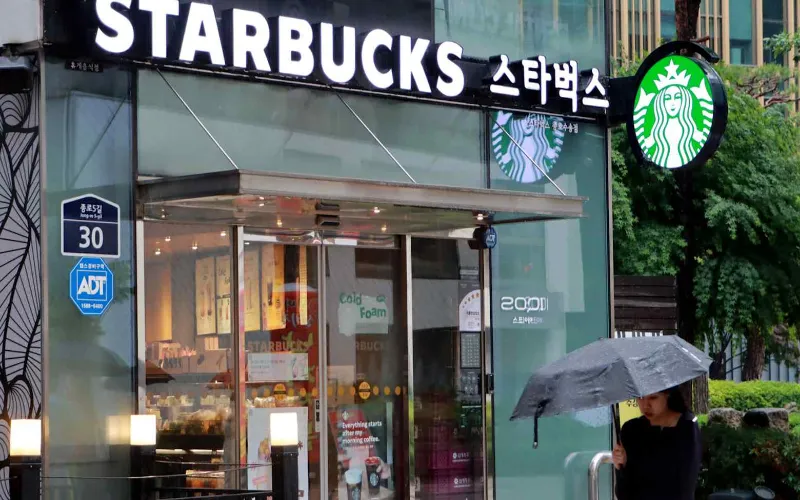

Starbucks Korea is facing growing public attention after new figures showed that prepaid balances on its customer cards reached 420 billion Won, or about $276 million, by the end of 2025.
The amount increased by 8.2 percent compared to the previous year. The rise has started a debate about whether stronger financial rules should apply to the company.
Unlike many prepaid payment services, Starbucks Korea does not fall fully under South Korea’s prepaid payment regulations. This is because the company both issues the cards and accepts them in its own stores.
Experts say this legal difference creates weaker customer protection rules compared to other payment systems.

Refund policies have also become a major concern. Customers must use at least 60 percent of the card balance before they can ask for a refund. Critics believe this system makes refunds harder and limits customer choice.

At the same time, the company is dealing with criticism over a recent marketing campaign launched on May 18.
The combined balance of prepaid funds loaded onto Starbucks Korea cards stood at 420 billion won ($276 million) as of the end of 2025, data showed Sunday, raising concerns over a regulatory blind spot.https://t.co/6j02oF9u4a
— The Korea Times (@koreatimescokr) May 24, 2026
Starbucks Korea used phrases such as “Tank Day” and “Tak on the desk!” in a tumbler promotion. However, the campaign was removed within hours after public backlash.
Many people linked the phrases to painful moments in South Korean history, including the 1980 Gwangju pro-democracy movement. Critics said the campaign appeared insensitive and disrespectful.
As a result, the issue quickly spread online and led to calls for stricter checks on company advertising campaigns.
Last November, Starbucks Korea received a government commendation for supporting local farms and using domestic agricultural products in its drinks.
After the recent controversy, authorities reviewed whether the award should be withdrawn. The Ministry of SMEs and Startups later decided not to revoke the honor.
Officials explained that the award was not directly connected to the marketing issue. Still, some activists and experts say the government can remove such awards if public trust is seriously damaged.