




The previously unreported episode points to a historic breakdown in American diplomacy
REUTERS/Illustration/John Emerson. Photos by Francois Lenoir and Yves Herman. REUTERS
When Donald Trump warned Iran on April 7 that “a whole civilisation will die tonight”, a European diplomat in Washington said his government wanted an urgent answer to a chilling question: Was the US president contemplating the use of a nuclear weapon?
Across Europe and Asia, the concern went beyond whether Trump’s apocalyptic threat was real or bluster. One fear, the diplomat said, was that Russia could seize the moment to justify similar threats in Ukraine, triggering a nuclear crisis on two continents.

European governments immediately sought reassurance through a traditional channel: the US State Department. But according to the diplomat, officials there gave an unsettling response: They didn’t know what Trump meant or what actions his words might portend.

The previously unreported episode points to a historic breakdown in American diplomacy. At a moment when a uniquely unpredictable US president is rattling markets and capitals with dramatic pronouncements, governments around the world are scrambling for clarity, only to discover that their usual points of contact — at US embassies or inside Washington — are missing, mute or out of the loop. At least half of America’s 195 ambassadorial posts worldwide are now vacant.
Margaret MacMillan, an Oxford University professor of international history, said the Trump administration is eroding America’s capacity to understand the world it operates in, raising the risk of global instability. “We’re not going to be able to use diplomacy as we have often done before: to build relationships, get agreements that benefit both sides, and avert and end wars.”
The Trump administration rejects the notion of a breakdown, saying the changes have strengthened US diplomacy and streamlined decision-making. “The president has the right to determine who represents the American people and interests around the world,” said Tommy Pigott, a State Department spokesperson.
This account of America’s diplomatic upheaval is based on interviews with more than 50 senior diplomats, White House officials and recently retired ambassadors, as well as dozens of foreign officials, diplomats and lawmakers across Europe and Asia.
As America’s career diplomats are fired or sidelined, its allies are changing how they deal with Washington. Rather than rely on embassies or formal channels, foreign governments say they are rewiring their diplomacy around a small circle of people with direct access to the president, leaving many dependent on back channels to manage a superpower whose signals have grown erratic.
Some US allies now believe the most effective response to a volatile president is to treat his rhetoric as background noise.
That calculus was evident after Trump’s threat to annihilate Iran stoked fears of nuclear war. In response, officials in Britain, France and Germany drafted what one European diplomat called a “harsh” joint statement later that day. But they chose not to release it, deciding Trump’s language was bluster and a public rebuke could prompt him to continue the bombing. By evening, Trump had announced a two-week ceasefire with Iran.
The British, French and German foreign ministries didn’t reply to requests for comment.
The episode, also previously unreported, illustrates an approach many allies now follow: restraint over confrontation. But diplomats said that repeatedly discounting Trump’s threats is also dangerous because it might leave them unprepared when another crisis looms.
More than a year into Trump’s second term, influence and information are increasingly flowing through a handful of envoys. Most prominent: Trump’s son-in-law, Jared Kushner, and the president’s longtime friend, real estate developer Steve Witkoff. Kushner has no formal government title, and Witkoff has no prior diplomatic experience. But some foreign governments now prioritise communications with them over official channels, Reuters found.
Kushner and Witkoff did not respond to requests for comment.
Other countries have cultivated their own unconventional lines into the White House. South Korean officials bypassed US trade negotiators to forge ties with White House Chief of Staff Susie Wiles — a person they felt could explain Trump’s true intentions as they fought back against his 25% tariffs. And Japan found an unlikely intermediary in SoftBank founder Masayoshi Son — one of Trump’s golfing partners.
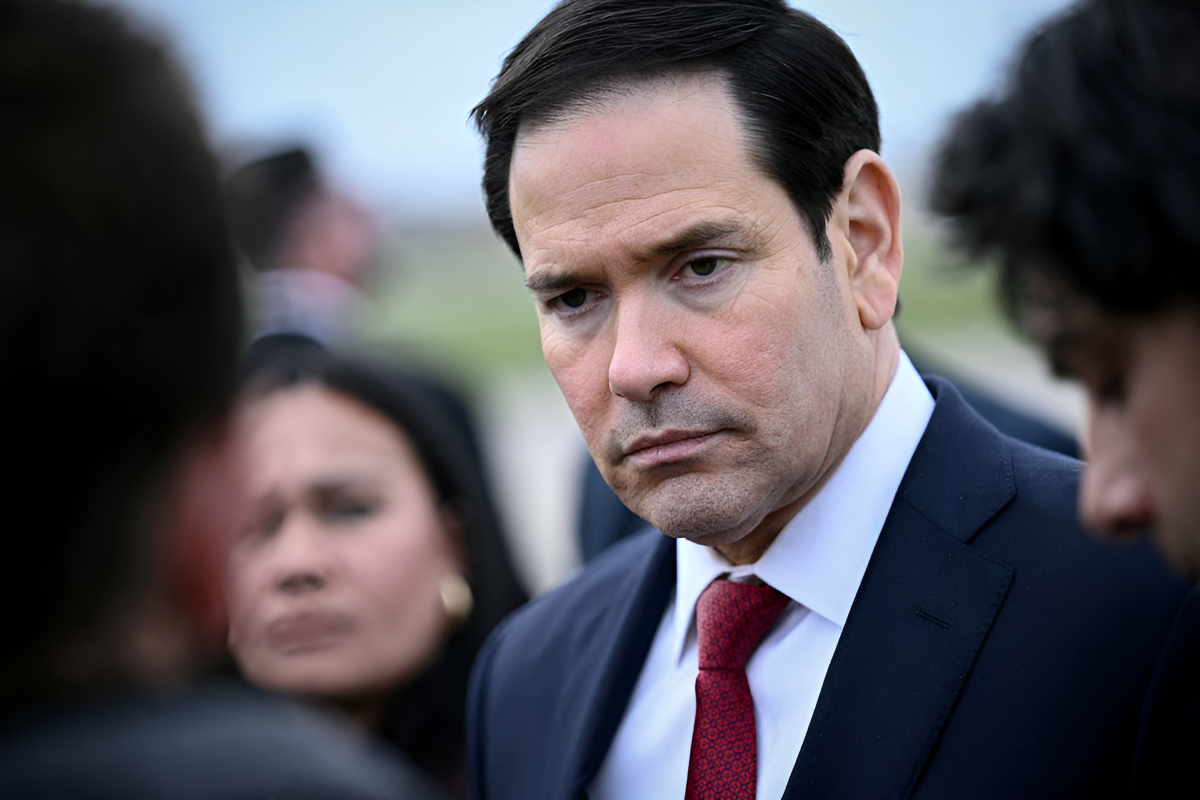
As Secretary of State, Marco Rubio has pushed a sweeping overhaul of the State Department. Brendan Smialowski/Pool via REUTERS
The State Department was an early target in Trump’s second term. In April 2025, Secretary of State Marco Rubio called it a “bloated” bureaucracy gripped by “radical political ideology” and announced a “comprehensive reorganisation plan”. The effort was foreshadowed in Project 2025, a policy blueprint published in 2023 by the Heritage Foundation, a right-wing think tank in Washington, DC. The plan called for a leaner State Department with more political appointees and the removal of career ambassadors deemed hostile to the administration.
About 3,000 employees left the State Department last year, nearly half fired and the rest taking buyouts — a roughly 15% cut to its US-based staff. Then, in December, Rubio ordered the unprecedented recall of about 30 ambassadors worldwide.
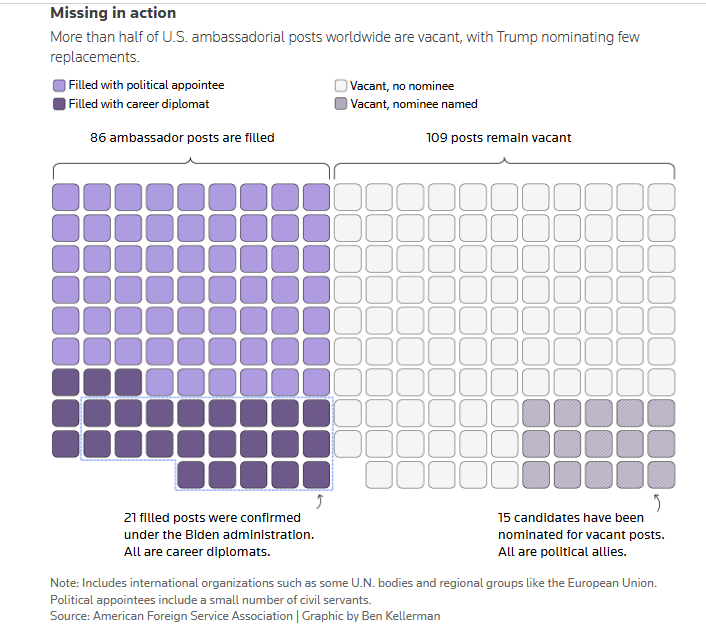
Rubio promised last year that his overhaul would “empower the department from the ground up, from the bureaus to the embassies”. But today, 109 of the 195 US ambassadorial posts worldwide are vacant, according to the American Foreign Service Association, the diplomats’ union.
Missing in action
More than half of US ambassadorial posts worldwide are vacant, with Trump nominating few replacements.
A White House official said the changes “have made our government more efficient and less bloated and more able to effectively execute the president’s foreign policy”.
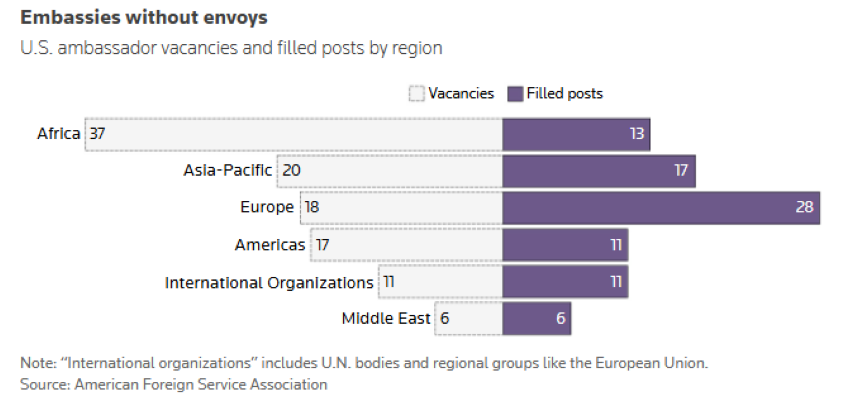
The new structure leaves Washington with fewer top diplomats on the ground in a major war zone. Five of the seven countries bordering Iran, and four of the six Gulf States, have no US ambassador.
Many US embassies are now run by chargés d’affaires — diplomats who serve as acting heads — rather than Senate-confirmed ambassadors, which some countries regard as a diplomatic downgrade. Former US ambassadors and State Department officials said the reduced diplomatic presence contributed to a chaotic scramble to evacuate Americans from the region when Trump started the Iran war.
Embassies without envoys
US ambassador vacancies and filled posts by region
“Those missions should all have ambassadors when you’re fighting a war,” said Barbara Leaf, a retired career diplomat who served as US ambassador to the United Arab Emirates under the first Trump administration and as assistant secretary of state for Near Eastern Affairs under President Joe Biden. “At a moment of crisis — and it’s an open-ended crisis — this administration has left these missions in a parlous state.”
Pigott said US embassies have performed well during the Iran war and are “more than appropriately staffed”.
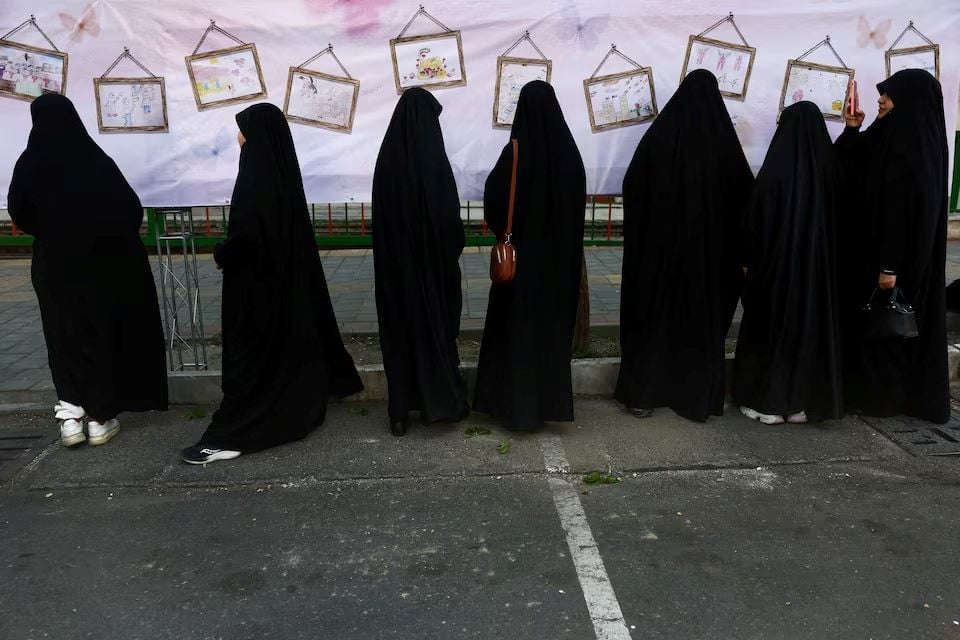
A ceremony for Iranian children killed following US airstrikes reflects the human cost when conflict replaces diplomacy. Majid Asgaripour/WANA (West Asia News Agency) via REUTERS
Diplomatic purge
For Bridget Brink, the fracture between the Trump administration and its far-flung diplomats was potentially a matter of life and death.
Brink was the US ambassador to Kyiv when Trump returned to office. In March 2025, just days after Trump’s explosive encounter with Ukrainian President Volodymyr Zelenskiy at the White House, the US cut off military aid and intelligence sharing to Ukraine. The weapons included air defence munitions that helped protect not just Ukrainians but also US embassy personnel from Russian drones and missiles, Brink said.
“I had 1,000 people, all civilians, on the ground,” Brink said in an interview. “And we were protected by Ukrainians using US and other equipment.”
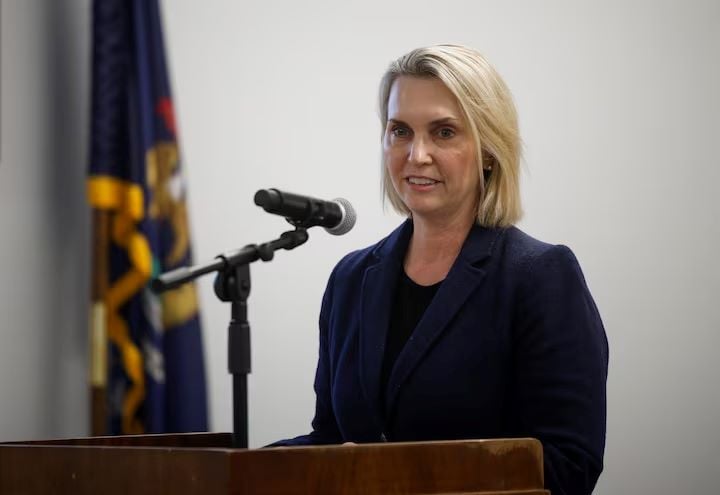
Bridget Brink said the Trump administration’s temporary halt in military aid to Ukraine while she was US ambassador in Kyiv was unexplained and put Ukrainian and American lives at risk. REUTERS/Rebecca Cook
The halting of military aid came without warning, she said. “When we tried to find out why it was stopped, we got no answer.” Brink reached out to the Pentagon, the State Department and the White House — “everywhere that we could, because we were very concerned about what this meant not only for Ukrainians but also for our own security.” The Pentagon did not respond to a Reuters request for comment on her account.
Brink said her staff worked behind the scenes to persuade the Trump administration to resume the aid, which it agreed to do on March 11. But she said she never received official confirmation of why the aid was halted in the first place.
Layoffs at the National Security Council (NSC), which traditionally coordinates foreign and defence policy at the White House, further frayed relations between the Trump administration and its embassies. In 2025, Trump slashed the NSC from hundreds of people to just a few dozen.
For months, NSC staff held no regular meetings and faced a de facto ban on holding interagency meetings on national security and foreign policy, according to three current and former US officials in Washington. The White House official said the NSC did not stop regular or interagency meetings, but they were smaller and focused on Trump’s priorities.
During that period, multiple officials said, staffers received little formal guidance about major topics such as the Ukraine war or NATO’s future. Instead, they scrutinised Trump’s Truth Social account for policy signals. Many NSC staffers kept Trump’s account open on a dedicated screen and responded quickly when he posted, the officials said.
Under Biden, Brink had regularly joined NSC meetings to develop and coordinate complex wartime policy between Washington and the Kyiv embassy. Under Trump, those meetings stopped, Brink said. She was told instead to “just call people” — an ad hoc approach she described as inefficient and unworkable in a conflict zone where Russian attacks were routine. “We’re seven hours ahead and in the bunker almost every night.”
The final straw, she said, was Trump’s policy of “appeasement” on Ukraine — seeking closer ties with President Vladimir Putin while blaming Ukraine for Russian aggression. She resigned in protest in April 2025. Two months later, she announced she was running as a Democrat from Michigan for the US House of Representatives.
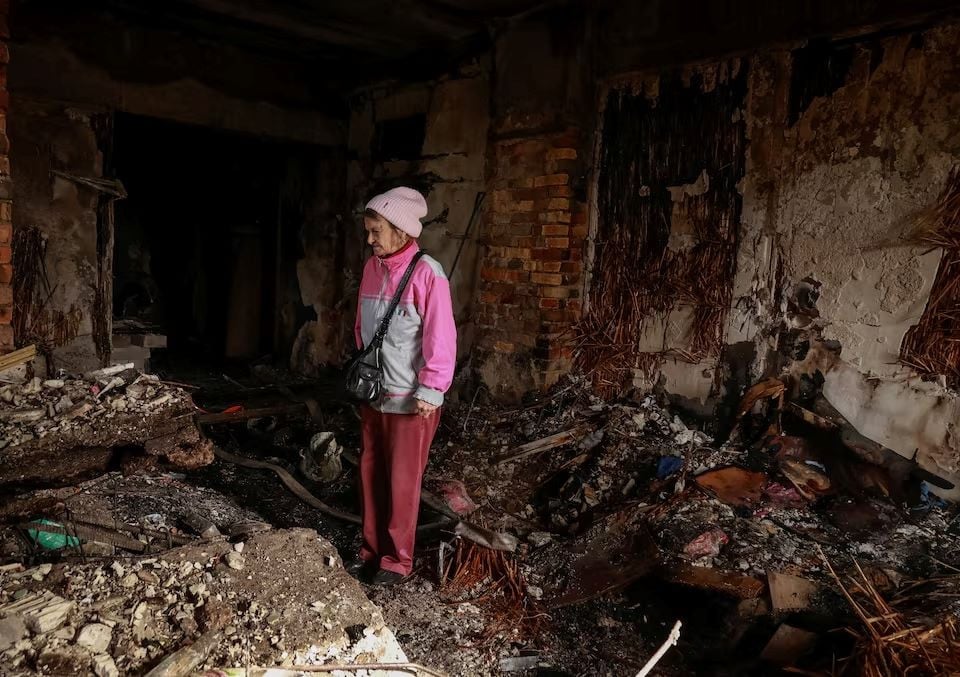
Russian drone strikes, like this one depicted in April in Ukraine’s port city of Odesa, underscore the stakes of frontline diplomacy. REUTERS
Her successor, Julie Davis, who served as chargé d’affaires, will also step down and retire in June, the State Department said on April 28. Department spokesperson Pigott said Davis is retiring after a “distinguished 30-year tenure” in the foreign service.
Many other career diplomats have had their ambassadorships abruptly cut short. A week before Christmas, about 30 were told to vacate their posts by mid-January — a recall that came largely without warning or explanation. Some departing ambassadors privately dubbed it “the Saturday Night Massacre”, a Watergate-era phrase now used to describe mass firings of officials.
US ambassadors fall into two categories: career diplomats and political appointees. Both are nominated by the president and confirmed by the US Senate. Career diplomats traditionally pride themselves on being nonpartisan and often have decades of experience. Political appointees are usually major campaign donors, former lawmakers or close presidential allies, and may have little or no diplomatic background.
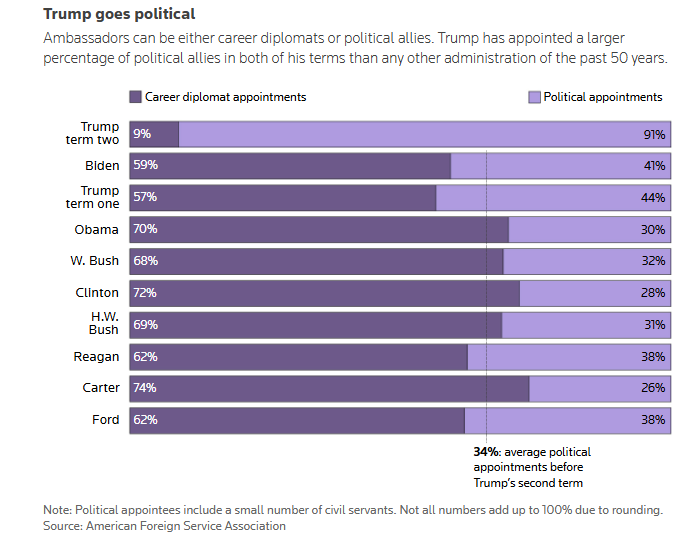
In US administrations spanning nearly 50 years, career diplomats have typically made up between 57% and 74% of ambassadors, according to the American Foreign Service Association. In Trump’s second term, about 9% of his ambassadorial appointees are career diplomats — a dramatic decline in the institutional expertise that has historically guided US diplomacy.
Most of the ambassadors recalled in December were career diplomats who were appointed to their current posts under Biden but had also served Republican administrations, including Trump’s. Ukraine envoy Brink, for instance, served five presidents, Democrat and Republican, including Trump in his first term.
Trump goes political
Ambassadors can be either career diplomats or political allies. Trump has appointed a larger percentage of political allies in both of his terms than any other administration of the past 50 years.
The State Department said the mass recall was a “standard process” and that replacements would represent Trump and “advance the America First agenda”, which the White House says will “champion core American interests”.
More than 100 ambassadorships remain open worldwide. “We are conducting our diplomacy with one arm tied behind our back,” said Brian Nichols, an ambassador for Democratic and Republican presidents from 2014 to 2021, in Peru and Zimbabwe.
Against that backdrop, a new pipeline of diplomats aligned with Trump’s agenda is emerging.
The Ben Franklin Fellowship, founded in 2024, identifies and seeks to promote conservatives within the State Department and counters what its leaders describe as bias against them. “A lot of moderate officers come to us — men, white men — [and] they say, ‘I’m totally marginalised by DEI,’” said co-founder Phillip Linderman, referring to diversity, equity and inclusion programmes under previous administrations.
The group now lists about 95 fellows on its website, including Deputy Secretary of State Christopher Landau. Another 250 members, mostly active diplomats, conceal their identities to avoid retaliation under future Democratic administrations, said Linderman, a former diplomat.
Among the fellowship’s largest financial backers is the Heritage Foundation, the architect of Project 2025. Last year, Heritage gave the group a $100,000 grant, effectively helping to advance one of Project 2025’s main recommendations: to remake a workforce it views as hostile to conservative administrations. Heritage told Reuters it supported many US organisations but exerted no “direct control” over them.
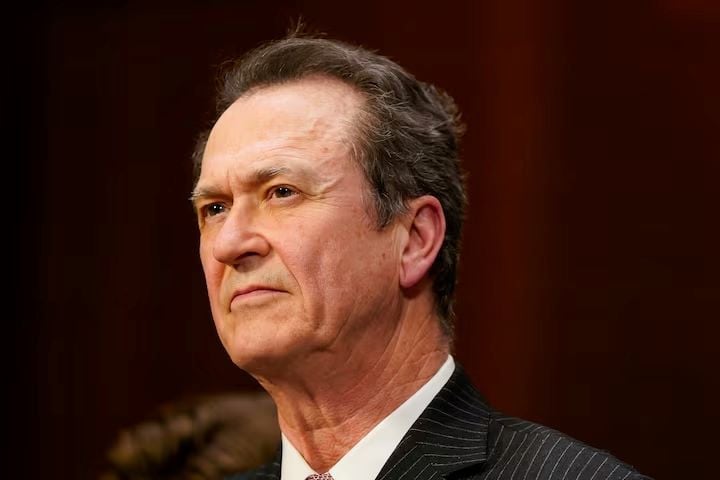
Ex-diplomat Phillip Linderman co‑founded the Ben Franklin Fellowship, part of a push to reshape the State Department by elevating diplomats aligned with Trump’s agenda. REUTERS
The fellowship aims to help Trump avoid appointing State Department staff who could obstruct his agenda, said Linderman and Matt Boyse, another ex-diplomat, fellowship co-founder and senior fellow at the Hudson Institute, a conservative think tank. The group convenes networking seminars, recruits on college campuses and advises the Trump administration on which career diplomats they see as ideological activists. “We’re helping them know — if they want to know — if a person is part of the resistance,” Boyse told Reuters.
Eighteen former ambassadors expressed concern that Ben Franklin Fellowship members were being fast-tracked into senior roles ahead of more experienced people. Pigott said the State Department “does not make personnel decisions based on participation in outside groups or demographic quotas”.
The rise of the envoy state
Trump has increasingly bypassed embassies, entrusting sensitive diplomacy to special envoys, most prominently Kushner and Witkoff, his principal negotiators on the wars in Ukraine, Gaza and Iran.
In the lead‑up to the Iran war, Kushner and Witkoff met Iranian officials in Geneva in late February but didn’t bring along US nuclear specialists, according to European officials involved in the discussions. In the previous nine months, the Trump administration fired at least a half dozen Iran nuclear experts, including Nate Swanson, a career diplomat who worked on Iran issues across administrations.
Swanson helped implement the Obama administration’s 2015 nuclear accord with Iran. The highly technical document, in which Iran agreed to significantly limit its nuclear programme in exchange for the lifting of nuclear-related economic sanctions, was drafted by large teams of diplomats and experts. Trump withdrew from the deal in 2018. Swanson said Witkoff called in April last year to ask him to rejoin renewed talks with Tehran. At the time, Swanson was working at the State Department’s Office of Sanctions Coordination.
Weeks went by, however, without meetings on Iran, Swanson said. “He had a ton on his plate,” he said of Witkoff, who was also juggling talks over Ukraine and Gaza. “We just didn’t have any input.” Before long, Swanson said, the administration “just stopped asking for advice”.
Less than two months after joining Witkoff’s negotiating team, Swanson was dismissed after the right-wing influencer Laura Loomer derided him on social media as an “Obama holdover”. He has since joined the Atlantic Council think tank as a senior fellow. Loomer did not respond to a comment request from Reuters.
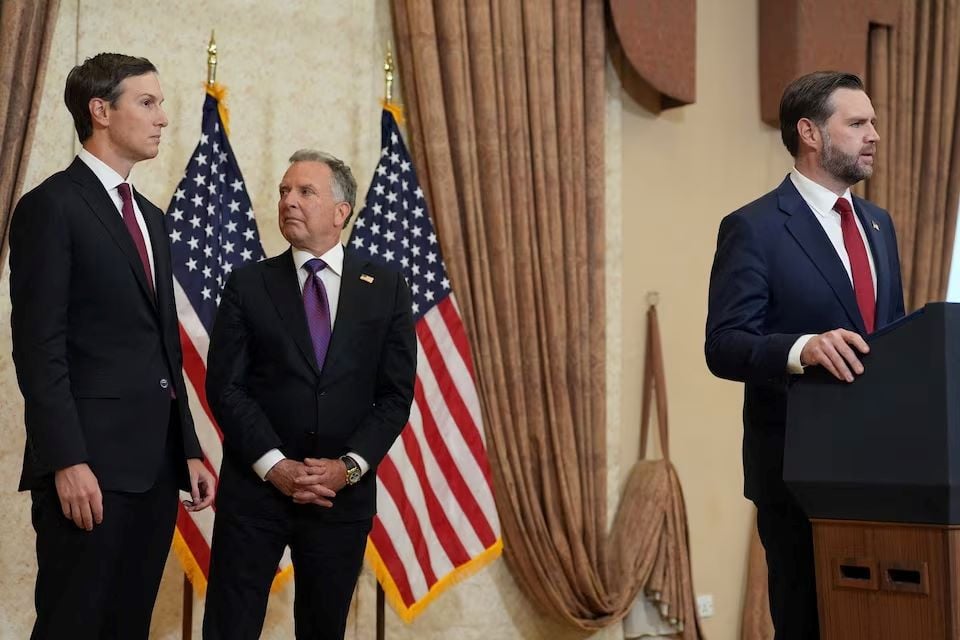
Trump relies on Jared Kushner and Steve Witkoff – pictured here with US Vice President JD Vance — to conduct high‑stakes diplomacy outside traditional channels. Jacquelyn Martin/Pool via REUTERS
One senior European diplomat said that during last-ditch talks in Geneva, the US team struggled to grasp the significance of different uranium‑enrichment thresholds and other elements of Iran’s nuclear programme, forcing European officials to explain. “How can you negotiate when you don’t understand the fundamentals?” the diplomat said.
On February 28, after the Geneva talks failed, the US and Israel started bombing Iran. On that day, and again on March 3, Witkoff briefed reporters on the talks. Those briefings suggested he had misread Iran’s proposal, exaggerating Iran’s nuclear threat by conflating limited enrichment of uranium with its near‑term weaponisation, said Kelsey Davenport of the Arms Control Association, a Washington, DC-based group that advocates for effective arms control policies. She reviewed recordings and transcripts from participants in the briefings.
Davenport said Witkoff’s statements contained many errors, suggesting “technical incompetence”. For example, he referred to Iran’s IR-6 uranium-enrichment centrifuge as “probably the most advanced centrifuge in the world”, when it’s not even the most advanced one in Iran. “Witkoff does not need to be a nuclear expert to negotiate a good deal. But if he’s not, he should be surrounded by people who are,” she said.
Trump’s top two envoys have also faced scrutiny of their potential conflicts of interest by Democrats in the US Congress — Kushner for allegedly negotiating peace deals with countries with which he has billion-dollar business deals, and Witkoff for his family’s role in a Trump crypto firm seeking inroads in the Middle East. Both have denied any conflict of interest.
The White House official called such claims “a tired narrative” pushed by Democrats and said both men “fully understood” Iran’s proposals during negotiations.
More than 90% of ambassadors appointed by Trump this term have been political loyalists, not career diplomats, and wield unusual power due to their perceived connections with the president’s inner circle. Two European officials recalled how Kushner’s father, Charles, the US ambassador to France, underscored his proximity to power by calling Jared directly in front of foreign counterparts at a meeting last year.
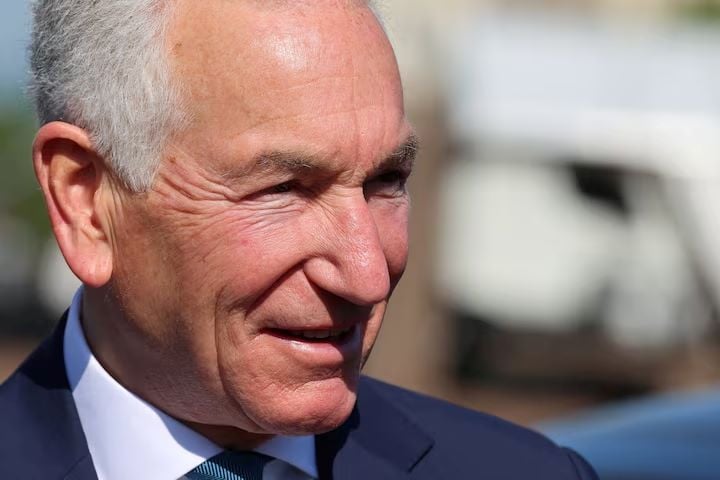
As US ambassador in Paris, Charles Kushner embodies a model of diplomacy in which access to Trump and his inner circle can carry as much weight as formal diplomatic experience. LUDOVIC MARIN/Pool via REUTERS
The US embassy in Paris declined to comment.
As his ambassador in Beijing, Trump appointed another loyalist: David Perdue, a former Georgia senator and businessman who has echoed Trump’s false claims that the 2020 election was rigged. Three US government officials who focus on China said Perdue has called Trump directly to hammer out decisions and address unresolved diplomatic questions, while even senior US diplomats were cut out of the loop. In planning high-level visits, they said, embassy staff often waited until Perdue had phoned Trump before committing to final arrangements — a break from the past when such decisions were made at lower levels.
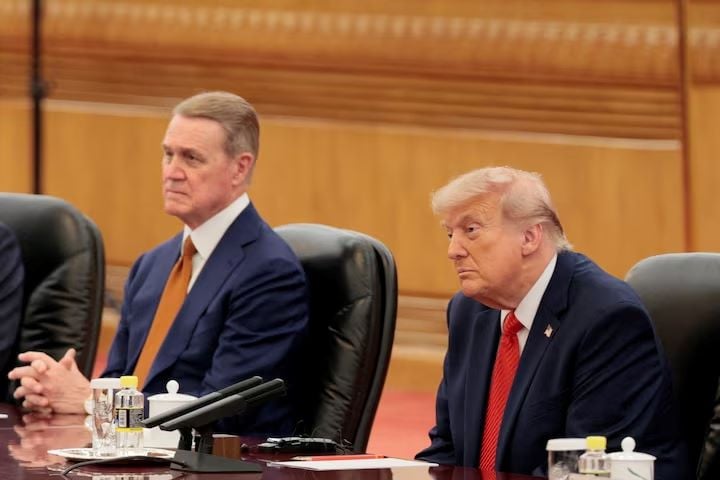
In Beijing, Ambassador David Perdue’s close ties with Trump reflect a shift away from the layered decision‑making that once defined U.S. diplomacy. REUTERS/Evan Vucci
Wolfgang Ischinger, a former German ambassador to Washington, said America’s current approach reflects a dramatic concentration of power over US foreign policy in one person: Trump. “That person will take decisions, sometimes overnight, sometimes in a formal meeting, sometimes not,” he said. “That’s very different, and I’m not sure the Trump way of taking decisions actually offers a guarantee for good decisions.”
Some countries are forging unconventional routes into the White House.
In April 2025, Trump announced a 25% tariff on South Korea, threatening its export‑driven economy. In subsequent trade talks, South Korean officials were struggling to determine whether their US counterparts were accurately conveying Trump’s position, Kang Hoon-sik, the presidential chief of staff, told a South Korean podcast. South Korean officials instead adapted by engaging directly with Wiles, the White House chief of staff. The arrangement was atypical. Kang is not the usual Korean counterpart facing the US on foreign policy, security or trade, and Wiles is not a trade negotiator.
The South Korean president’s office and foreign ministry didn’t reply to a request for comment.
Japan turned to SoftBank founder and Trump golfing buddy Masayoshi Son.
Shigeru Ishiba, who served as prime minister until October 2025, told Reuters that while he was leader, Japan used the tech tycoon as a back channel to reach Trump — the first time Son’s role has been publicly acknowledged. Ishiba said Son was acting largely in his own business interests, but confirmed that his government passed messages to Trump through Son.
Reaching Trump directly was vital because “the people around him are all yes-men,” said Ishiba.
SoftBank and Son declined to comment. Japan’s foreign ministry denied using Son as a back channel, but declined to comment on whether Ishiba had done so.
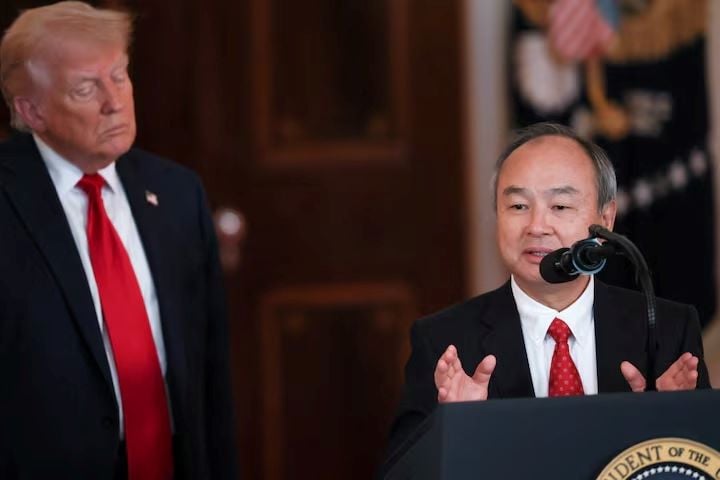
Some countries have found unconventional ways to reach the US president. Japan passed messages through SoftBank CEO Masayoshi Son, a Trump golfing partner. REUTERS/Leah Millis
Pigott, the State spokesperson, said he “rejects the premise that key decisions were made without meaningful input from experienced professionals”. He described Trump’s use of envoys and direct lines to the White House by some countries as effective. “The sustained direct engagement from the highest levels of this administration around the world is an asset,” he said, “and anyone claiming otherwise doesn’t know what they are talking about.”
The world recalibrates
Trump has upended diplomatic norms with a steady stream of threats — aimed at foes such as Iran and allies, including Denmark, Canada and the North Atlantic Treaty Organisation. Governments have been forced to weigh whether responding publicly would calm tensions or make them worse.
That’s what happened in early April after Trump warned that Iran’s civilisation could be wiped out. Officials in Britain, France and Germany drafted what one European diplomat described as the “harsh” joint statement — then decided against releasing it.
“We thought in the end [that] every time he barks like that, he does not bite,” said the diplomat, who helped draft the statement. European officials believed a US ceasefire with Iran remained possible and worried that a public rebuke might push Trump to continue bombing. They held back. By the end of the day, Trump declared the ceasefire.
The episode reinforced a lesson for many US allies: Silence can be the safest response to Trump’s most extreme threats.
Some European diplomats call this the “Merkel method”, a nod to former German Chancellor Angela Merkel’s stoic response during Trump’s first term: absorb provocations without public reaction while firmly defending national interests.
A handful of allies, including Australia and New Zealand, did criticise Trump’s Iran remarks. But some others, including Japan, held their tongues.
“President Trump’s statements changed constantly, so over time we stopped reacting to each one,” said Takeshi Iwaya, a lawmaker with Japan’s ruling Liberal Democratic Party who served as foreign minister until October 2025. “Reacting can just provoke unnecessary responses.”

