



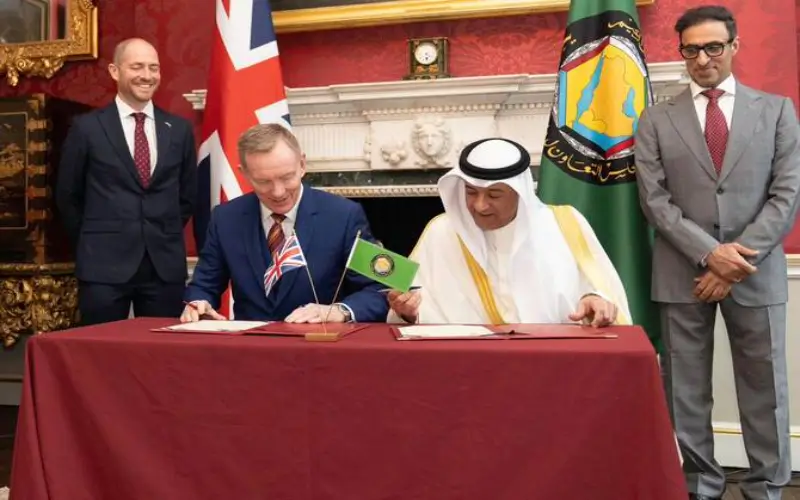

The United Kingdom has become the first G7 country to reach a trade agreement with the Gulf Cooperation Council, a move expected to add around £3.7 billion ($5 billion) every year to the UK economy.
According to the UK government and its officials, the deal could also increase real wages by about £1.9 billion. A key part of the agreement is cutting tariffs, with around £580 million worth of duties on British exports to the Gulf set to be removed over time, including £360 million that will be scrapped immediately once the deal takes effect.
Prime Minister Keir Starmer described the agreement as a major success for British businesses and said it is the fifth big trade deal made since his government took office, after agreements with India, the US, the EU, and South Korea. He said the deal strengthens ties with Gulf countries and opens new opportunities for trade and investment.
GCC Secretary-General Jasim Al-Budaiwi said the agreement will strengthen long-term economic cooperation between both sides. UK Business and Trade Secretary Peter Kyle also said the deal gives exporters more confidence and stability when planning future trade.

The agreement is expected to benefit several UK industries, including food producers, automotive companies, and retailers, as the Gulf region imports most of its food. UK services, which make up a large part of the economy, will also gain better access to Gulf markets, while professionals such as lawyers, engineers, and consultants will find it easier to travel and work there.

The deal also includes improvements for the technology sector, allowing UK firms to store and process data outside the Gulf for the first time, reducing costs. Officials estimate that trade between the UK and GCC could rise by nearly 20 percent, with billions already invested in joint projects like Heathrow Airport.
Experts and regional officials say the agreement could support economic diversification in Gulf countries, especially Saudi Arabia under its Vision 2030 plan, while also helping the UK strengthen its global trade position after Brexit.

