Putin hails Russia's test launch of new Sarmat nuclear missile, calls it 'most powerful'

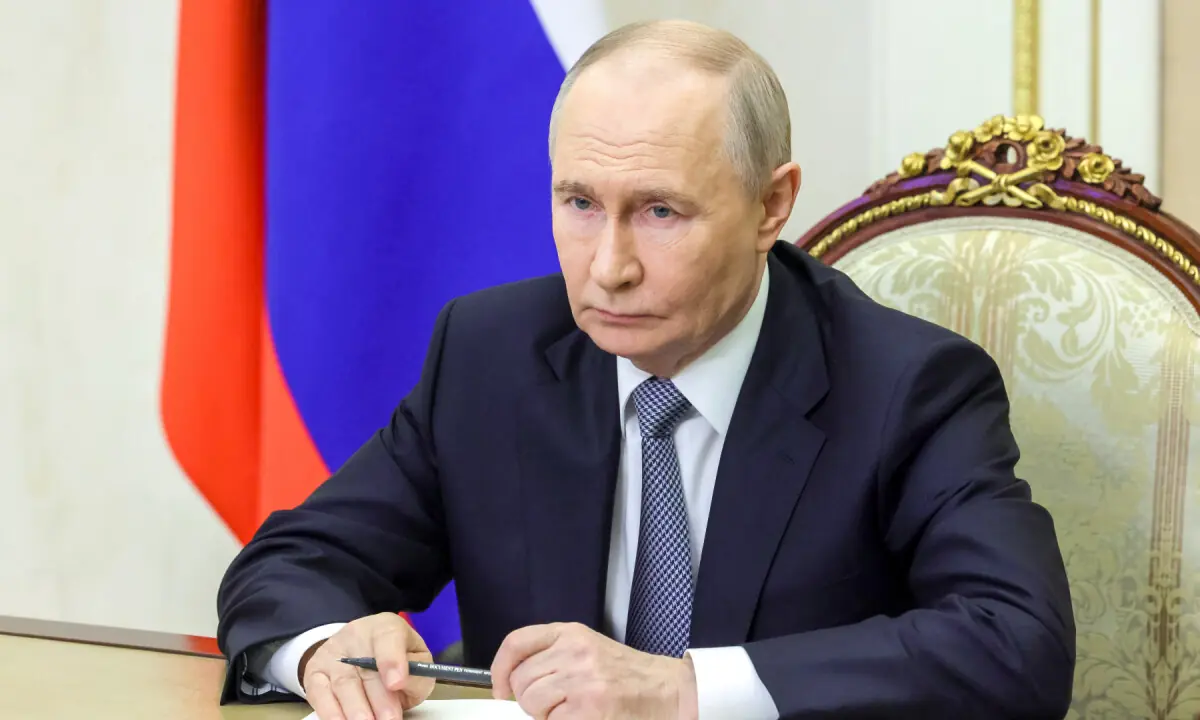

Russia’s President Vladimir Putin has welcomed the test launch of the new strategic nuclear missile Sarmat, describing it as “the most powerful in the world”.
State TV showed Sergei Karakayev, commander of Russia’s strategic missile forces, reporting to Putin on what he said was a successful Sarmat test-launch on Tuesday.
Putin said Russia will deploy Sarmat for “combat duty” by the end of this year. The planned deployment of the missile — designed to deliver nuclear warheads to strike targets thousands of miles away in the United States or Europe — follows years of setbacks and delays.
Putin, in televised comments, said the yield of the warhead was more than four times greater than any Western equivalent and its range exceeded 35,000 kilometres (21,750 miles).
“It has the ability to penetrate all existing and future anti-missile defence systems,” he said.

“The deployment of launchers equipped with the Sarmat missile system will significantly enhance the combat capabilities of the ground-based strategic nuclear forces in terms of guaranteeing the destruction of targets and solving strategic deterrence problems,” Karakayev said.
The test launch of the intercontinental ballistic missile (ICBM) comes months after the last treaty with the United States limiting their atomic arsenals lapsed.
The ending of the New START agreement in February formally released the world’s two largest nuclear powers from a raft of restrictions.
Western security analysts say Putin has made exaggerated claims for the capabilities of some of Russia’s new generation of nuclear weapons, part of a modernisation programme he first announced in 2018.
Sarmat has seen failures in the past — one test in September 2024 left a deep crater at the launch silo, according to Western experts.
Since the start of the Ukraine war in 2022, Putin has repeatedly reminded the world of the size and power of Russia’s nuclear arsenal in statements seen by the West as attempts to deter it from intervening too strongly on the side of Ukraine.