

The United States is “not looking for a fight” over the Strait of Hormuz, and its ceasefire with Iran still holds, but any attack on commercial shipping will be met with a “devastating” response, the Pentagon chief said on Tuesday.
The warning from Pete Hegseth came on the second day of a US effort, dubbed ‘Project Freedom’, to facilitate the transit of commercial ships through the Strait of Hormuz, which Iran had closed in response to the US-Israeli war on the Islamic republic.
“We’re not looking for a fight. But Iran also cannot be allowed to block innocent countries and their goods from an international waterway,” Hegseth told reporters.
“If you attack American troops or innocent commercial shipping, you will face overwhelming and devastating American firepower.”

The Pentagon chief added that Washington is promising security for commercial vessels with a “red, white and blue dome” over the Strait of Hormuz.

“As a direct gift from the United States to the world, we have established a powerful red, white and blue dome over the Strait,” Hegseth said, noting that US destroyers are on station providing overwatch for commercial shipping, in conjunction with combat and surveillance aircraft.
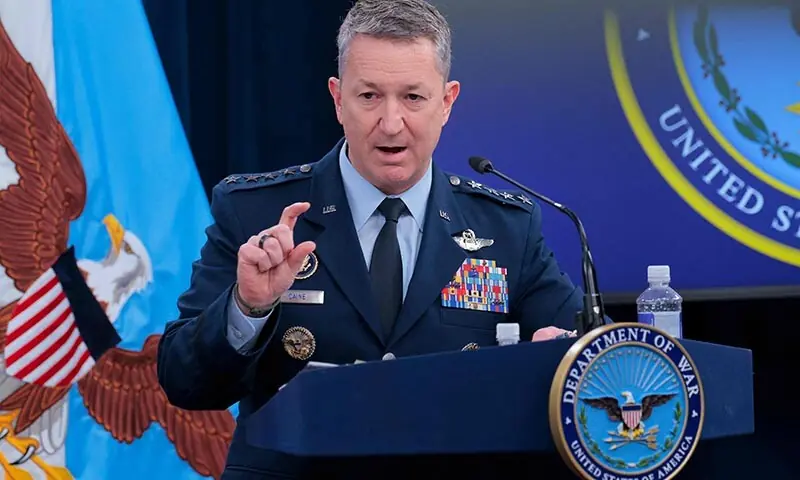
Chairman of the Joint Chiefs of Staff General Dan Caine, meanwhile, said US forces are ready to resume major combat operations against Iran if ordered to do so.
“No adversary should mistake our current restraint with a lack of resolve,” said Gen Caine, flanked by Hegseth.
Admiral Brad Cooper, the commander responsible for US troops in the Middle East, said on Monday that Washington’s forces had intercepted missiles and drones fired by Iran and also destroyed six small Iranian boats that threatened shipping.
But both Caine and Hegseth downplayed those hostilities, with the US’ top general describing it as “low harassing fire” and the Pentagon chief saying that “right now, the ceasefire certainly holds.”
“Since the ceasefire was announced, Iran has fired at commercial vessels nine times and seized two container ships, and they have attacked US forces more than 10 times, all below the threshold of restarting major combat operations at this time,” Gen Caine said.
US and Israeli forces launched the war against Iran on February 28, after which the Islamic republic closed the Strait of Hormuz — a vital route for oil and gas exports — while American forces later launched a blockade of Iranian ports.
President Donald Trump has indefinitely extended what was initially a two-week ceasefire, but the conflict — and its widespread economic fallout — remains unresolved.
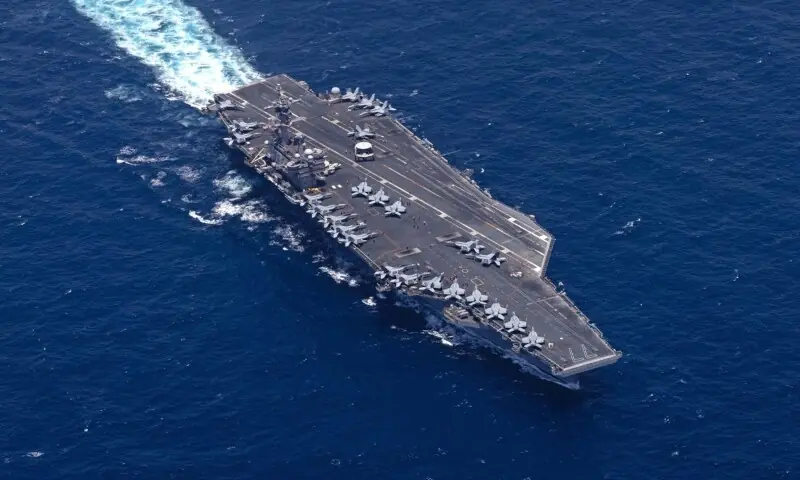
Caine said there are currently “22,500 mariners embarked on more than 1,550 commercial vessels trapped in the Arabian Gulf, unable to transit.”
Cooper said on Monday that the United States is not directly escorting ships but rather had cleared a safe path through the Strait of Hormuz and then put in place multi-layered defences, including ships, aircraft and electronic warfare to respond to any threats.
Hegseth made clear in his remarks that the operation will not be open-ended.
“We’re stabilising the situation so commerce can flow again, but we expect the world to step up. At the appropriate time, and soon, we will hand responsibility back to you,” he said.