

ISLAMABAD: Persistent governance failures and weak community-level systems continue to undermine Pakistan’s ability to prepare for and respond to climate disasters, a new report has warned, calling for urgent reforms to build long-term resilience across vulnerable districts.
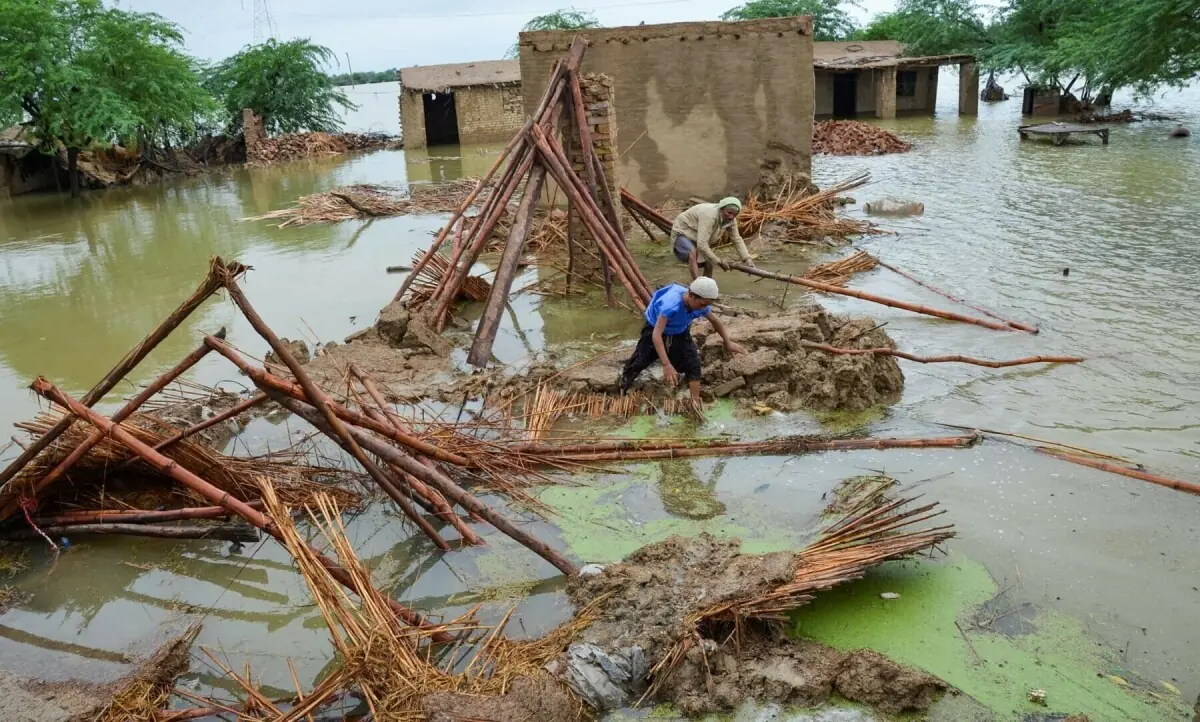
The findings, compiled by the think tank Jinnah Institute, come in the wake of the devastating 2025 floods, which submerged entire districts, displaced millions, and wiped out livelihoods, exposing critical gaps in preparedness despite years of policy frameworks, institutional reforms, and international commitments. The report argued that reliance on reactive disaster management has proven insufficient in the face of intensifying climate stress.
Based on insights from more than 330 participants, including 36 focus group discussions and 24 key informant interviews conducted nationwide, the study highlighted how communities experienced, coped with, and recovered from climate shocks. It shifts the focus from traditional vulnerability assessments to a more comprehensive understanding of resilience rooted in lived experiences.
A key feature of the report is Pakistan’s first district-level Resilience Index, which ranks 130 districts across five dimensions: human capital, economic well-being, standard of living, urbanisation, and digital access.

The index revealed stark disparities, with Lahore scoring 0.72 compared to just 0.14 for Lehri in Balochistan. These findings underline deep regional inequalities and provide a baseline tool for policymakers and development partners to monitor progress over time.

Communities identified seven core drivers of resilience, including access to education and vocational skills, women’s ownership of assets, digital literacy, strong community networks, social protection programmes such as the Benazir Income Support Programme (BISP), availability of public services, and proximity to urban centres.
Notably, respondents described resilience in practical terms as a gradual process of moving away from conditions that perpetuate vulnerability.
The report also sheds light on the social dimensions of vulnerability. Women with asset ownership and decision-making authority demonstrate stronger adaptive capacity, yet continue to face barriers in accessing documentation, financial services, and mobility.
Persons with disabilities highlighted both physical and societal barriers, while transgender individuals reported reliance on urban anonymity for safety, with limited access to healthcare, education, and family support.
Youth in remote areas face constrained opportunities, often forced to choose between unaffordable education and limited local employment.
The report said that informal support systems and community-based organisations play a critical role in filling service delivery gaps, although it cautions that these cannot replace formal state mechanisms.
Governance challenges remain a central concern. Early warning systems frequently fail to reach at-risk populations in time, while coordination between institutions is fragmented. Environmental mismanagement, including deforestation, illegal construction in floodplains, and the neglect of wetlands and drainage systems, continues to exacerbate the impact of disasters.
The absence of effective local governments further compounds the problem, leaving communities without grievance redressal mechanisms or meaningful channels to communicate their needs. Marginalised groups, including refugees, religious minorities, and persons with disabilities, face compounded risks due to documentation barriers and exclusion from social protection systems.
The report outlines a policy roadmap urging federal and provincial authorities to revitalise local governance structures, reform welfare systems, and strengthen early warning and accountability mechanisms. It also calls on development partners to support community-led adaptation strategies and invest in district-level data, while encouraging the private sector to move beyond short-term corporate social responsibility initiatives towards long-term investments in climate resilience.
Above all, the report emphasises that effective resilience-building must be grounded in community participation, warning that without inclusive and coordinated action, Pakistan’s most vulnerable populations will remain exposed to recurring climate shocks.
Published in Dawn, May 1st, 2026