‘No impact’ of Middle East conflict on remittances from Gulf countries so far: finance minister

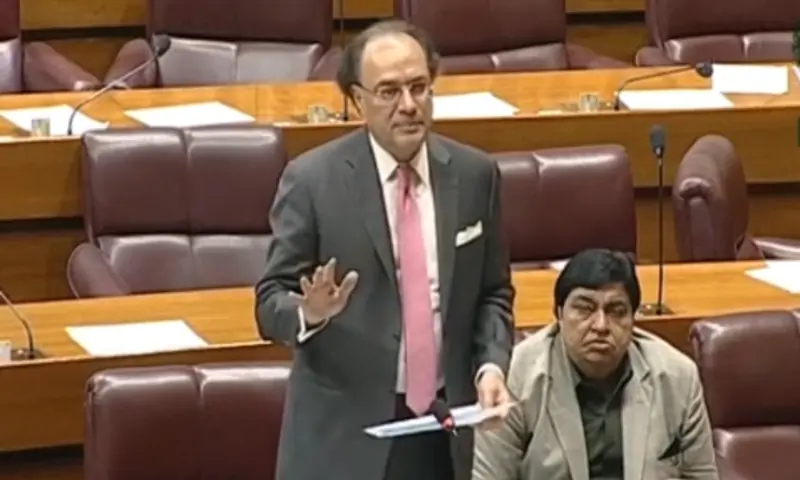

ISLAMABAD: Finance Minister Muhammad Aurangzeb on Tuesday said the ongoing conflict sparked by the US-Israeli war on Iran has not adversely impacted Pakistan’s remittances from the Middle East.
“Some members spoke of remittances, which is true. [However,] thankfully, there has been no impact on remittances as of yet,” Aurangzeb said while speaking on the National Assembly floor.
“However, the reality is, roughly between 40 to 50 per cent of our remittances are coming from the GCC (Gulf Cooperation Council) countries,” the minister said, pointing out the region’s large contribution.
“So we are also reviewing its elasticity, that what difference it can make on the balance of payments and the current account,” he added.

Noting that other lawmakers had “rightfully” wondered what impacts the conflict would have on Pakistan’s economy, Aurangzeb said the government was regularly monitoring several aspects.

“Not only is the oil and gas bill increasing, but trade and insurance cost has gone up and the vessels available that bring these molecules,” he added.
Commenting on Pakistan’s diplomatic efforts to secure peace in the Middle East, Aurangzeb said, “Pakistan is playing its role, with prime minister sahib, field marshal sahib, deputy prime minister sahib. May God make us take things to the finishing line.”
However, he cautioned that even if hostilities cease soon, the resulting crisis would remain for “weeks and months” as energy infrastructure has been hit and continues to be hit across the Gulf.
During his speech, Aurangzeb detailed that government meetings are held on a daily basis, where steps taken by others in South Asia and even those in Southeast Asia are studied.
“Rationing has begun in a lot of countries […] even people with deep pockets have already transmitted the price. If you compare internationally, in the UAE, petrol prices were increased by 30pc and diesel prices by 70pc,” he said.
The minister cited Bangladesh, Sri Lanka, India, Philippines and Cambodia as examples of nations hit hard by the ongoing crisis.
In an apparent response to remarks made by other lawmakers, Aurangzeb stressed the need to set some facts straight after “statements were made that had no connection with reality”.
The minister highlighted that a blanket subsidy had been given, halting the transmission of oil price hikes to the public from March 14 to April 4.
“It is important to reinforce that a blanket subsidy of Rs129 billion was given,” he asserted, pointing out that funds were sourced through austerity measures, which were also facing a third-party audit.
The budget for Public Sector Development Programme (PSDP) was cut by Rs100bn, Aurangzeb noted, adding that dividends and profits were obtained from state-owned enterprises (SOEs).
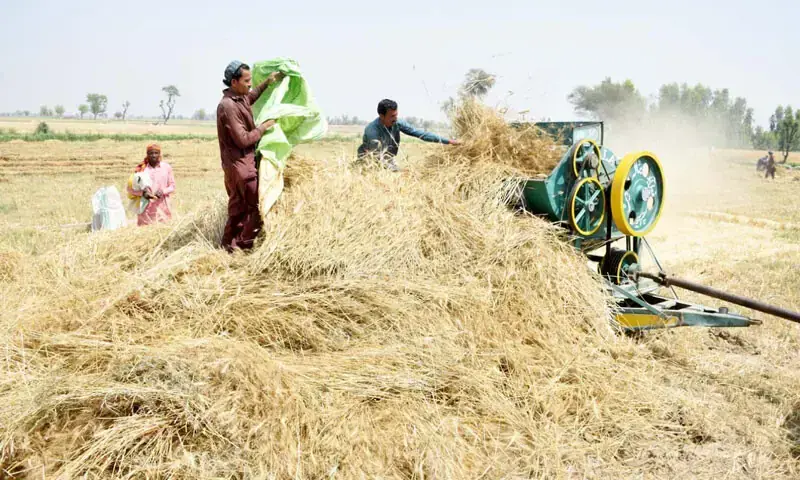
“On the question of whether the deserving segments were taken care of or not, so a targeted subsidy was announced right at that time,” he said, referring to the subsidies aimed at bikers, public transport and small-scale farmers.
“We have not just announced the subsidies; the dirbursement are underway and the process had begun on Saturday,” Aurangzeb highlighted.
The minister noted that “very constructive suggestions” had come from the treasury and opposition benches.
“While we should hope for the best, we have to plan for the worst and hope is not a strategy,” he remarked.
PPP’s Sharmila Faruqui decries fuel price hike
Speaking on the NA floor before Aurangzeb, PPP’s Sharmila Faruqui decried the recent hikes in petroleum prices.
She said that the briefing given by Petroleum Minister Ali Pervaiz Malik before the NA on Monday on the increase in oil prices was not satisfactory and he was “unconvincing”.
Since the February 28 strikes by the US and Israel on Iran triggered the war and pushed up global oil prices, fuel prices in Pakistan have reached record highs.
In two major hikes, petrol prices have risen from Rs266.17 to Rs378 — after a partial reduction in a recent hike — while those of high-speed diesel have surged from Rs280.86 to Rs520.35.
In her speech, Faruqui claimed Pakistan was the first country in the region to increase oil prices.
The PPP leader referred to recent addresses by PM Shehbaz and the April 2 press conference by three ministers on the issue of oil prices, saying they showed a lack of consistency in the government’s policies and decisions.
Faruqui noted that in his speeches, PM Shehbaz kept on insisting that prices would not be raised and their impact would not be transferred to the people, but then ministers held a press conference and suddenly prices were increased twice.
She suggested that the government hire the services of some consultants in order to have consistent policies, highlighting that no one knew how long the economic crisis stemming from the Middle East conflict would last.
The PPP MNA noted there was a tax of Rs131 per litre on petrol.
“What, after all, is this government’s policy? How does it plan to move forward? The price of diesel is also the highest in the region,” she said.
Faruqui added that people were asking them how they were supposed to make ends meet.
She contended that the government talked about motorcyclists only, without realising there were other people being affected too.
The PPP leader remarked that even she hesitated while buying petrol, wondering what the situation would be for ordinary people and those with small vehicles.
The government should reduce the profit margins of petroleum companies and formulate a comprehensive strategy, the PPP lawmaker suggested.
MQM-P calls for briefing on regional situation
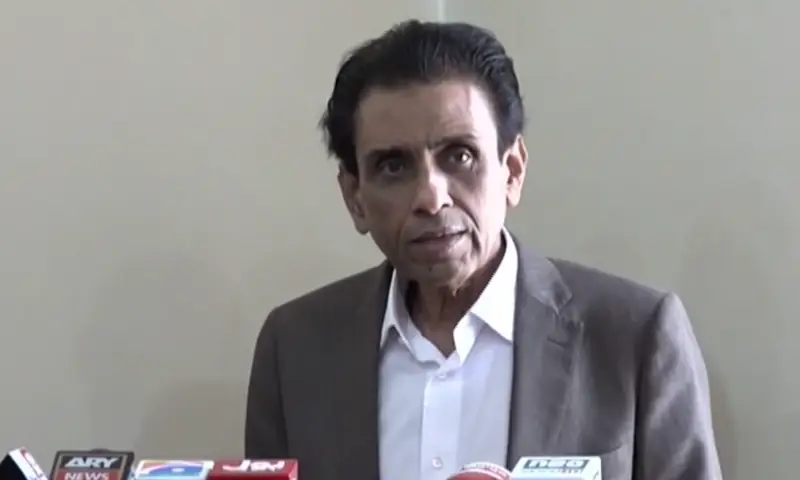
Meanwhile, Javed Hanif of Muttahida Qaumi Movement-Pakistan (MQM-P) demanded that the NA should be given a comprehensive briefing on the possible fallout of the ongoing regional situation so that they can formulate future policies and decisions.
Taking part in the debate, Hanif demanded that Deputy PM and Foreign Minister Ishaq Dar, Defence Minister Khawaja Asif, Aurangzeb, and a team of security officials should brief the house on the Middle East conflict and its possible implications for Pakistan.
He appreciated Pakistan’s role and its mediatory efforts, saying that everyone was trusting Pakistan and its stature has increased.
However, the MQM-P leader said, they should be ready for the situation if these efforts remained fruitless.
He regretted that they were discussing the petroleum prices, which he termed a very trivial matter in the whole crisis. He contended that the entire architecture of the region could change in the future and they were only discussing oil prices.
“What if the US acts on its threat?” Hanif asked in an apparent reference to the US president’s threats to wipe out Iran. He cautioned that if it happened, then the statehood in Iran would come to an end.
He observed that if Iran retaliated, then the economic system of the Gulf countries would collapse, which could cause serious financial problems for Pakistan.
“What will happen with our remittances that are sent by some five million Pakistanis?” Hanif asked.
The MQM-P lawmaker stressed the need to consider what would happen to national unity, keeping in view the emotional attachment of Pakistanis during the crisis.
He was of the view that these issues were more serious than the issue of petroleum prices, which they had been discussing for the last few days.
Achakzai suggests formation of ‘national govt’
Separately, National Assembly Opposition Leader Mahmood Khan Achakzai suggested the formation of a “national government” to build consensus among the country’s political parties.
Speaking in the NA during a debate on the Iran situation, Achakzai said, “We should agree on some democratic points at least — Parliament will be the source of power, supremacy of the Constitution, policies will originate from here.”
Stating that the time had passed when they used to blame each other for mistakes, the opposition leader said, “We will have to move toward a national government.”
“We will have to agree on some points. We will have to ask the establishment to give some space,” he said.
Pointing out a “most dangerous” concern, Achakzai noted that several key politicians, including President Asif Ali Zardari, Prime Minister Shehbaz Sharif and PML-N President Nawaz Sharif, were now of old age.
“God forbid, if these four to five people are not here anymore, the remaining would not be able to do anything,” he added.
He called for key politicians, including Zardari, Nawaz, Shehbaz and Imran Khan, to come to the table to discuss national issues.
The country, Achakzai said, could only move forward through “collective wisdom”.
He maintained that the “establishment” tried to break PTI founder Imran Khan but failed. Achakzai warned of resistance if there was any effort from “within the party or the rulers” to sideline Imran.
“Due to our own mistakes, this system is not functional anymore,” claimed Achakzai, also the head of the opposition alliance Tehreek-i-Tahafuz-i-Ayin-i-Pakistan (TTAP).
“This system has collapsed; whatever happened after the 2024 elections,” he claimed, referring to the PML-N-led coalition government formed after the Feb 8, 2024, general elections.
The opposition leader also pointed out the absence of PM Shehbaz from the house. “Shehbaz Sharif is not here; otherwise, I would have spoken to him,” he said.
Lashing out at United States President Donald Trump, Achakzai said one individual wanted to push the entire world into war.
He added that the US trusted Pakistan and it should take advantage of that. The opposition leader further said that Afghanistan had been Pakistan’s ally and would remain so.
Achakzai suggested that there should be no adjournments and the session should be held continuously, with everyone allowed to speak.