
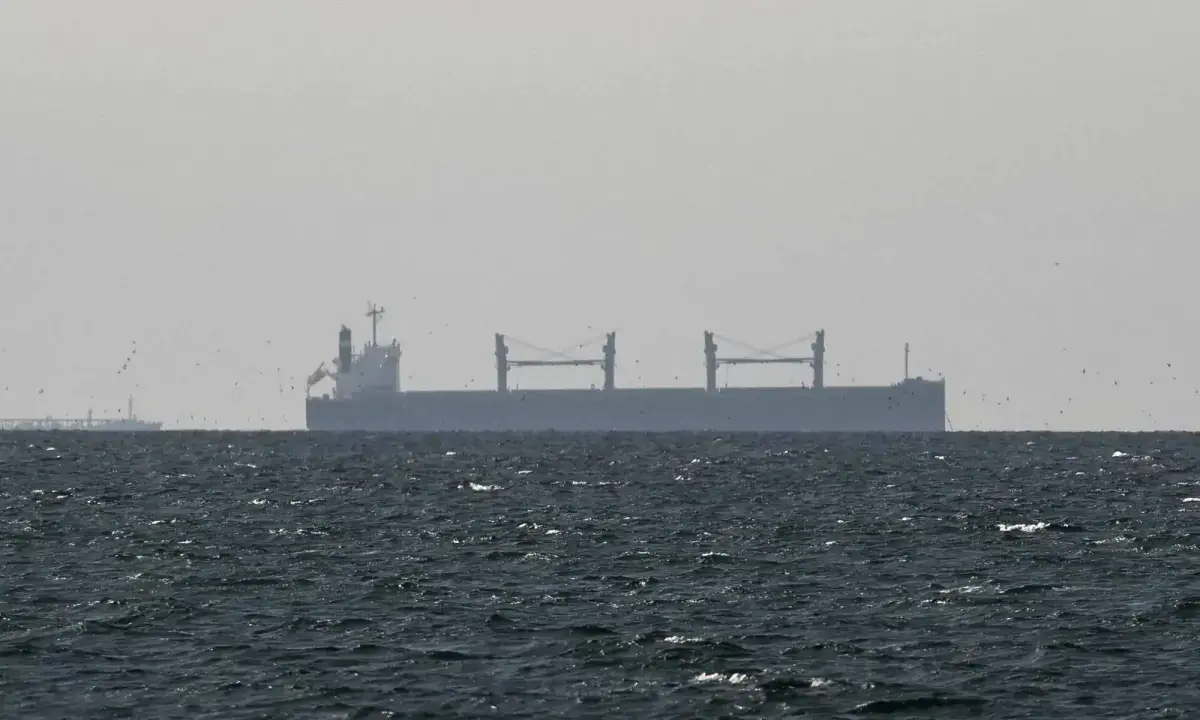

The global energy crisis continues to grow, with no end in sight. When President Trump came to address the nation on April 1, he had few answers to the question surrounding the closure of the Strait of Hormuz, and the steps to reopen the narrow shipping lanes, responsible for shipping 20 per cent of crude oil and 30pc of liquefied natural gas to the world markets, especially Asia.
The speech failed to cool oil markets, as escalating tensions with Iran crushed ceasefire hopes and reignited bullish momentum — at least for the next couple of weeks. It was evident that the president had no strategy on hand to get off the ramp.
The closure of the Strait has raised many questions. Where is the energy world heading? Is there a new energy order in the making? Big questions with few answers, but the blueprint is beginning to emerge.
The new emerging energy world order would never be the same as it was on February 28, 2026. The very reliability of the Persian Gulf energy suppliers is now under a cloud, with consumers, especially in the Western world, looking for viable alternatives. In the emerging scenario, Gulf Arab oil producers are striving to bypass the Strait of Hormuz and that is not easy to accomplish.

If the Houthis decide to close the Bab al-Mandeb strait, it will compound global energy woes, likely pushing oil prices to $150 a barrel

The world’s top crude exporter, Saudi Arabia, has diverted most of its oil exports to its Western port of Yanbu. This means that Saudi Arabia will first need to transport oil from its eastern region to the west coast. About 80–90pc of Saudi oil is extracted from its fields in the east. In normal circumstances, the oil is then exported through the Persian Gulf, taking the Hormuz route; that is no longer possible.
To transport crude from fields in the east to the Yanbu port on the Red Sea, Saudi Arabia is using its East-West pipeline. Before the beginning of hostilities, Aramco was transporting some two million barrels per day of crude through this pipeline. Much of this transported oil was used for domestic consumption. Saudi refineries and petrochemical complexes in the western region also needed crude oil and gas to meet their needs. Aramco, the Saudi Oil giant, now claims it is transporting 7m barrels a day through the pipeline to Yanbu port for loading on vessels and exports. Even in this scenario, Saudi exports could be less than normal.
In the initial days of the war, Aramco had declined to send at least two vessels of crude oil to Pakistan because of the closure of the Hormuz. But after a SOS from Islamabad, Aramco promised to make a detour and send a few vessels from its Yanbu port, as shipments from this port didn’t pass through the Strait of Hormuz.
To reach the Indian Ocean, vessels originating from Yanbu generally pass through the narrow Bab al-Mandab, another shipping chokepoint. In normal times, this strait at Yemen’s southwestern tip is a pathway for ships carrying about 10pc of the world’s oil and natural gas supplies.
But there is another problem here: Yemeni Houthis, regarded as an Iranian ally, dominate this passageway. From 2022 to 2025, Houthis kept targeting vessels passing through this waterway. Now if Houthis decide to widen the war theatre and close the Bab al-Mandeb strait, it will compound global energy woes, likely pushing oil prices to $150 a barrel and beyond, experts said.
Iranian strategists are fully aware of this vulnerability. An Iranian military official told the country’s semi-official news agency a week ago that if the US and Israel attack more of the country’s energy infrastructure, Iran would escalate “insecurity in other straits, including the Bab al-Mandeb Strait and the Red Sea.”
Houthis were quick to show their intent when they fired the first salvo. On March 26, the Houthis confirmed launching barrages of ballistic missiles and drones targeting military sites in southern Israel, indicating that they can block vessels passing through Bab al-Mandab at their whim.
What can the Saudis do in this case? They will need to avoid this route too. Ships avoiding the Bab al-Mandab Strait and the Red Sea must reroute around the Cape of Good Hope in South Africa. This alternative route adds 10–15 days (or more) to the voyage, significantly increasing fuel costs and transit times for vessels travelling between Asia and Europe. A rise in insurance costs will be another addition. Ships will thus need to travel around the southern tip of Africa rather than using the Suez Canal, and a voyage from the Persian Gulf to Rotterdam increases from an estimated19–35 days.
Alternatively, some cargo may be moved via limited multimodal options, such as unloading in Saudi Arabia (Jeddah) or Israel (Eilat) to travel overland to possible ports, though these do not support high-volume shipping.
Iraq is the second-largest crude oil producer within the Organisation of the Petroleum Exporting Countries (Opec). Before the war, Iraq was producing 4.3m barrels per day. With its current production standing at around 1.3m and 1.8m bpd, its output has collapsed by 60–80pc.
Since Iraq’s southern terminals are largely blocked, it is attempting to use alternative routes. This includes the Turkey (Ceyhan) pipeline. This pipeline route allows 150,000 to 200,000 barrels per day of Kirkuk crude oil to Ceyhan in Turkey. It has the potential to reach up to 430,000 bpd if Iraq’s northern fields fully resume.
Iraq could also use Syria for small-scale exports via tanker trucks to Mediterranean ports. This route costs more and can only handle about 5m barrels monthly.
Abu Dhabi, Opec’s third largest producer, is also striving to bypass Hormuz, using the 380km pipeline running from Habshan, an oil and gas field in the southwestern area of Abu Dhabi, to the port of Fujairah on the Gulf of Oman.
This pipeline, the Abu Dhabi Crude Oil Pipeline or the Habshan-Fujairah pipeline, bypasses the Strait of Hormuz choke point. But Fujairah port is within the range of Iranian missiles. The attacks on Fujairah port infrastructure last month aimed to limit this possibility.
Crude oil exports and production of Kuwait have also plummeted by more than 60pc since early March 2026. Following attacks on its energy infrastructure, Qatar’s liquefied natural gas (LNG) export capacity is down by approximately 17pc, with repairs to damaged facilities expected to take three to five years. The attack knocked out two of Qatar’s 14 LNG trains, sidelining about 12.8m tonnes per year of capacity. As a result, QatarEnergy announced halting production at its Ras Laffan facility and declared force majeure on shipments.
With Pakistan dependent on LNG from Qatar, Islamabad is faced with an acute crisis in a real sense. Can all these efforts fully replace the shipment that normally passed through the Strait of Hormuz before the onset of war? No.
While these pipelines and routes can replace some of the capacity of Hormuz, their combined capacity is only about 9m bpd, compared with about 20m bpd from the strait — a straight loss of 11m bpd from the market.
Further, the energy infrastructure throughout the region, including Iran, has suffered considerable hits. In certain locations, it was necessary to either shut down or cap the field’s output. If oil rises above $140-150 per barrel, it may trigger a global recession; we are in for tough times.
The writer is an energy analyst and has delivered talks at the Department of Energy in Washington and the International Energy Agency.
X: @rhusainsyed
Published in Dawn, The Business and Finance Weekly, April 6th, 2026