


Amid rising fears over the Strait of Hormuz, dozens of nations on Thursday sought ways to ensure the continued flow of vital energy shipments after U.S. President Donald Trump warned of intensified military action against Iran. The announcement triggered a surge in global oil prices, adding further strain on consumers.
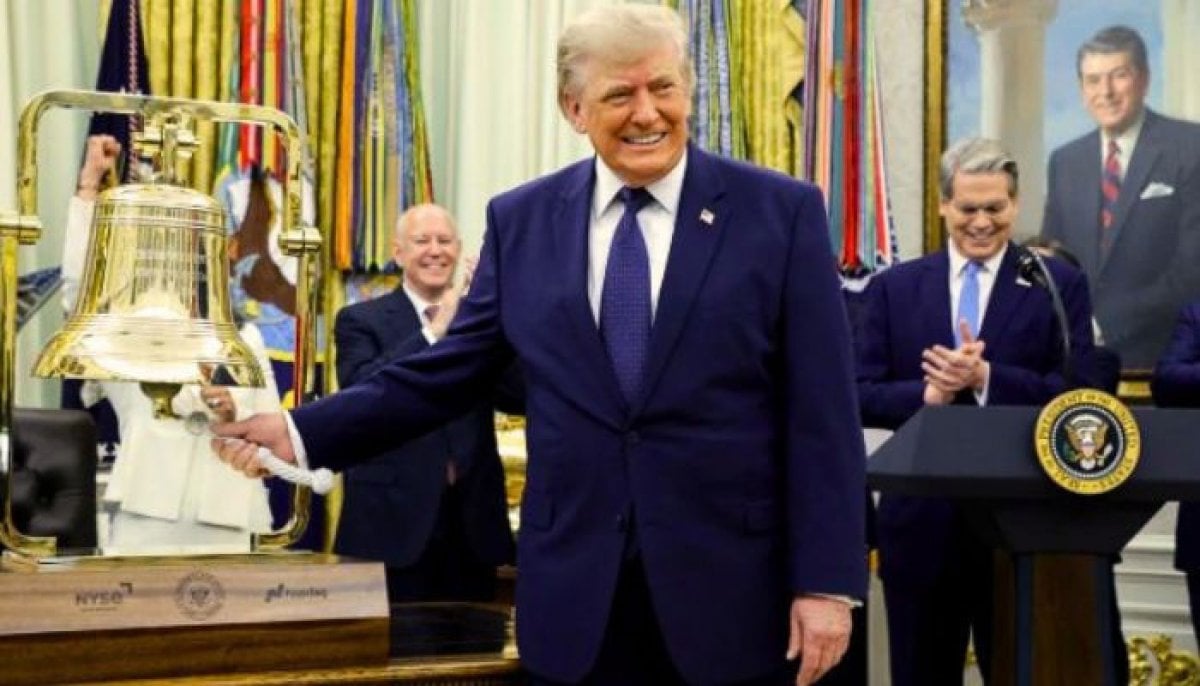
Trump stated that U.S. operations would escalate providing no clear timeline for de-escalation. His remarks drew sharp warnings from Tehran and led to a dip in international markets. “We’re going to hit them extremely hard over the next two to three weeks. We’re going to bring them back to the Stone Ages where they belong,” he said in a speech on Wednesday evening.
On Thursday, Trump reiterated his stance on Truth Social, writing: “IT IS TIME FOR IRAN TO MAKE A DEAL BEFORE IT IS TOO LATE,” alongside footage appearing to show strikes on an Iranian bridge.


Despite the loss of several key leaders Iran remained defiant, proposing an alternative framework for control of the strategic waterway, which typically carries nearly 20% of the world’s oil supply but is now largely blocked. Tehran said it was drafting a monitoring agreement with Oman to oversee vessel traffic.

Deputy Foreign Minister Kazem Gharibabadi emphasized that these measures were aimed at ensuring safe passage rather than imposing restrictions. He added that ships would require permits and licenses under Iran-Oman agreements.
Trump warned that the conflict could escalate if Iran failed to comply with U.S. demands, including potential strikes on its energy infrastructure. He urged nations reliant on the strait for fuel to “just grab it.”
European and other nations, however, have said they would only assist in securing the passage if a ceasefire is in place. Britain led a virtual meeting of approximately 40 countries to discuss restoring free navigation, focusing on diplomatic and economic solutions. French President Emmanuel Macron noted: “Any solution must involve consultation with Iran.”
Although the meeting ended without concrete agreements, officials agreed that Iran should not charge transit fees and that all nations should have unimpeded access to the strait.
Iran’s military responded with warnings of “broader, more destructive” attacks. Ebrahim Zolfaqari, spokesperson for Iran’s Khatam al-Anbiya Central Headquarters, stated that the conflict would continue until Iran’s adversaries faced “permanent regret and surrender.”
The Iranian Fars News Agency later identified potential targets in Saudi Arabia, Kuwait, Abu Dhabi, and Jordan following an airstrike on one of its own bridges. The Revolutionary Guards claimed to have struck an Amazon cloud computing facility in Bahrain.
Analysts warn that Iran could gain significant leverage over Middle Eastern energy flows, having demonstrated its ability to block the strait through attacks on oil tankers and Gulf nations hosting U.S. forces. Gulf states have reserved the right to defend themselves but have avoided military retaliation to prevent a wider regional war.
Iran’s parliament is considering legislation that would formalize restrictions on vessels from hostile countries and authorize tolls on others passing through the strait, according to spokesperson Abbas Goodarzi.
Since February 28, thousands have been killed across the region following U.S. and Israeli airstrikes on Iran, which triggered retaliatory attacks on Israel, U.S. bases, and Gulf states, while opening a new front in Lebanon.
Iran reported injuries when a bridge connecting Tehran and Karaj was struck. Several steel producers and Tehran’s Pasteur Institute also suffered extensive damage. The Revolutionary Guards warned that attacks on U.S.-linked steel and aluminum facilities in the Gulf would escalate if Iranian industries were targeted again.
In Israel, missile sirens and interceptors sounded over Jerusalem after a missile was reportedly launched from Yemen, claimed by Iran-aligned Houthis, marking the widening regional impact of the conflict.
Fuel shortages have already strained Asian economies and are expected to affect Europe, while a U.N. report warned that a sharp economic slowdown could trigger a cost-of-living crisis in Africa.
Benchmark Brent crude surged roughly 7% to $108 per barrel, U.S. bond yields spiked, and global stock markets lost earlier gains.
Russel Chesler, Head of Investments and Capital Markets at VanEck Australia, said: “The central question on investors’ minds is: ‘When will this end?’”