



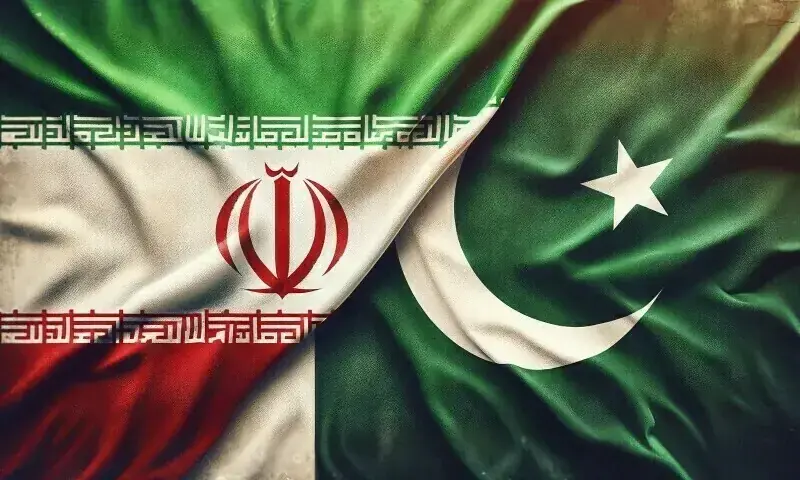

WASHINGTON: As the US-Israel war on Iran enters its fourth week, the battlefield is no longer the only arena shaping outcomes. Diplomatic positioning is accelerating behind the scenes — and it is in this context that Pakistan’s name has begun surfacing more frequently in international discussions.
Pakistan’s diplomatic role is not being discussed in abstract terms; it has surfaced in recent days because of concrete initiatives reported by multiple international media outlets.
Over the past week, several global publications have reported that Islamabad has actively offered itself as a mediator in the escalating US-Israel confrontation with Iran.
According to these reports, Pakistan’s military and civilian leadership has been in direct contact with senior US officials, including President Donald Trump, conveying Islamabad’s willingness to facilitate dialogue and reduce tensions.

Some accounts suggest that Pakistan has even indicated readiness to host talks in Islamabad if the parties are prepared to explore diplomatic channels.

Vali Nasr, a prominent Washington-based scholar, argues that any Pakistani diplomatic initiative is unlikely to occur in isolation from Saudi Arabia:
“Pakistan will only step up if it has Saudi backing — and prodding. Riyadh is likely very much in the picture,” he wrote in a post on X.
Nasr’s assessment highlights a crucial dynamic. Pakistan’s deep military and economic ties with Saudi Arabia mean that any meaningful mediatory effort would likely enjoy tacit Saudi approval.
Pakistan’s value as a potential intermediary also stems from its parallel access to Tehran and Washington — a rare combination in the current geopolitical climate.
Analyst Michael Kugelman makes this point clearly: “Pakistan is far from being an unlikely US-Iran mediator. Many high-level Pak-Iran meetings over last year. The US administration is very fond of Pakistan. Trump has said (Field Marshal Asim) Munir knows Iran better than most. Also worth noting that Pakistan represents Iran’s diplomatic interests in the US.”
Other reports indicate that Pakistan has been among a small group of regional states — alongside Turkey and Egypt — relaying messages between Washington and Tehran as the conflict intensified.
Muslim diplomats Dawn spoke to in Washington noted that both Pakistan and Turkey share borders with Iran, making them immediately vulnerable to any spillover from the conflict. Instability in Iran would not be a distant strategic concern for either country; it would carry direct security, economic, and refugee implications.
That geographic reality helps explain their visible eagerness to prevent further escalation and to keep diplomatic channels open.
Egypt’s position is different but equally significant. As the largest Arab nation and one of the few regional states maintaining direct lines of communication with Israel, Cairo is uniquely placed to relay messages that others cannot. Its ability to speak to both Arab capitals and Israeli leadership enhances its diplomatic utility at a time when formal channels are strained.
Diplomatic observers in Washington are also drawing attention to the timing of the recent media reports about these mediation efforts.
First, the war has entered a sustained and dangerous phase. Initial strikes have given way to broader exchanges, raising fears of regional spillover. As escalation risks increase, media attention naturally shifts toward possible off-ramps. That shift has created space for discussion of intermediaries.
Second, direct US-Iran engagement remains politically and diplomatically constrained. In Washington, domestic political calculations limit overt negotiation. In Tehran, direct talks under fire would carry their own costs. In such circumstances, third-party interlocutors become more valuable — especially those with functioning ties to both sides.
Third, Pakistan’s recent diplomatic activity has been visible enough to attract coverage. High-level contacts with Washington, ongoing engagement with Tehran, and consultations with Gulf partners have all been reported in close succession. This cluster of activity has reinforced the perception that Islamabad is not merely observing events but attempting to shape them.
In short, Pakistan’s mediatory role is being discussed now because the conflict has reached a point where military escalation carries growing costs, while diplomatic options remain limited. When direct channels narrow, states with cross-cutting relationships become relevant.
Islamabad appears to recognise this moment — and is positioning itself accordingly.

