



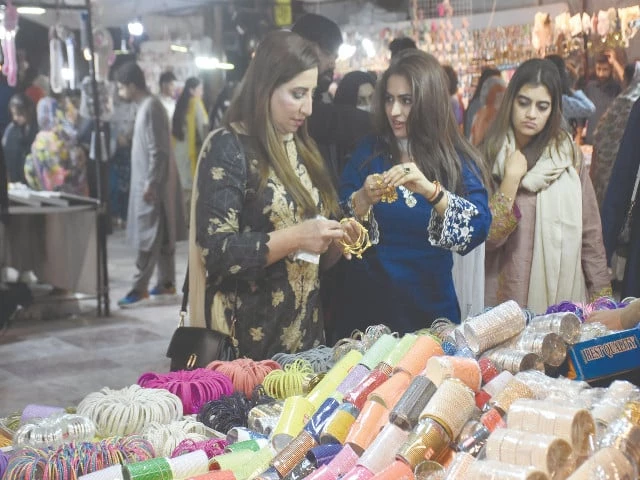

Women browse bangles at a stall at Islamabad’s Jinnah Super Market as shoppers gear up for the upcoming Eidul Fitr festival. Photo: Online
LAHORE:
During the last days of Ramazan, in the run-up to Eidul Fitr, markets across the country buzz with shoppers — especially women, children and young people — bargaining for festive wear and navigating packed lanes of discounts, bulging bags and brightly lit mehndi and bangle stalls.

This is usually the scene in markets across the country as Eid approaches. Malls and shopping centres fill with quiet chaos — a seasonal ritual of frenzy. Eid shopping, once steeped in tradition and simple pleasures, now flirts with consumerist excess.

However, this year, something appears amiss. Most markets and bazaars are not as jam-packed as they would typically be just a few days before Eid. Shopkeepers appear disappointed by the footfall, while customers complain that high prices are deterring them from shopping freely.
At the heart of this palpable drop in business activity is the reduced purchasing power of people. The war in the Middle East has begun to eclipse the warmth of the festival.
The country’s commercial centre, Karachi, witnessed a massive inferno just a couple of weeks before the start of the holy month, causing immense losses to traders and claiming the lives of scores of people. In addition, the recent rise in fuel prices has had a domino effect.
Eid shopping remained dull in the first weeks of the holy month, but it is now gaining some momentum, particularly at stalls and small shops trading in readymade dresses, shoes, shirts, cosmetics and various other items.
However, businessmen operating shops in major shopping malls say their sales have declined.
Vendors on the roadsides of busy streets and intersections are also doing brisk business this year, as financial constraints have forced people of modest income to cut down their budgets, while the affluent sections of society have nearly completed their shopping.
Traders maintain that the rising prices customers complain about are the result of high rates charged in wholesale markets and for raw materials. Because of this, they say, they are witnessing a 50 per cent dip in business this year.
Shiraz, who sells children’s readymade garments in Lahore’s Rang Mahal, says rising inflation has dented people’s purchasing power because food prices have increased, prompting them to prioritise basic needs over spending on new clothes.
“People can compromise on clothes, but not on food. Families who’d buy dresses for all their children are now getting them for just one or two.”
Asked about the crowded bazaar despite it being a fasting day and the hot weather, he says customers are thronging the markets but are not really buying much.
“People are coming in, but hardly anyone ends up shopping. This cramped bazaar used to be full of families that you couldn’t move a muscle at this time a few years ago; this isn’t even half the crowd,” he explains.
Mohsin, a salesman at a shoe shop in Kashmiri Bazaar, echoes Shiraz’s remarks about losing half the business and the public prioritising spending on food. He also feels that their wages are not enough to meet all their needs.
“If we get business for our bosses, only then will we be paid. You may see people around, but they’re not shopping; shopkeepers around are sitting idle,” he said, adding that inflation has increased to unprecedented levels.
“If a daily-wager makes Rs1,000 a day, will he get groceries for home or clothes and shoes? Please help increase our wages. Covid has just been an excuse because even during the lockdowns, some traders did business.”
“Despite Eid being close, this market hasn’t seen a worse time than now,” he lamented.

