
Implements work-from-home policy for govt offices, advises same to private sector
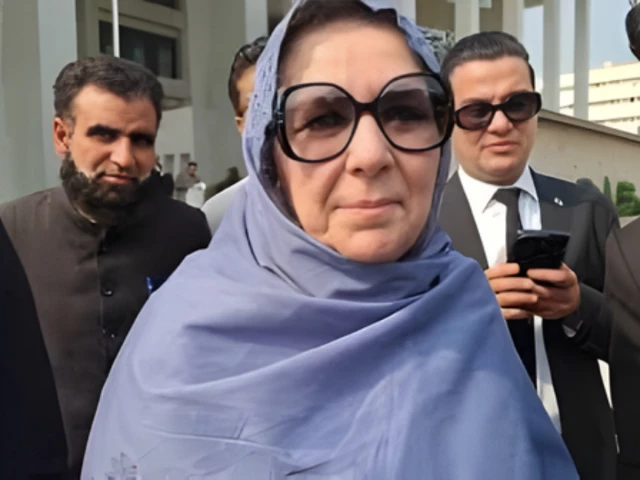
Punjab Chief Minister Maryam Nawaz. SCREENGRAB
LAHORE:

Punjab Chief Minister Maryam Nawaz on Monday announced the closure of all educational institutions till the end of the month and also imposed various curbs on fuel usage by governtment officials as the grinding conflict in the Middle East chokes energy supplies.

Tensions in the Middle East escalated sharply after US and Israeli air strikes last week assassinated Iran’s Supreme Leader Ayatollah Ali Khamenei and several senior officials, triggering a wave of retaliation from Tehran and widening the conflict across the region. In response to the strikes, Iran launched retaliatory attacks on US military bases in several Gulf countries, significantly expanding the scope of the confrontation.
The conflict has already led to the suspension of around a fifth of global crude and natural gas supply, as Tehran targets ships in the vital Strait of Hormuz between its shores and Oman, and attacks energy infrastructure across the region. The Khyber-Pakhtunkhwa government earlier today introduced a two-month fuel conservation plan, slashing fuel allowances for official vehicles by 25%.
Shortly after, CM Maryam announced in a post on X: “In view of the extraordinary economic challenges arising from the ongoing conflict in the region, I have decided to take extraordinary measures to protect the public and manage resources responsibly.
“Until the petroleum crisis is resolved, official fuel supply for provincial ministers will be suspended. I have also ordered an immediate 50% reduction in petrol and diesel allowances for government officers vehicles.
“The protocol vehicles accompanying provincial ministers and senior government officials have also been restricted. Only one vehicle will be allowed for essential security purposes.”
She further said that government offices would implement a work-from-home policy, with only essential staff attending offices.
Furthermore, schools, colleges and universities would remain closed from tomorrow till March 31, while examinations would continue as scheduled, adding that online classes may be conducted during this period.
In more measures, she said that all government outdoor events were suspended.
“The private sector is advised to adopt work-from-home arrangements where possible, avoid unnecessary events and limit on-site staff to essential personnel. District administrations have been directed to strictly monitor transport fares and take strong legal action against overcharging. The supply and prices of essential food items will also be closely monitored across Punjab.”
In view of the extraordinary economic challenges arising from the ongoing conflict in the region, I have decided to take extraordinary measures to protect the public and manage resources responsibly.
Until the petroleum crisis is resolved, official fuel supply for provincial…
— Maryam Nawaz Sharif (@MaryamNSharif) March 9, 2026
The Punjab government earlier introduced new standard operating procedures (SOPs) aimed at ensuring uninterrupted fuel supplies and preventing hoarding, as rising tensions in the Middle East push global oil prices sharply higher.
Under a newly issued notification, authorities will implement stricter monitoring of petroleum stocks, transportation and retail availability across the province.
Officials say the measures are designed to prevent artificial shortages and curb illegal fuel transfers at a time of heightened volatility in international energy markets.
The provincial Industries Department has been designated as the central focal authority for petroleum oversight. A dedicated monitoring system will also be established to track the movement and availability of fuel products, according to the notification.
وزیراعلیٰ پنجاب @MaryamNSharif کی خصوصی ہدایات پر
پنجاب میں فیول کی ترسیل کے نظام کو مزید شفاف اور
محفوظ بنانے کے لیے حکومت پنجاب کے عملی اقدامات جاریمؤثر مانیٹرنگ اور ذمہ دارانہ استعمال کے ذریعے
عوامی وسائل کا تحفظ یقینی بنایا جارہا ہے#CMTransportVision2030 pic.twitter.com/vQ4pViJOuh— Transport & Masstransit Deptt (Punjab), Pakistan (@TransportDeptt) March 9, 2026
Oil depots across Punjab have been directed to submit detailed daily stock reports to a provincial control room. These reports must include opening stock levels, incoming supplies, daily sales and closing balances to help authorities monitor supply flows in real time.
At the district level, deputy commissioners have been tasked with conducting daily checks at petrol stations to verify fuel availability and ensure compliance with official price rates. Local administrations will also monitor customer queues and supply disruptions while taking immediate action against hoarding or unauthorised fuel transfers.
Read More: PSX drops over 11,000 points as Gulf war sparks widespread selling
The government has further decided to establish District Petroleum Monitoring Committees in each district, headed by the deputy commissioner. The committees will include representatives from police, the Industries Department, Civil Defence, the Punjab Enforcement and Regulatory Authority and oil marketing companies. Their mandate is to review daily supply and demand conditions and recommend rapid corrective measures if shortages emerge.
Transport and logistics are also being brought under tighter scrutiny. Officials say the movement of oil tankers and fuel transport vehicles will be closely monitored, with delivery documentation subject to verification at multiple checkpoints.
Authorities have warned that vehicles found violating fuel transport regulations will face heavy fines, and legal action may be taken against drivers and associated companies.
To strengthen oversight, the government also plans to introduce a mobile application for monitoring petrol pumps and oil depots. The platform, being developed jointly by the Punjab Information Technology Board and the Urban Unit, will be linked to a digital dashboard and a track-and-trace system intended to improve transparency in petroleum supply chains.
Read More: K-P cuts fuel allowance by 25% as cabinet unveils two-month conservation plan amid Mideast crisis
Inspection records will be uploaded through a monitoring application to maintain a centralised database of enforcement activity. Border and highway checkpoints have also been instructed to intensify monitoring of fuel shipments to prevent unauthorised movement of petroleum products.
Officials say the measures are intended to maintain stable fuel availability and avert potential disruptions in the provincial supply chain.
Read More: Pak Navy launches ‘Operation Muhafizul Bahr’ against threats to shipping, trade amid Mideast crisis
The policy shift comes as global oil markets are already under pressure from escalating geopolitical tensions. According to international market data, crude oil prices recently climbed above $100 per barrel after renewed conflict in the Middle East and disruptions linked to the strategic Strait of Hormuz shipping route.
Crude oil futures soared almost 30% to nearly $120 a barrel, one of its biggest one-day jumps on record, threatening to raise costs of products from gasoline to jet fuel.
Iran has also issued a stark warning about the potential impact on energy markets. A spokesperson for Iran’s Islamic Revolutionary Guard Corps said continued US and Israeli strikes on Iranian energy infrastructure could drive global oil prices beyond $200 per barrel. The official cautioned that Tehran could respond by targeting energy-related facilities in the region if attacks continue.
The rising price outlook carries significant implications for Pakistan, where higher fuel costs typically ripple through the broader economy.
When petroleum prices rise, transportation expenses increase, pushing up the cost of food, vegetables and other essential goods. Public transport fares often follow suit, adding financial pressure on commuters, particularly students and low-income workers.
Industries and factories also face higher production costs due to increased fuel expenses for machinery and logistics. In agriculture, diesel-powered equipment such as tractors and tube wells becomes more expensive to operate, potentially raising farming costs and ultimately food prices.
Officials say the new monitoring framework is intended to shield consumers from artificial shortages and ensure transparent fuel distribution as global market uncertainty continues.