



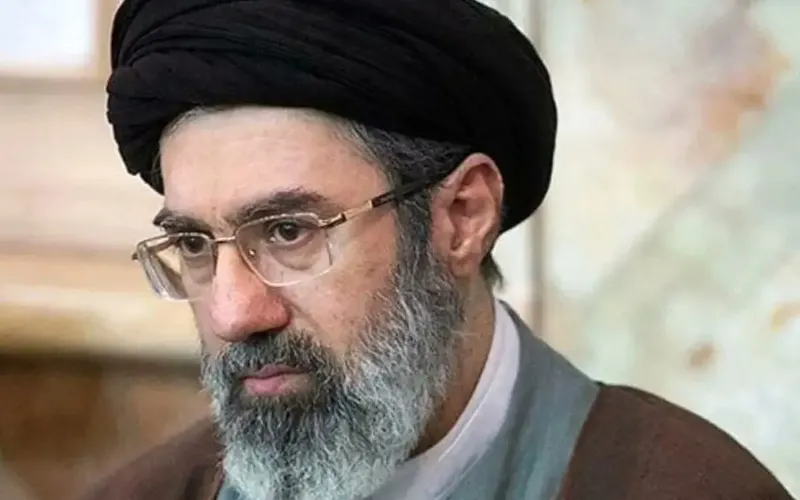

Mojtaba Khamenei the second son of the late Ayatollah Ali Khamenei is widely being discussed as the most likely successor to his father as Iran’s next supreme leader.
Reportedly, the Islamic Revolutionary Guard Corps (IRGC) has thrown its substantial weight behind Mojtaba’s candidacy, and Israeli defense officials, including Minister Gideon Saar, have publicly warned of potential assassination attempts against him.
Known for his uncompromising anti‑Western stance, Mojtaba is not the figure that US President Donald Trump or Western policymakers would have preferred. US Secretary of State Marco Rubio described Iran’s leadership as “religious ideological extremists” shortly after the news broke, and the prospect of Mojtaba’s rise is unlikely to allay such characterizations.
The supreme leader of Iran is chosen by the 88‑member Assembly of Experts, who in this case are reported to be considering a shortlist of half a dozen candidates. His likely selection would send a strong signal that the Republic intends to maintain its current ideological course rather than pivot toward accommodation with the United States.

For more than ten years there has been speculation that Mojtaba could eventually succeed his father, rumours that intensified after the death of Ebrahim Raisi the sitting president and a key ally of Ali Khamenei in a helicopter accident.

Born in 1969, Mojtaba pursued religious studies after finishing high school, and at 17 he joined Iran’s war effort during the Iran–Iraq conflict. However, it was not until the late 1990s that he began to emerge as a recognised force within conservative circles.
Following the decisive defeat of Ali Akbar Nategh Nouri a candidate backed by Ayatollah Khamenei in the 1997 presidential election, hard‑line factions concluded that their organisational structures needed restructuring, and Mojtaba played a central role in that transformation.
Reformist critics have also blamed him for the brutal suppression of post‑election protests in 2009; his name was reportedly chanted by demonstrators as emblematic of the crackdown. Senior reformist politician Mostafa Tajzadeh, who was jailed in the aftermath of the disputed vote, later alleged that decisions in his legal case were overseen directly by Mojtaba.
In 2022, he was formally granted the title of Ayatollah a necessary step toward higher office and was increasingly visible beside his father at state functions. He has wielded influence over the Islamic Republic of Iran Broadcasting, the state media apparatus frequently criticised by domestic audiences for propagating pro‑government messaging in preference to more popular foreign satellite programming.
Mojtaba is also believed to have played a significant role in managing aspects of his father’s extensive financial networks.
Among his closest political allies are the newly appointed head of the IRGC, Ahmad Vahidi; Hossein Taeb, a former director of the IRGC’s intelligence arm; and Mohammad Bagher Ghalibaf, the current speaker of the Iranian parliament.
The notion of a hereditary succession to the leadership has long been opposed by reform‑minded factions inside Iran. In 2022, veteran reformist Mir Hossein Mousavi remarked on the persistent rumours about Mojtaba’s potential rise, questioning why they were never categorically denied if unfounded.
The Assembly of Experts, in response, dismissed such concerns as “baseless speculation” and reaffirmed that the next supreme leader would be chosen based on merit and suitability.
Amid these developments, Israeli air strikes reportedly targeted a key assembly building in Qom, a major centre of Shia scholarship, although Iranian state‑affiliated media stated the structure was empty at the time.
Ayatollah Ali Khamenei was reported killed in a US‑Israeli strike on Saturday 28 Feb 2026.
No official declaration has yet been made, and some insiders believe any announcement may be postponed until after the senior Khamenei’s funeral rites.

