
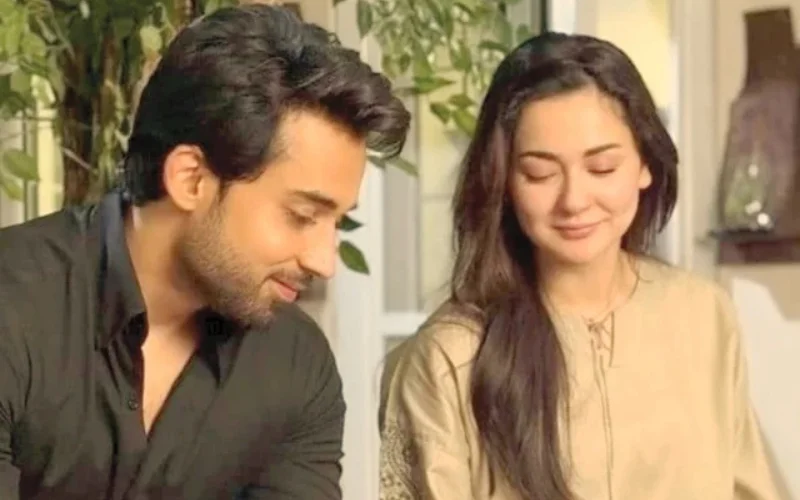

KARACHI: Pakistani drama viewers are currently engaged in a heated debate over what constitutes “healthy love” on screen, as the television serial Meri Zindagi Hai Tu faces intense criticism for its storyline and character dynamics.
The drama stars Bilal Abbas Khan and Hania Aamir in lead roles. The story revolves around Ira, a principled medical student, whose life takes a turn when Kamyar, a wealthy and influential young man, enters her world. Kamyar is portrayed as someone who views love as a mix of control and persistence, often interpreting rejection as a challenge.
A significant number of viewers argue that the serial repeats a familiar formula: a powerful, affluent man persistently pursues a woman, disregards her refusal, intrudes into her life without consent, and yet is ultimately presented in a romantic light.
Over time, Ira’s resistance appears to weaken, and she gradually becomes inclined toward Kamyar — reinforcing the notion that stubbornness and relentless pressure are proof of love.

Critics on social media contend that the issue extends beyond a single character’s behavior. They question the writing and the limited development of Ira’s character, arguing that the serial not only depicts toxic behavior but normalizes and glamorizes it.

Some commentators have also objected to the portrayal of a character shown as aggressive and struggling with substance abuse being partially justified within the narrative. Additionally, certain scenes referencing religion to establish moral superiority have drawn criticism.
The controversy surrounding “Meri Zindagi Hai Tu” has once again reignited debate over whether Pakistani dramas are reinforcing unhealthy relationship dynamics by labeling them as romance, potentially shaping misleading perceptions among younger audiences.