




Iran shows flexibility in US nuclear talks amid military pressure in Geneva negotiations
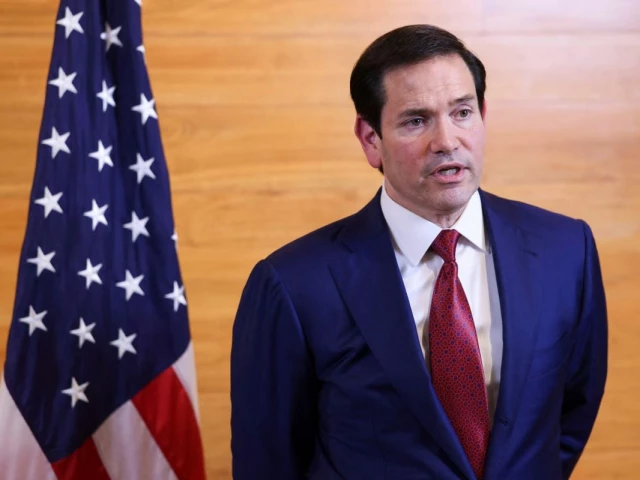
US Secretary of State Marco Rubio speaks to reporters in a departure lounge before returning to Washington following meetings with Caribbean Community (CARICOM) leaders, at Robert L. Bradshaw International Airport in Basseterre, Saint Kitts and Nevis on February 25, 2026. PHOTO: AFP
Secretary of State Marco Rubio warned Wednesday that Iran must negotiate on its missile program, a day after President Donald Trump alleged Tehran was working on rockets capable of reaching the United States.
“I would say that the Iranian insistence on not discussing ballistic missiles is a big, big problem,” Rubio told reporters on the eve of new talks between the United States and Iran.

Rubio declined to describe whether the talks in Geneva would be decisive in determining if the United States would attack Iran.

“The president wants diplomatic solutions. He greatly prefers them,” Rubio said during a visit to Saint Kitts and Nevis.
Regarding the talks, he added, “Hopefully they’re productive, but eventually we’ll have to have conversations about more than just a nuclear program.”
On the possibility of a strike on Iran, Rubio said: “The president has made no decision on that, so I don’t know if Thursday is the key date for that. I think progress needs to be made.”
Iran promises flexibility at nuclear talks
Iran pledged to show flexibility at indirect talks with the United States on their longstanding nuclear dispute on Thursday, with Tehran under pressure to agree to a deal or face US military strikes.
The third round of talks in Geneva, which began on Thursday morning, will discuss Iran’s nuclear program against the backdrop of a major US military buildup in the Middle East ordered by President Donald Trump.
US Secretary of State Marco Rubio said on Wednesday that Iran’s refusal to discuss its ballistic missile program was a “major problem” that would eventually have to be addressed, saying the missiles were “designed solely to strike America” and pose a threat to regional stability.
“If you can’t even make progress on the nuclear program, it’s going to be hard to make progress on the ballistic missiles as well,” Rubio told reporters in Saint Kitts.
Iranian Foreign Ministry spokesperson Esmaeil Baghaei told Press TV on Thursday that the negotiations would focus solely on nuclear issues and the lifting of sanctions, adding that Tehran was entering the talks with “seriousness and flexibility.”
Impasse on Nuclear Program
The two countries renewed negotiations this month, seeking to break a decades-long impasse over Tehran’s nuclear program, which Washington, other Western states and Israel believe is aimed at building nuclear weapons. Tehran denies this.
US Special Envoy Steve Witkoff and Trump’s son-in-law Jared Kushner were due to attend the indirect talks with Iranian Foreign Minister Abbas Araghchi, a US official said. The meeting follows discussions in Geneva last week and will again be mediated by Oman’s Foreign Minister Badr Albusaidi.
Read More: Iran dismisses missile, nuclear claims after Trump alleges ‘sinister ambitions‘
Trump briefly laid out his case for a possible attack on Iran in his State of the Union speech on Tuesday, underlining that while he preferred a diplomatic solution, he would not allow Tehran to obtain a nuclear weapon.
He has deployed fighter jets, aircraft carrier strike groups, as well as destroyers and cruisers in the region in an effort to pressure Iran into concessions.
On Wednesday evening, Araghchi and Albusaidi discussed the proposals Iran will put forward to reach an agreement, according to a statement posted on X by Oman’s foreign ministry.
We’ve been exchanging creative and positive ideas in Geneva today, and now both US and Iranian negotiators have adjourned for a break. We’ll resume later today. We hope to make more progress.
— Badr Albusaidi – بدر البوسعيدي (@badralbusaidi) February 26, 2026
Pressure inside and outside Iran
The largest US military deployment in the Middle East since the invasion of Iraq in 2003 has raised fears of a wider regional conflict. In June last year, the US joined Israel in striking Iranian nuclear sites. Iran has threatened fierce retaliation if attacked again.
The USS Gerald R. Ford, the largest US aircraft carrier, left port near the Greek island of Crete on Thursday bound for waters near Haifa in northern Israel, where it is expected to arrive on Friday.
The United States has also sent around a dozen F-22 fighter jets to Israel — the first time Washington has deployed combat aircraft to the country for potential wartime operations, a US official said.
The Trump administration has not formally announced the deployment. The Pentagon declined to comment.
Trump said on February 19 that Iran must reach a deal within 10 to 15 days, warning that “really bad things” would otherwise happen.
Oil prices edged higher on Thursday as investors assessed whether the talks could avert a military conflict that risks supply disruptions, though gains were capped by higher US crude inventories.
Saudi Arabia is increasing oil production and exports as part of a contingency plan in case any US strike on Iran disrupts supplies from the Middle East, two sources said on Wednesday.
Araghchi said on Tuesday that Iran aimed to achieve a fair, swift deal but reiterated that it would not forgo its right to peaceful nuclear technology. Washington views nuclear enrichment inside Iran as a potential pathway to nuclear weapons.
“A deal is within reach, but only if diplomacy is given priority,” Araghchi said in a statement on X.

