



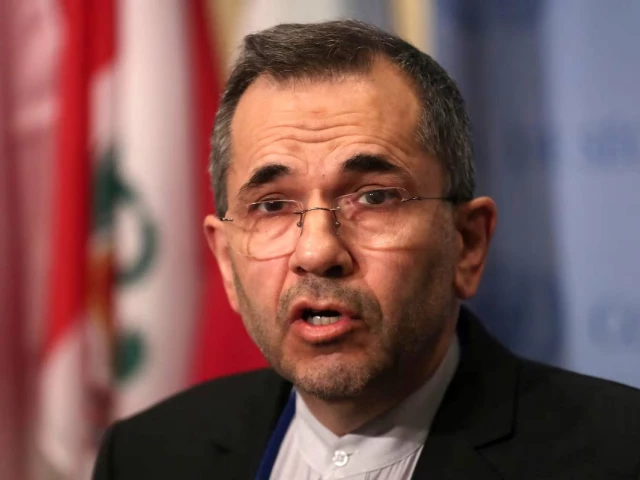

A file image of Iranian Deputy Foreign Minister Majid Takht-Ravanchi. PHOTO: REUTERS
WASHINGTON/TEHRAN:
Diplomatic engagement between Iran and United States is set to resume as both sides prepare for indirect talks in Geneva on Thursday (tomorrow), even as military posturing and political rhetoric continue to heighten regional uncertainty.

Iranian Deputy Foreign Minister Majid Takht-Ravanchi said Tehran is ready to take “any necessary steps” to reach a nuclear agreement with Washington. Speaking through state media, he stressed that Iran would enter negotiations with “complete honesty and good faith” and aims to secure a deal as quickly as possible.

The talks are expected to involve US envoys Steve Witkoff and Jared Kushner, according to senior American officials. Negotiations resumed earlier this month as the United States expanded its military presence in the Middle East.
The diplomatic opening comes alongside strong warnings from Tehran. Iranian officials said the country would respond “ferociously” to any American military strike. Foreign ministry spokesman Esmaeil Baqaei said even a limited attack would be considered an act of aggression and would trigger defensive retaliation under Iran’s military plans.
White House Press Secretary Karoline Leavitt said President Donald Trump continues to prioritise diplomacy but would not rule out lethal force if necessary. Trump has reportedly questioned why Iran has not “capitulated” under US pressure, a remark criticised by Iranian officials.
Trump on Tuesday denied reports of any disagreement with senior military leadership regarding Iran policy, stating on the social media there was no split with the country’s top general over potential operations.
Trump said that while military action was not the preferred option, the United States would be capable of achieving a decisive victory if a confrontation with Iran became unavoidable. He added that most military leaders also preferred to avoid war but believed any authorised operation would be “easily won” if undertaken.
Iranian negotiators have signalled possible flexibility on nuclear issues. Tehran may consider sending half of its highly enriched uranium stockpile abroad, diluting the remainder and participating in a regional enrichment consortium if the US recognises Iran’s right to peaceful nuclear energy and lifts economic sanctions.
The nuclear dispute remains the core obstacle. Washington wants Iran to abandon uranium enrichment on its territory, which US authorities view as a potential pathway to weaponisation. Iran has consistently denied any intention of developing nuclear weapons, insisting its programme is purely civilian.
Military tensions are compounded by regional security concerns. The United States and Israel previously conducted strikes on Iranian nuclear sites, significantly limiting enrichment operations, although Tehran is believed to retain enriched uranium reserves.
International reactions have reflected anxiety over possible escalation. India, Sweden, Poland, and Australia have advised citizens to leave Iran. Meanwhile, the United States ordered non-emergency diplomatic staff to leave its embassy in Lebanon, where the Hezbollah maintains strong regional ties.
China has urged restraint, with Ambassador Shen Jian warning against unilateral use of force in international relations.
Domestic unrest inside Iran has added pressure on authorities. University protests have re-emerged following economic hardship linked to international sanctions. Videos circulating online showed students in Tehran burning national flags and chanting anti-government slogans.

