



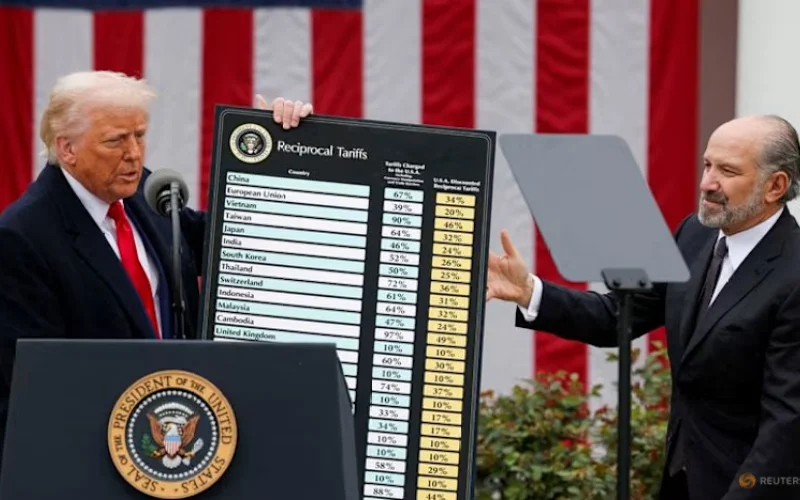

WASHINGTON: The US Supreme Court has struck down several of President Donald Trump’s most extensive global tariffs, overturning a key White House policy initiative and injecting new uncertainty into international trade.
In a 6-3 ruling, the court concluded that the law Trump relied on to impose these tariffs, the International Emergency Economic Powers Act (IEEPA) of 1977, did not authorize the president to levy such broad trade duties.
The decision could pave the way for potentially hundreds of billions of dollars in tariff refunds, marking a significant win for small businesses and states that had challenged the measures.
Trump’s administration had defended the tariffs, arguing they were justified under the IEEPA to address national emergencies, including trade imbalances and drug trafficking.

However, challengers—including private firms and states—contended that the law does not mention “tariffs” and that Congress never intended to give the president open-ended authority to override existing trade agreements.

Chief Justice John Roberts, writing for the majority, agreed with the challengers: “When Congress has delegated its tariff powers, it has done so in explicit terms and subject to strict limits. Had Congress intended to convey the distinct and extraordinary power to impose tariffs, it would have done so expressly, as it consistently has in other tariff statutes.”
The ruling specifically affects tariffs imposed last year on goods from nearly every country, initially targeting Mexico, Canada, and China before expanding globally. Trump had justified the duties as a tool to encourage domestic investment and manufacturing, framing them as a path to economic revival.
The tariffs had sparked widespread domestic and international criticism due to their sudden impact on trade costs and potential inflationary effects. Ahead of the ruling, the White House indicated it might explore alternative tools to impose tariffs, leaving the future trade strategy uncertain.
The case was viewed as a major legal test of Trump’s broader effort to expand executive power. The majority opinion included the court’s three liberal justices as well as two Trump appointees, Amy Coney Barrett and Neil Gorsuch. Justices Clarence Thomas, Brett Kavanaugh, and Samuel Alito dissented.
This ruling sets a significant precedent limiting the scope of presidential authority in imposing unilateral trade measures without explicit Congressional approval, reshaping the balance of power over US trade policy.

