




Report says vision in right eye has improved from 6/36 to 6/9, while left eye has 6/6 vision with use of glasses
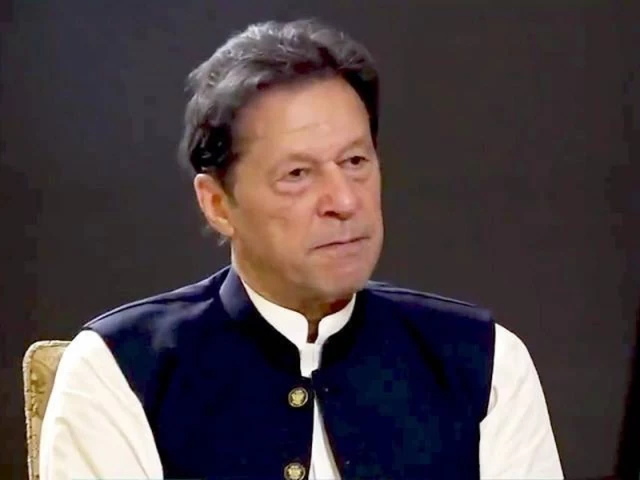
Pakistan Tehreek-e-Insaf founder Imran Khan. Photo: File
RAWALPINDI/ISLAMABAD:

A medical board examining jailed former prime minister Imran Khan has reported an improvement in his eyesight and did not recommend shifting him to a hospital, it emerged on Monday.

According to Imran’s medical report, obtained by The Express Tribune, Imran’s vision in his right eye has improved from 6/36 to 6/9, while his left eye has 6/6 vision with the use of glasses. The assessment was carried out by a board comprising Dr Nadeem Qureshi and Dr Arif, following a detailed examination at Adiala jail.
According to the report, the anterior segment of both eyes was normal and the cornea was clear. It noted mild intragel haemorrhage at the edge of the right eye and moderate retinal haemorrhage in all four quadrants.
Swelling in the macula of the right eye was subsiding, with macular thickness reduced from 550 to 350 microns. The board outlined ongoing medication and treatment and recommended OCT angiography and fundus fluorescein angiography after completion of anti-VEGF therapy, the report added, while no recommendation was made for Imran’s transfer to a hospital.
Following the medical assessment, PTI Chairman Barrister Gohar Ali Khan and Leader of the Opposition in the Senate Allama Raja Nasir Abbas were briefed on Imran’s condition during a session at the Pakistan Institute of Medical Sciences. His personal physicians, Dr Asim Yousuf and Dr Khurram Mirza, were also informed via a phone call and expressed satisfaction with the ongoing treatment.
Separately, Law Minister Azam Nazeer Tarar said that Imran had normal 6/6 vision in one eye, while the other eye achieved about 70% vision with glasses. Speaking at a lawyers’ event in Ferozewala, he said the specialist medical team had expressed satisfaction with the treatment being provided and had also briefed opposition leaders and Imran’s personal doctors.
Tarar’s remarks came after earlier submissions to the Supreme Court of Pakistan suggested that Imran’s eyesight had deteriorated significantly. The court had directed authorities to submit a detailed medical report on his health by February 16.
Parliamentary Affairs Minister Tariq Fazal Chaudhry said that the detailed medical examination was conducted inside the jail in accordance with government directives and with “complete transparency”.
“The government provided every necessary facility on site to ensure no question of any negligence arises,” he added.
“Barrister Gohar [Ali Khan] was also kept informed of all developments. According to the initial report: there is a clear reduction in swelling, vision is improving [and] no major complications have emerged. The government also regularly informed the family that they could be present during the examination; however, no representative from the family showed up. Nevertheless, the entire procedure was conducted under the supervision of independent experts,” the minister said.
Chaudhry said that one dose of Eylea injection was administered, and the second dose would be given on February 25. He said that according to the experts’ opinion, Vabysmo could be an alternative, but since positive results from the current treatment were emerging, it was decided to continue with Eylea for now.
“The next step is an angiogram, after which a decision on laser treatment will be made if necessary. The government wants to make it clear that, despite his status as a prisoner, Imran Khan is being provided with all medical facilities. It is the state’s responsibility to provide standard treatment to every citizen, and no negligence has been shown in this matter.”
اتوار کی دوپہر عمران خان کا تفصیلی طبی معائنہ اڈیالہ جیل کے اندر حکومتی ہدایات کے مطابق مکمل شفافیت کے ساتھ کرایا گیا۔ حکومت نے ہر ضروری سہولت موقع پر فراہم کی تاکہ کسی بھی قسم کی کوتاہی کا سوال پیدا نہ ہو۔
خصوصی طور پر Slit Lamp، OCT Scan مشین اور مکمل سہولیات سے لیس ہیوی…
— Dr. Tariq Fazal Ch. (@DrTariqFazal) February 16, 2026
Parliamentary Secretary Barrister Daniyal Chaudhry stated that sending Imran abroad, or his getting bail, unless there was a life-threatening illness with legal evidence to support it, is not possible.
Speaking to the media, Chaudhry said the provision in the Qanun-e-Shahadat (Law of Evidence) was very clear.
“Bail and the permission to go abroad are only applicable if you have a life-threatening disease. If there is no life-threatening disease, or if the condition is not worsening, as the family claims it has already happened, then it’s a different matter,” he said, adding that the government supported providing whatever medical facilities or support were required here.
Such a move could disrupt law and order, the parliamentary secretary noted. “A convict will not be allowed to disrupt the law and order of the country. They have already backtracked on their commitments before,” Chaudhry said, adding that the situation could be reconsidered “if they fulfill their commitments, if they stop talking about destabilising Pakistan, stop talking about ‘setting Pakistan on fire,’ or shutting the country down, if they avoid these types of political statements.”
Read: PTI ends K-P House sit-in as Parliament House protest continues
Regarding Imran’s treatment, Chaudhry said all necessary medical care was available and would continue to be provided. “Facilitation has been provided and will continue to be provided. We have said it before and we will say it again, the medical facilities that he needs, he will get,” he stated, noting that the government was taking the matter very seriously.
The parliamentary secretary rejected what he termed propaganda regarding the PTI founder, calling it false. The talk of malnutrition and other claims had proven to be false, according to Chaudhry, who emphasised that all facilities were available to him in jail. “Whatever they [the medical board] recommend, there is no second opinion on that,” he said.
Paid propaganda by the founder’s supporters is circulating on social media, he added, with those seeking deals or leniency doing so from day one and always looking for excuses.
Regarding the sit-in, the parliamentary secretary termed it nothing other than politics, adding that they should resolve things amicably. Apart from sit-ins and protests, they had no priorities and do nothing for the country or politics, according to Chaudhry.
The government was ready for dialogue, but only through parliamentary channels, Chaudhry stated, adding that any discussions regarding the PTI founder were conducted through such channels. Blackmail would not be accepted, he said. “If they continue doing this, they will not get relief”.
Meanwhile, speaking to The Express Tribune on the fourth day of the opposition’s sit-in outside Parliament House, Chairman PTI Barrister Gohar Ali Khan, said the protests would continue until their demands are met.
Read More: PTI slams state for ‘crime’ against Imran after eye health revelations
Gohar added that they demanded that Imran’s health not be treated as a political issue. “He should be given the best facilities. This is the problem of every Pakistani,” he said. The PTI chairman said they demanded that Imran be treated at a hospital suggested by the family and his personal physician. “His treatment should be under their supervision so that the case is found out. How did this clot occur? All of a sudden, in three months, how did this eye deteriorate?” Gohar questioned.
Gohar said they received notice that doctors had visited Imran and a report may have been filed. “That report will be filed in the Supreme Court. When we see the report, we will see their contents,” he said, adding that the party wanted Imran’s neurologist to meet him and conduct a personal examination before the family was satisfied.
The PTI chairman also claimed that on the first day of the protest, all doors were closed and they were not provided breakfast, water, or food. “Today, four days later, I brushed my teeth. We had to survive on dry bread,” he said.
Aleema terms situation ‘extremely concerning’
Imran’s sister Aleema Khanum termed it “extremely concerning and unacceptable” that the government was resisting the presence of Imran’s personal doctor and family representative during his examination and treatment.
She said that without the physical presence of both his personal doctor and family representative, “we categorically reject any claims made by the government regarding his examination, treatment or medical condition.”
Statement by @Aleema_KhanPK :
It is extremely concerning and unacceptable that the government is resisting the presence of Imran Khan’s personal doctor and family representative during his examination and treatment. Without the physical presence of both his personal doctor and…
— PTI (@PTIofficial) February 16, 2026
Meanwhile, Dr Yousuf issued a video statement after a conference call with the doctors that examined Imran. He said that as per the doctors, Imran’s eye was better than before.
“I wish I could confirm this with full certainty, but unfortunately I can neither confirm nor deny it. The reason is that I have neither examined Imran myself nor spoken to him. Moreover, the doctors nominated by Imran’s family have still not been granted permission to examine him,” he said, requesting the authorities to allow him or Dr Faisal Sultan, as well as the doctors nominated by Imran’s family, to participate in the examination and treatment process in Islamabad.
He also requested that all future tests, assessments and treatment should be carried out at Shifa International Hospital, because “we believe it is a hospital of international standards and appropriate quality, where, God willing, Imran Khan sahib will be able to receive the best possible treatment.”
ڈاکٹر عاصم یوسف کا تازہ بیان، جو انہوں نے عمران خان کے موجودہ علاج کرنے والے ڈاکٹروں کے ساتھ کانفرنس کال کرنے اور ان ڈاکٹروں کے حالیہ چیک اپ وزٹ کے بعد جاری کیا ہے۔
“اسلام آباد کے ڈاکٹرز نے تفصیل سے بتایا کہ وہ کب سے خان صاحب کو دیکھ رہے ہیں، کون کون سے ٹیسٹ کیے گئے، کیا تشخیص… pic.twitter.com/kFOfgVkGTx
— PTI (@PTIofficial) February 16, 2026
Medical team
The SC had previously ordered the formation of a medical team to examine Imran’s eye after Barrister Salman Safdar’s report quoted the PTI founder as stating that “only 15%” vision remained in his right eye. The court also directed that both the medical examination and telephonic contact with his children be completed before February 16.
Safdar, who met Imran at Adiala jail on Tuesday as amicus curiae, submitted a seven-page report detailing the former prime minister’s living conditions. In it, he quoted Imran as saying that “despite the treatment administered (including an injection), he has been left with only 15pc vision in his right eye”.
Imran told Safdar that until October 2025, he had “normal 6 x 6 vision in both eyes”, after which he began experiencing persistent blurred and hazy vision. He said he repeatedly reported the issue to the then jail superintendent, but “no action was taken by the jail authorities”.
The report stated: “[Imran] stated that he subsequently suffered a sudden and complete loss of vision in his right eye, following which an ophthalmologist from Pims Hospital, Dr Muhammad Arif, was called to examine him. According to [Imran], he was diagnosed with a blood clot that caused severe damage, and despite the treatment administered (including an injection), he has been left with only 15pc vision in his right eye”.
Safdar added that he “personally observed that the petitioner appeared visibly perturbed and deeply distressed by the loss of vision and the absence of timely and specialised medical intervention”.
Also read: Govt decides to move Imran to hospital, constitute medical board as TTAP sit-in enters day 2
“Throughout the meeting, the petitioner’s eyes were watery, and he repeatedly used a tissue to wipe them, reflecting physical discomfort,” he recalled.
The report further stated that Imran claimed “regular and periodic blood tests” were not conducted and that while his personal physicians Dr Faisal Sultan and Dr Yousuf, had previously been allowed access, “despite repeated requests and a deteriorating ocular condition, no such access was allowed during the relevant period”.
Imran also claimed that for nearly three months, the only treatment provided consisted of eye drops, which led to no improvement and was followed by a major impairment of vision. He further stated that despite being 73 years old, he had not been examined by a dentist for two years despite repeated requests.
Safdar said jail staff informed him that Imran was currently under the care of Pims’ Dr Arif and that his vital signs were recorded three times daily. He also clarified a day earlier that any statements attributed to him regarding Imran’s health outside the court record were “misrepresented and misreported”.
Meanwhile, a medical report dated February 6, signed by PIMS Executive Director Professor Dr Rana Imran Sikander, was also submitted to the SC. Addressed to the Adiala jail administration, the report said a complete ophthalmic assessment was conducted and a diagnosis of “right central retinal vein occlusion” was made, recommending hospital-based follow-up treatment.
Dr Sikander recalled that Imran was brought to PIMS on the night of January 24 for a medical procedure. “The treatment plan i.e. need for administering anti-VGEF intravitreal injection, was explained in full to the patient. Accordingly, informed consent was obtained,” he stated, adding that the procedure was completed smoothly in approximately 20 minutes.
Safdar noted in his report that the medical note provided by Imran’s family did not “contain full details of the episodes” nor identify the ophthalmologist who conducted the tests and administered treatment.

