



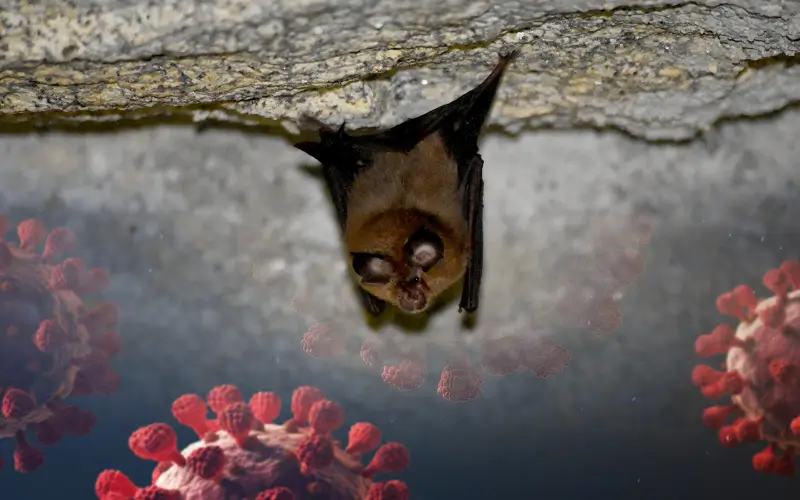

Scientists have identified a new bat-borne virus similar to the deadly Nipah virus, raising concerns that it may already be spreading silently among humans.
According to researchers, the newly discovered virus was detected in patients who initially showed Nipah-like symptoms, but later tested negative for Nipah virus.
Nipah virus is a highly dangerous disease that can cause brain inflammation (encephalitis) and has a fatality rate of up to 75 percent among infected individuals.
Experts from Columbia University’s Mailman School of Public Health said the newly identified virus is medically known as Pteropine orthoreovirus (PRV). Its symptoms closely resemble those of Nipah virus, leading to fears that it may have gone undiagnosed in humans for some time.

The virus was found in five patients in Bangladesh whose throat samples tested negative for Nipah virus. All patients had recently consumed raw date palm sap, which is considered a well-known source of bat-transmitted viruses such as Nipah, rabies, and Marburg.

Patients infected with the virus experienced severe respiratory and neurological symptoms. In some cases, health problems such as fatigue, breathing difficulties, and trouble walking persisted for months after the illness. One patient later died, although it could not be confirmed whether the death was directly caused by the PRV virus.
In their study published in the journal Emerging Infectious Diseases, researchers urged doctors to consider this newly identified virus when treating patients showing symptoms similar to Nipah virus.
The study’s lead author, Dr. Nish Mishra, said the discovery highlights that consuming raw date palm sap can facilitate the spread of not only Nipah virus but other dangerous pathogens as well, stressing the urgent need for expanded surveillance and monitoring systems.
Meanwhile, UK health authorities have confirmed they are closely monitoring a recent Nipah virus outbreak in India’s West Bengal state, where around 200 people are currently being tested.
Experts warn that the emergence of Nipah-like viruses underscores the growing risk of zoonotic diseases and the need for early detection to prevent future outbreaks.

